Peruvian Inca Orchid vs Xoloitzcuintli: Choosing
Compare Peruvian Inca Orchid and Xoloitzcuintli ownership through size categories, daily routines, learning, and individual experience.
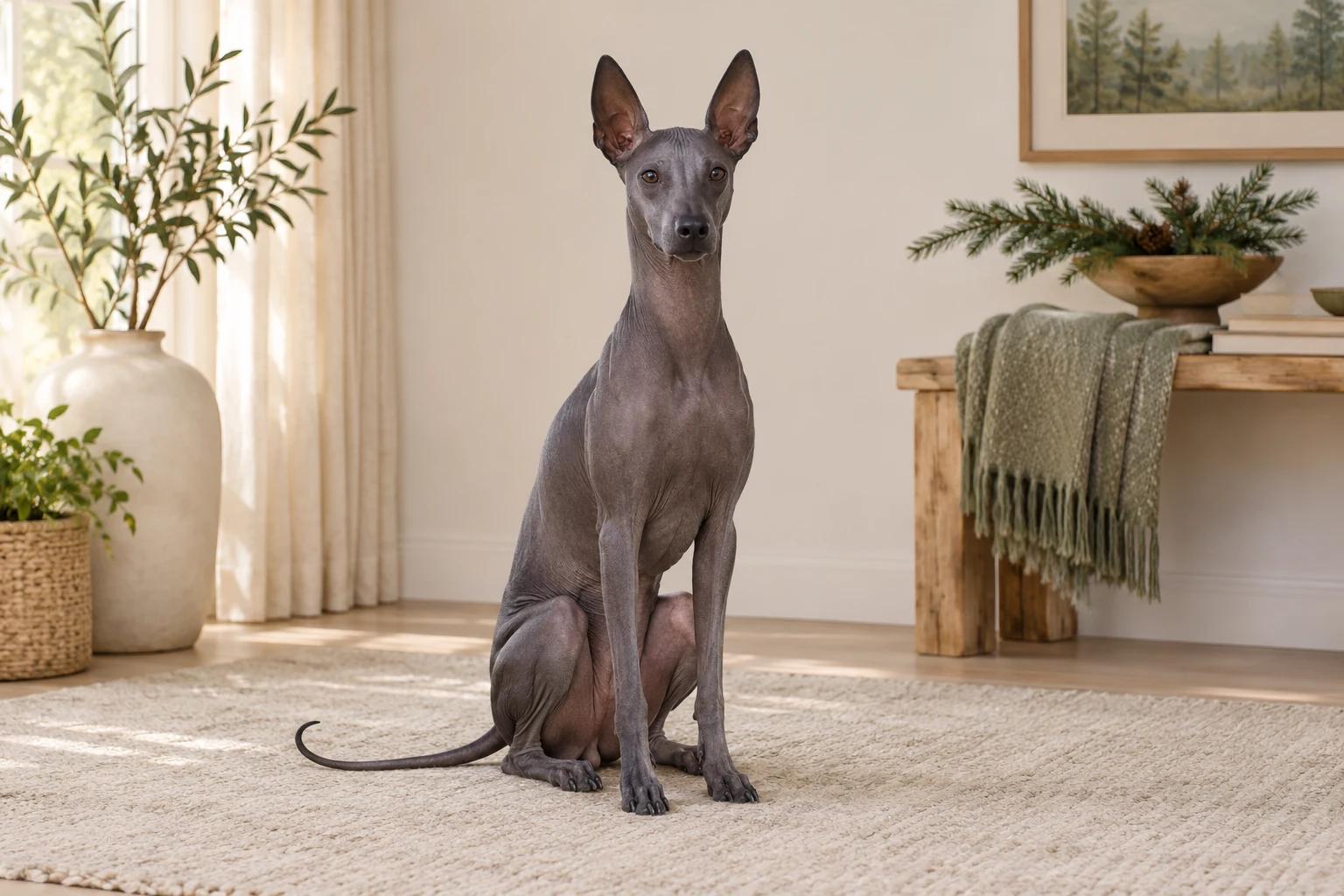
Peruvian Inca Orchid vs Xoloitzcuintli is a comparison between two distinct breeds, not two interchangeable names for a hairless dog. Start by identifying the size and individual you are considering. Then compare the actual care arrangements, opportunities for activity, and experience of everyday handling. Their striking appearance may have started your search, but the best choice will depend on the life you can share with the dog after the initial fascination settles.
Peruvian Inca Orchid vs Xoloitzcuintli: the starting facts
The Peruvian breed is associated with Peru; the Xoloitzcuintli with Mexico. The FCI Peruvian standard describes three sizes, while VCA's Xoloitzcuintli guide identifies toy, miniature, and standard Xolos. A comparison that ignores those categories can accidentally place very different-sized dogs on either side of the decision.
The UKC Peruvian Inca Orchid standard describes an elegant sighthound with independent thinking and devotion to its people. VCA emphasizes the Xolo's strong owner bond and a gentle, playful approach to learning. These descriptions give you useful questions to ask; they do not establish that one breed will be easier for every owner.
Keep both the Peruvian Inca Orchid profile and the Xoloitzcuintli profile open while you make a shortlist. Both profiles call for meaningful activity and mental engagement. Do not use the word companion to mean a dog that simply waits for attention at the end of a long day.
Compare equivalent size categories first
A small Peruvian and a standard Xolo will produce a misleading impression if you are trying to decide which breed is more manageable to transport. Ask for the adult category, current measurements, and age of each dog under consideration. For a puppy, ask what information supports the expected adult size and what remains uncertain.
Write down the practical constraint behind your size preference. Perhaps you have limited vehicle space, need equipment you can move alone, or use a narrow entryway. Measure that constraint rather than relying on the words small and medium. Those labels do not tell you whether a particular crate fits through your car door.
Ask to see the dog standing and moving in an ordinary setting. A tightly framed portrait can make size difficult to understand. If meeting remotely, request a straightforward video with familiar surroundings rather than trying to infer dimensions from a decorative photograph.
This is where the difference between Peruvian Inca Orchid and Xoloitzcuintli becomes a specific ownership question: which actual dog fits the arrangement you can provide? Breed-wide averages are less useful than the relevant category and the individual measurements.
Look at a normal day, not a promotional description
For each candidate, ask the caregiver to describe a recent weekday. Include the first outing, time with people, quiet periods, and evening activity. Ask which parts are established and which still need teaching. You are looking for an understandable routine, not a claim that the dog has no inconvenient habits.
Put your own weekday beside that account. Can you preserve a familiar morning arrangement during the transition? Is daytime help available? Where will the dog rest when you are working? A strong preference for one breed should not hide a basic scheduling gap that would affect either.
If you are choosing a Peruvian Inca Orchid or Xoloitzcuintli for an active lifestyle, describe the activity accurately. Walking local routes, traveling to events, and spending long periods in unfamiliar accommodation require different preparation. Ask about the experiences the individual already has rather than assuming enthusiasm for one activity transfers to all the others.
Judge introductions and learning separately
Watch how a dog interacts with a familiar caregiver before asking it to engage with you. Give it time to observe, and follow the caregiver's introduction plan. You do not need an instant greeting to make the meeting worthwhile. You do need honest information about how the dog normally handles unfamiliar people and settings.
Ask what training looks like on an ordinary day. Can the caregiver show a familiar task and explain the cue? What does the dog find rewarding? What happens when the surroundings become more distracting? These details are useful for both breeds, even if their written descriptions use different adjectives.
A Xoloitzcuintli vs Peruvian Inca Orchid decision should not become a contest over which dog performs most impressively in one meeting. A quiet dog may be tired or uncertain; a lively dog may be unusually excited. Look for a consistent account across observation, caregiver history, and any follow-up meeting.
If you have another animal, compare actual experience with that species and a practical introduction plan. If children live in the home, plan adult supervision and private resting space. Neither breed name settles the compatibility question on its own.
Ask for care you can demonstrate
For either breed, request an individual care handover. Ask the caregiver to show the equipment they use, how the dog responds to handling, and what advice the veterinarian has given. Write down product names only when they are part of that dog's established, appropriate routine; do not improvise a skin-care regimen from a breed photograph.
Our separate article about the Peruvian's coated variety explains why appearance alone is not a sufficient description. Here, the practical point is to compare the care of the dogs actually on your shortlist rather than filling in missing information from their most familiar public image.
Arrange support before collection day. A local veterinarian, a suitable trainer, and a caregiver willing to answer follow-up questions are more useful than a suitcase of products purchased speculatively. Ask who you should contact if an ordinary task proves harder than the demonstration suggested.
Make the choice on evidence you can use
Create two short lists: what is known about each dog and what still needs answering. A known adult routine may matter more to you than a preferred appearance. Alternatively, you may decide to wait because the right size category or support arrangement is not yet available.
There is no need to declare a universal winner. Choose the individual whose needs you can meet with the least wishful thinking. The dog breed quiz can help organize your preferences, but the final comparison should include the people, schedule, and space that will exist on an unremarkable Tuesday.
FAQ
Are the Peruvian Inca Orchid and Xoloitzcuintli the same breed?
No. They are distinct breeds associated with Peru and Mexico respectively. Identify the breed, size category, and individual history when researching a dog rather than treating a similar appearance as proof that the names are interchangeable.
Which breed needs less activity?
Do not choose between them on the assumption that either needs an inactive life. Both My Breed Atlas profiles highlight activity and mental engagement. Compare established individual routines and discuss suitable activity with the veterinarian when planning changes.
Which is the better choice for a first-time owner?
The more useful choice is the individual whose care and behavior you understand, with support you can actually access. Ask for demonstrations, realistic routine details, and ongoing guidance. Previous dog ownership alone does not answer whether a particular match will work.
Sources behind this article
- United Kennel Club: Peruvian Inca Orchid ↗
- FCI: Peruvian Hairless Dog Standard No. 310 ↗
- VCA Animal Hospitals: Xoloitzcuintli ↗
Article source checked: November 15, 2026. Source checked 2026-11-15
Keep reading

Affenpinscher vs Brussels Griffon: Everyday Differences
Read article →