Pekingese Exercise Needs: Outings at Their Pace
Plan Pekingese exercise with manageable outings, gentle games and weather-aware choices, without using a fixed distance as a target.
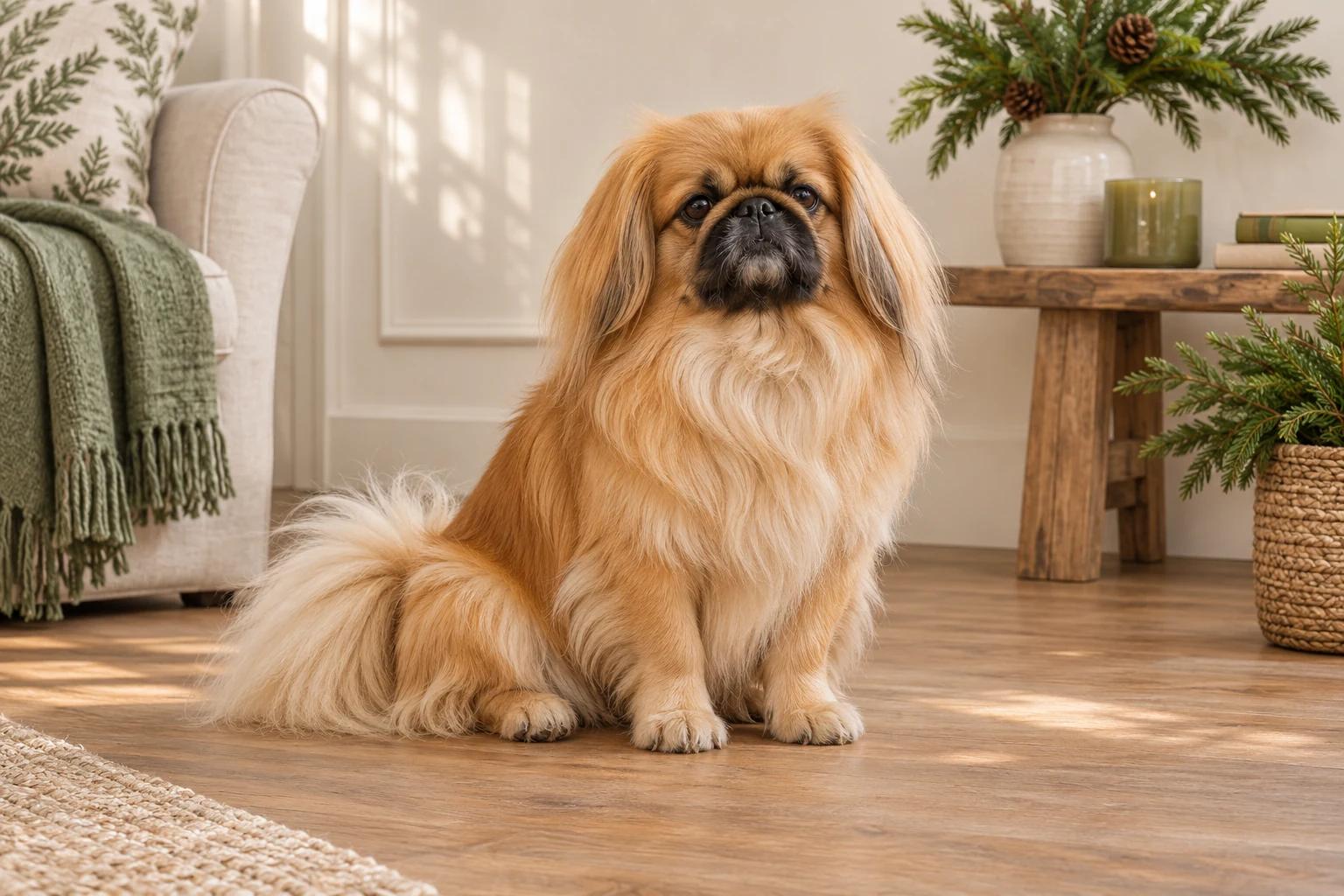
Pekingese exercise needs are not met by choosing between a long forced march and no activity at all. A Pekingese still needs opportunities to explore, move, play and share time with you. The useful approach is to make those opportunities manageable for the individual, with an easy way to shorten or change the plan.
Think in terms of comfortable participation rather than distance achieved. A carefully chosen outing near home can offer more useful experience than a route that leaves you committed to a long return journey after the dog has had enough.
Pekingese exercise needs: plan for the dog, not a quota
VCA describes leisurely walks and games rather than overly vigorous exercise for Pekingese. PDSA likewise discusses shorter outings alongside play and training, with particular care around heat and overexertion. These sources support a flexible routine, not a universal stopwatch target.
The Pekingese profile places activity and mental engagement in the middle of its reference scale. That is a reminder to provide a varied day without treating the breed as either an endurance athlete or a dog that should only be carried.
Ask your veterinarian what is appropriate for your dog's age, condition and health history. A new puppy, a newly adopted adult and an older companion may need different starting points. Do not increase intensity simply because another Pekingese appears to manage more.
Design the walk so you can turn back
A Pekingese daily walk is easier to adapt when the route has options. Choose an easy loop close to home or a path where turning around does not leave you far from the starting point. Look for manageable surfaces and places to pause without blocking other walkers.
Begin without a destination you must reach. Let the outing include investigation rather than measuring success only by forward progress. A dog pausing to notice a familiar corner is still participating in the world.
Avoid combining the dog's walk with an errand that requires waiting somewhere unsuitable. A queue, exposed pavement or a lengthy stop can make an otherwise modest trip harder to manage. Separate the jobs when you cannot accommodate the dog's needs throughout.
Have an exit plan before setting out. Know how you will get home promptly if the dog is uncomfortable, and keep your phone and relevant contact details available. Planning an exit is more useful than expecting to improvise one halfway through a route.
Weather can change the whole plan
PDSA's advice for flat-faced dogs explains that they can struggle with long or high-energy activity and cooling in hot weather. Pekingese are a short-faced breed, so the forecast and actual conditions deserve attention before exercise, not only after a problem appears.
Do not assume a particular time of day is automatically suitable. Check conditions where you will walk and be prepared to replace the usual outing with a different plan. A warm evening may still be unsuitable even though it is later than your normal walk.
Keep hot-weather decisions simple for anyone sharing care. Write down that the ordinary route is optional and that completing it is never more important than the dog's comfort. A helper should know whom to contact with concerns rather than feeling obliged to finish a scheduled distance.
If breathing is difficult or the dog appears distressed, stop the activity and seek veterinary help promptly. Do not dismiss unusual breathing as a charming breed trait or try to improve it by pushing the dog to become fitter.
Make indoor time interesting without making it frantic
A quieter day can still include interaction. Choose simple activities that do not depend on repeated running, jumping or sharp turns on a slippery floor. A familiar toy placed in an easy hiding spot can create a brief search, or you can practice a useful cue such as moving onto a mat.
Keep the challenge understandable. If the dog cannot find the toy, make the next attempt easier rather than adding more hiding places. If you are practicing a cue, work on one small piece and finish after a successful response.
Use comfortable footing and enough room for the dog to move naturally. Put away obstacles that make a game unnecessarily awkward. The activity should suit the space you actually have, not imitate a video filmed in a much larger room.
Give play an end. Put the toy away and allow quiet time rather than continually trying to generate enthusiasm. Indoor engagement is part of a balanced routine, not a requirement to keep the dog entertained every minute.
Separate reluctance from a training argument
A dog stopping on a walk is giving you information. The reason might involve the surroundings, the activity or physical comfort. Do not automatically label a Pekingese stubborn and pull it onward.
Look at the situation: what changed, where did the dog stop and what was happening nearby? If this is a new pattern or you have concerns about movement, breathing or stamina, ask your veterinarian. An observation log can make that conversation clearer without pretending to diagnose the problem yourself.
For a familiar nonmedical difficulty, a reward-based trainer may help you adjust the route or teach a useful skill. The important distinction is between making an experience easier to understand and forcing the dog to complete it.
Similarly, a dog asking to play again does not establish that a strenuous activity is appropriate. You remain responsible for deciding when the session ends and when professional advice is needed.
Build a routine someone else can follow
How much exercise does a Pekingese need? The useful answer is an individualized combination of manageable activity, exploration and rest, reviewed as the dog and conditions change. To make that answer practical, record what your dog currently does comfortably and how you adapt the day.
Include ordinary care details in a handover note: the usual route, alternatives, equipment, the veterinary contact and any individualized restrictions. A caregiver should not have to infer these from the dog's breed or from how excited it looks when a lead appears.
Review the Pekingese activity level over the whole day rather than judging one outing in isolation. Consider play, teaching, necessary toilet trips and quiet company together. If the pattern changes, seek advice rather than repeatedly adjusting exercise in search of a quick fix.
The guide to Pekingese size-label expectations explains a separate question about choosing a dog. Small size does not itself answer an exercise question. Use the dog match quiz to consider whether gentle, flexible daily involvement suits your lifestyle better than a companion expected to complete demanding outdoor plans.
FAQs
How long should I walk my Pekingese?
Choose a duration and pace suitable for the individual, with veterinary guidance where needed. Use routes you can shorten easily and consider conditions on the day. A fixed breed-wide number cannot account for health, age, weather and terrain.
Can a Pekingese get exercise through indoor games?
Gentle indoor games and brief teaching sessions can contribute to daily engagement. Choose secure footing and activities suited to the dog. They should be part of a considered routine, not a reason to ignore necessary outdoor access or individual care needs.
What should I do if my Pekingese stops walking?
Pause and consider the surroundings and the dog's comfort instead of pulling it onward. Seek veterinary advice for new reluctance or concerns about movement or stamina. Breathing difficulty or distress calls for prompt veterinary help.
Is a Pekingese a suitable jogging companion?
Do not choose a Pekingese for a jogging routine. Breed guidance favors manageable walks and games rather than vigorous exercise. Discuss appropriate activities with your veterinarian and select a companion whose needs fit the lifestyle you actually want to share.
Sources behind this article
Article source checked: November 15, 2026. Source checked 2026-11-15
Keep reading

Afghan Hound Exercise Needs: Build a Workable Active Day
Read article →