Papillon vs Pomeranian: Which Routine Fits?
Compare Papillon and Pomeranian coat care, activity, training and household routines before meeting a prospective companion.
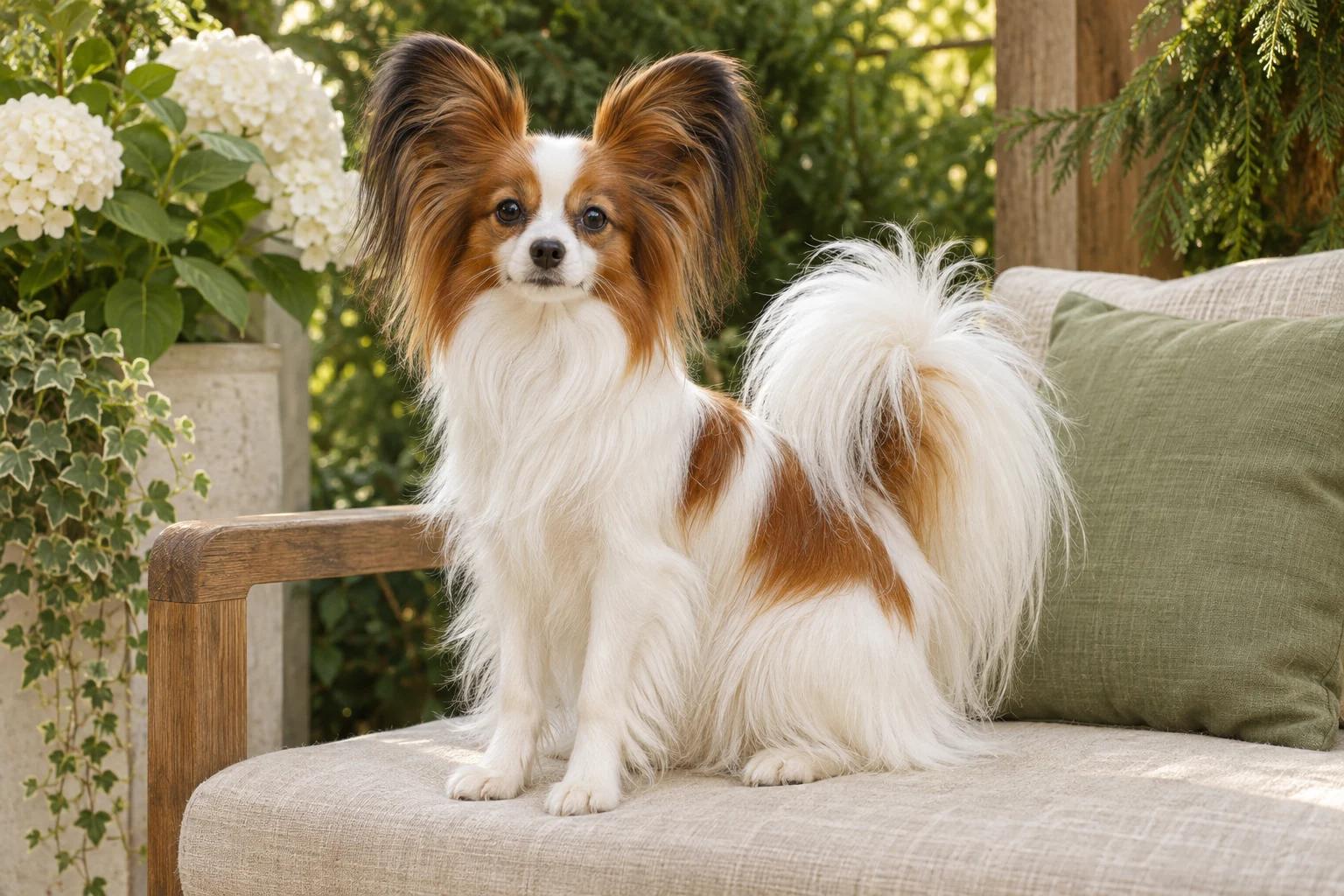
Papillon vs Pomeranian is a choice between two small companions, not between an energetic dog and a decorative one. Both need attention, teaching and opportunities to explore. The most useful distinction is the everyday routine you would enjoy repeating: a Papillon offers a light, silky-coated package with a strong interest in learning, while a Pomeranian brings a compact outline and a fuller double coat.
Look beyond a puppy photograph. An adult demonstration of grooming, walking and settling will tell you more about your likely week than a contest over which breed looks cuter.
Papillon vs Pomeranian at home
Start with the Papillon profile and Pomeranian profile. The Papillon reference puts particular emphasis on activity and mental engagement. The Pomeranian reference describes a more moderate activity tendency, but this is still a lively companion rather than an ornament. Both profiles flag voice as something to plan around.
The Papillon Club of America's standard describes a fine-boned dog with a body slightly longer than its height. The AKC Pomeranian standard describes a square, compact outline and a dense undercoat beneath longer outer hair. Those differences explain much of the visual contrast, without telling you which individual will enjoy your living room.
Picture an ordinary evening. If you would happily alternate a walk with teaching a new trick, a Papillon is worth meeting. If you are particularly drawn to a full-coated little companion and are comfortable making coat care part of shared time, meet Pomeranians too. Neither preference removes the need to assess the actual dog.
The coat is a recurring commitment
The Papillon standard describes a silky coat without an undercoat. That is a different maintenance proposition from a Pomeranian's layered coat. It is not permission to ignore fringes, tangles or routine checks, and neither breed makes cleaning disappear.
Before choosing, ask each caregiver to show you the normal grooming setup. Watch where the dog stands, what tools are used and how the person reaches beneath the visible surface. Ask which tasks happen at home and which are left to a groomer. A finished photograph cannot answer these questions.
For a Pomeranian, pay particular attention to whether you understand the work beneath the abundant outline. For a Papillon, notice how the owner handles the longer decorative hair without pulling. You need not copy a show presentation to provide ordinary companion care, but you do need a workable process.
Make the costs concrete. Put appointments, tools, laundry and your own time on the same page. A breed can be small enough to carry and still have a coat routine that feels substantial during a busy week.
Learning, play and the end of the day
VCA describes Papillons as athletic, interactive learners who benefit from reward-based training. That can be a pleasure if you like teaching. It can also be a mismatch if your plan is simply to buy a small dog because your home is small.
Try a household thought experiment rather than assigning either breed a fixed exercise quota. On a day with work, rain and a delivery, when would the dog go out? Who would provide company? Where would a short game happen without a slippery floor or a busy doorway? How would you help the dog settle afterward?
For either breed, the answer should include more than leaving toys on the floor. A few purposeful activities can give shared time a beginning and an end: search for a toy, practice moving onto a mat, then put the game away. These are planning examples, not promises that a particular sequence suits every dog.
If your main interest is training, ask to watch the prospective dog's response to familiar cues. If you prefer quiet companionship, ask about the hours between outings, not just whether the dog enjoys a lap. The difference between Papillon and Pomeranian ownership becomes clearer through these small observations.
Noise and apartment decisions
A Pomeranian vs Papillon comparison should include the sounds outside your front door. Hallways, elevators, visitors and neighboring dogs may matter more than your floor area. Neither breed should be selected on the assumption that a toy dog will be silent.
Describe your building to the caregiver. Ask what happens when someone knocks, when the dog sees movement through a window and when its usual person leaves. Request examples from ordinary days rather than accepting “not much of a barker” as the whole answer.
Your own setup matters too. A resting spot away from constant foot traffic may be easier to use than a bed directly beside a window. Arrange deliveries and arrivals so the dog is not repeatedly asked to cope with the busiest moment from the closest possible position. A trainer can help make a plan for persistent barking; avoid choosing between breeds on a promise that training will erase all noise.
Meeting dogs without letting appearance decide
If you are torn between a Papillon or Pomeranian, take the same questions to both visits. Ask about handling, toileting routines, time apart and previous experience with your type of household. Observe the dog before trying to interact, and let the caregiver guide introductions.
Ask to see the equipment the dog currently wears. Harness fit and carrier space should be checked on the individual, not inferred from fluff or a breed label. If children or other animals live with you, discuss supervised introductions and separate resting spaces. A favorable breed description cannot establish compatibility.
The existing guide to Papillon and Phalene ear varieties can clarify appearance terminology without turning ear shape into a temperament test. Keep appearance questions separate from the daily-care questions that decide whether the match is practical.
Use the dog match quiz to organize your priorities, then compare them with what you actually learn during visits. Choose the dog whose documented routine you can support, not the breed that wins the most categories on an imaginary scoreboard.
FAQs
Is a Papillon easier to groom than a Pomeranian?
A Papillon has a silky coat without the Pomeranian's dense undercoat, so the work is different. Ask to see each individual dog's routine before deciding what feels manageable. Both still need consistent care and checks beyond the visible coat.
Which breed is better for someone who enjoys training?
A Papillon is a strong candidate for someone who actively enjoys teaching and learning games. Pomeranians also need training. Meet individual dogs, discuss their experience and choose a teaching routine you can sustain rather than expecting automatic obedience from either breed.
Can either breed live in an apartment?
Either may fit an apartment routine when outings, company, care and noise management are realistic. Assess hallway triggers and time alone as carefully as available space. The prospective dog's history is more useful than a blanket apartment-friendly label.
Which breed should I choose if I want a quiet companion?
Do not choose either breed on a guarantee of quietness. Ask about the individual dog's responses to visitors, outdoor movement and separation. An adult with a well-described routine may make those questions easier to investigate than a very young puppy.
Sources behind this article
- Papillon Club of America: Breed Standard ↗
- American Kennel Club: Pomeranian Standard ↗
- VCA Animal Hospitals: Papillon ↗
Article source checked: November 15, 2026. Source checked 2026-11-15
Keep reading

Affenpinscher vs Brussels Griffon: Everyday Differences
Read article →