Papillon Size: Measuring for Everyday Life
Understand Papillon height, proportions and practical measuring, with advice for choosing equipment and discussing weight with your veterinarian.
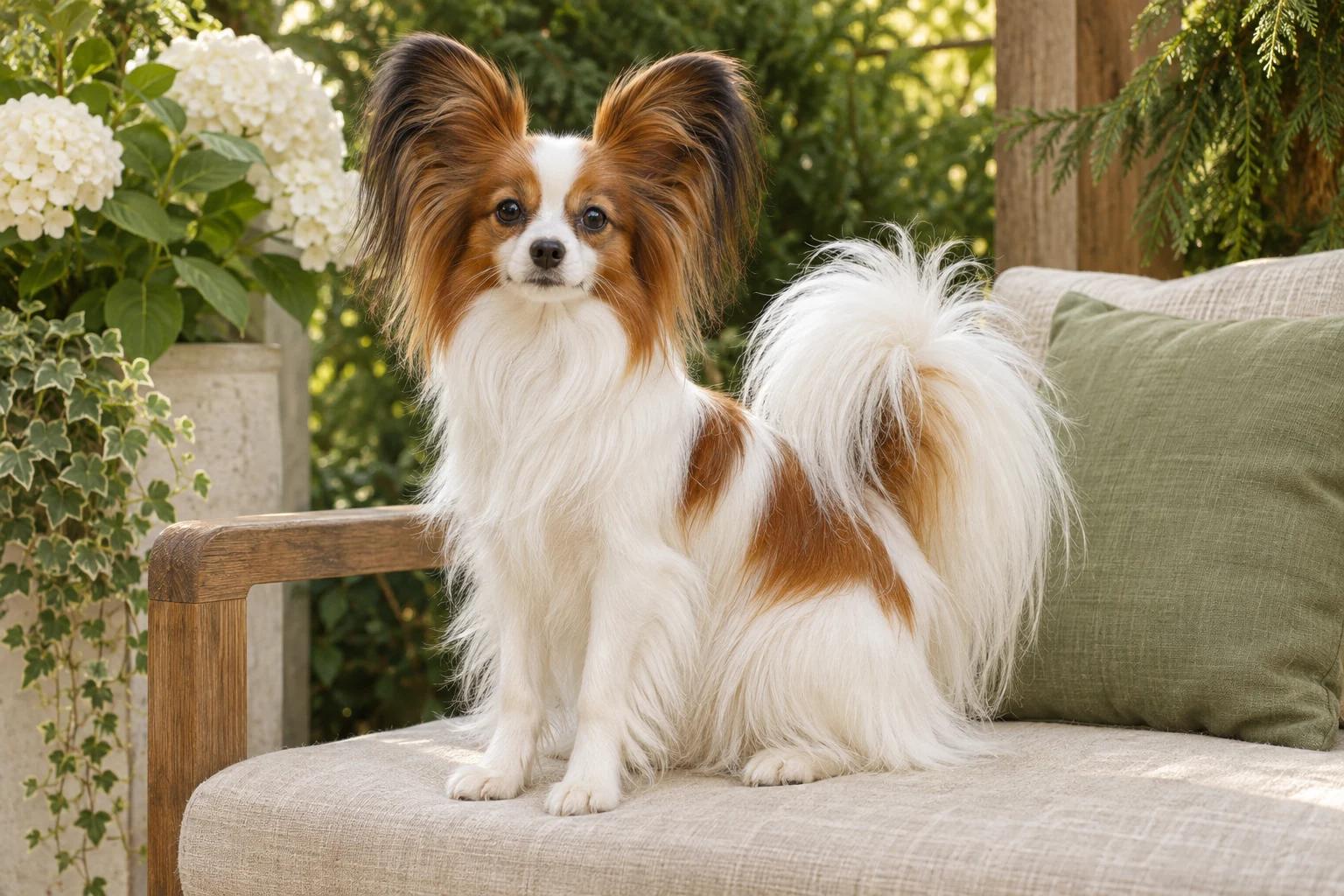
Papillon size is best understood through height, body shape and the individual dog's measurements, not a photograph beside a handbag. A shoulder-height measurement and a scale reading answer different questions. Neither chooses a harness, carrier or feeding plan for you.
The practical question is what your own dog needs to move, rest and travel comfortably.
Papillon size: what the standard actually describes
The Papillon Club of America standard gives Papillon height as 8–11 inches at the shoulders, not at the top of the head or the tips of the ears. A tall ear outline can make two dogs appear more different in height than their shoulder measurements show. Long hair can also blur the underlying body shape.
The My Breed Atlas profile lists an overall adult weight range of 3–11 pounds, with females listed at 3–11 pounds and males at 3–10 pounds. These are breed reference ranges, not feeding targets or guarantees about a puppy.
The standard's proportion-based description of weight is important: height and substance belong together. A number on a scale does not tell the whole story. Use Papillon weight as something to record and discuss with your veterinarian, rather than as a target chosen from an advertisement.
A breed standard describes a reference ideal for judging breed characteristics. It is not a personal growth contract or a veterinary assessment. A companion outside a show description does not automatically have a problem, and matching that description does not prove that a dog is healthy.
For the broader picture, the Papillon breed profile brings size together with activity, learning and everyday care. Keep those demands in view while you work out the physical space a dog would occupy.
Measure for a purpose, not for a perfect number
Before taking measurements, decide what you need them for. A shoulder-height note answers a different question from chest circumference. A carrier requires more than knowing which breed is going inside it.
For a simple height estimate, use a level, nonslip surface and let the dog stand naturally. Avoid stretching the neck upward or pressing the body into position. If the dog is uncomfortable with the process, stop and ask an experienced handler to demonstrate a gentler approach. An approximate home measurement is sufficient for many planning conversations; it need not imitate a show-ring assessment.
For equipment, follow the manufacturer's stated measuring points. Record the date, product and measurement rather than keeping an unlabeled number in your phone. “Chest for blue harness” is more useful later than “twelve,” with no unit or explanation.
Photograph the fit, not just the packaging. A view of how a strap sits when the dog is standing may help you explain a concern to a professional. Do not leave poorly fitting equipment in use while waiting for advice.
Buying a harness without guessing from coat
The Papillon's outline can mislead a shopper. Decorative hair adds visual volume, while the frame beneath it is small. Choosing solely by a manufacturer's “toy” category risks overlooking the measurements that product actually uses.
Compare the current chest measurement with the adjustment range, then check the fit on the dog. Look at the placement of straps, whether the dog can move normally and whether the garment shifts as the dog turns. Ask the seller or a knowledgeable professional for help if the design seems wrong for the dog's shape.
For a puppy, record when you last checked the fit. A harness that worked when it arrived should not become an unexamined part of the routine. Keep receipts and choose a realistic exchange option rather than buying an entire adult wardrobe from a prediction.
If more than one person walks the dog, label the correct adjustment or show them the fitted arrangement. Equipment planning is more useful when the person opening the front door understands it too.
Carriers, beds and small spaces
How big do Papillons get in practical terms? Small enough that many household products are marketed to them, but not interchangeable with every other toy dog. Check the dog's actual length, standing room and ability to turn, alongside the product's instructions and capacity.
A bed is not only a rectangle that fits beside your chair. Watch how the dog chooses to sleep: curled, stretched or changing positions. Leave room for the posture, not merely the curled photograph that looks tidy in an online listing.
For a carrier, distinguish external dimensions from usable interior space. Padding, curved sides and the shape of the opening can change what the dog actually has available. Let the dog investigate a suitable carrier gradually at home rather than making its first experience a hurried departure.
If travel involves a transport provider, check that provider's current rules separately. A small breed name does not establish eligibility. Measure the individual and the chosen carrier, and do not assume a product advertised for travel is accepted on every service.
A small frame still needs thoughtful handling
VCA describes Papillons as athletic toy companions, not dogs whose needs stop at portability. Small size should help you plan access and handling without replacing opportunities to walk, explore and learn.
Create a clear route around resting places so the dog is less likely to be underfoot during busy chores. Tell visitors where the dog usually settles. When people want to interact, sitting at the dog's level can be more practical than repeatedly passing it between standing adults.
Ask the caregiver to demonstrate how the dog is accustomed to being picked up and set down. Children need supervision and an adult-led plan; being small enough for a child to lift is not a reason to let lifting happen casually.
Appearance details have their own place. The existing Papillon and Phalene guide explains ear terminology. Ear carriage does not change the need to measure the body beneath the outline.
Keep a useful growth record
For a young dog, a short record of dated measurements and veterinary weights is more useful than repeatedly comparing photographs online. Keep the measuring method consistent and note whether a figure came from home or a clinic.
Bring changes or concerns to your veterinarian, who can interpret growth and body condition together. Do not change food quantities to force a puppy toward a preferred adult size. If you are still choosing a dog, ask about adult relatives while recognizing that they cannot guarantee the puppy's eventual dimensions.
The dog match quiz can help you consider whether the wider routine fits. Physical size answers only one part of that decision: a Papillon still occupies time, attention and room in the household schedule.
FAQs
How tall is an adult Papillon?
The Papillon Club of America standard describes 8–11 inches at the withers, the top of the shoulders. Measure from a level surface to that point rather than to the head or ears. The standard is a breed reference, not an individual growth guarantee.
What should my Papillon weigh?
A useful weight assessment considers the individual dog's frame, life stage and body condition. Record the dog's weight and ask your veterinarian to interpret it. Do not use a seller's preferred number as a feeding target.
Can I buy adult equipment for a Papillon puppy?
You can plan ahead, but final fit should be checked on the dog. Follow the product's measurements and adjustment range, and recheck fit as the puppy grows. A breed label alone is not a reliable sizing system.
Does a small Papillon need less engagement?
Small physical size does not remove a Papillon's need for walks, play, teaching and company. Plan those activities for the individual dog. VCA describes the breed as athletic and interested in interaction, despite its toy-sized frame.
Sources behind this article
Article source checked: November 15, 2026. Source checked 2026-11-15
Keep reading

Airedale Terrier Temperament: What Everyday Life Can Feel Like
Read article →