Nova Scotia Duck Tolling Retriever grooming guide
Build a Toller grooming routine around brushing, feathering checks, seasonal loose coat, bathing preparation and a clear groomer handover.
Explore the
Nova Scotia Duck Tolling Retriever
Background, care, and everyday considerations.
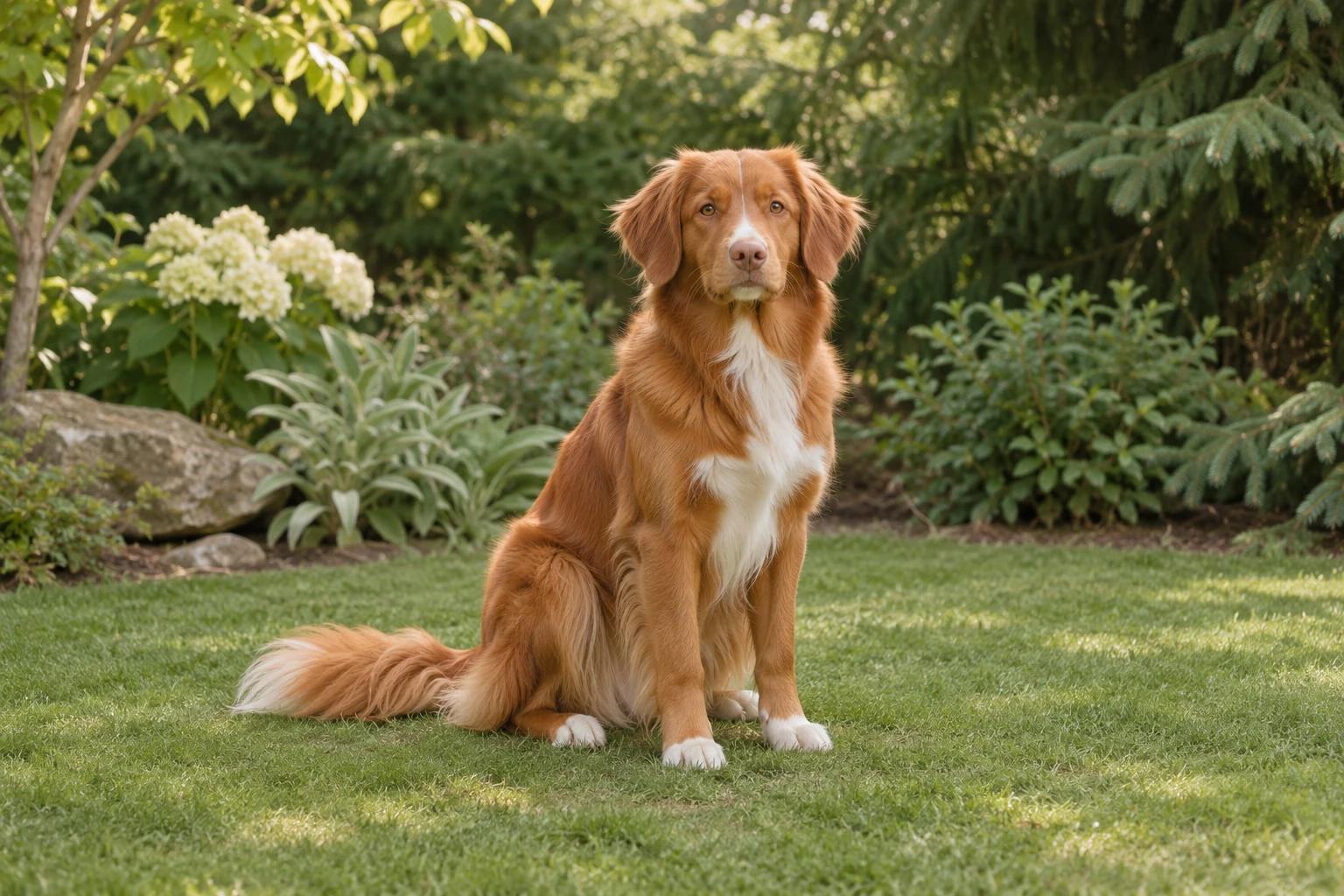
View breed profile →Nova Scotia Duck Tolling Retriever grooming should support the life of an active sporting companion, not turn its coat into a styling project. A workable routine has room for ordinary brushing, checks after outdoor exploration, and more attention when loose coat becomes noticeable. It also includes teaching the dog to participate comfortably, because an excellent brush is not much use if every session becomes a chase around the house.
The Toller breed profile gives once- or twice-weekly brushing as an ordinary starting point. Build from that reference while watching the coat in front of you.
Nova Scotia Duck Tolling Retriever grooming starts with the coat
The breed club's standard describes a medium-length, water-repellent double coat with a soft, dense undercoat and moderate feathering. It anticipates seasonal shedding and calls for a natural appearance. Limited neatening for the show ring is not an instruction to reshape the whole dog. Toller breed standard.
For Nova Scotia Duck Tolling Retriever coat care at home, separate three tasks: noticing what is in the coat, removing loose hair and managing any tangles. They do not all require the same tools or the same amount of time. A quick check after an outing is different from a planned brush-through.
Do not use the polished appearance of a show photograph as your only reference. Ask the current caregiver to show you the ordinary coat between appointments. That gives you a realistic view of what you will actually maintain.
Plan the return from an outing
Before leaving for a muddy walk, put towels and a washable mat near the entrance you will use. Decide where the dog will wait while you remove your own footwear. This small piece of preparation makes it easier to check the coat without dragging wet equipment across the house.
Once home, look over the dog in good light. Pay attention to areas that have brushed against plants and to longer hair where debris may be caught. If you find something you cannot remove gently, stop and ask a groomer or veterinarian for help rather than pulling repeatedly.
Keep a simple distinction between an outdoor check and a full grooming appointment. You may only need to remove visible debris and deal with wet equipment now, with brushing later when the dog is comfortable and you have time. The important thing is not to forget a problem you noticed at the doorway.
A shared household can use a short note: coat checked, towel used, small tangle needs attention. That is more informative than saying the dog is done, which may mean something different to each person.
Learn a technique before collecting tools
If you are learning how to groom a Nova Scotia Duck Tolling Retriever, ask a breed-experienced groomer to demonstrate on your dog. Watch the hand pressure, the size of the area worked and how the coat is checked afterwards. Request an explanation of what the tool should feel like when it is moving comfortably.
ASPCA advises choosing a brush or comb suited to the individual coat and explains that regular brushing can reduce loose hair in the home without stopping normal shedding. ASPCA grooming guidance.
Use that professional demonstration to make a small equipment list. You do not need every product marketed for heavy shedding. Keep the tools clean and inspect them for damage before use. A snagging comb deserves attention before another stroke, not after the dog has learned to avoid it.
For your first sessions, choose one accessible area and a short finish point. A relaxed shoulder brush-through may be enough practice for a dog new to grooming. Build the routine in pieces instead of introducing every tool and handling task on the same afternoon.
Work through the coat deliberately
Use a consistent route so that you do not keep brushing the easy back while forgetting the rest of the dog. Your groomer can help you choose an order appropriate to the coat and the dog's comfort. Note areas where you need a demonstration rather than improvising near sensitive skin.
Avoid making speed the goal. If the dog moves away, pause and assess the position, tool and duration. A nonslip surface, quieter setting or shorter session may be more useful than another person holding the dog more tightly.
Make stopping predictable as well. Put the brush away, release the dog from the grooming area and finish. If you repeatedly restart after the dog believes it is finished, you make the routine harder to understand. Clear beginnings and endings are especially helpful when several people share coat care.
Shedding needs observation, not a countdown
Nova Scotia Duck Tolling Retriever shedding can be more noticeable during coat changes. Learn your dog's pattern rather than predicting an exact start date. You may find extra brief brush-throughs more practical than waiting for the usual session and trying to do everything at once.
Keep expectations realistic about the home. Washable covers, a dedicated car towel and regular cleanup can matter as much as another grooming gadget. If the appearance of loose hair would be unacceptable, consider that before bringing home a double-coated dog.
Do not assume every coat change is ordinary shedding. Bald areas, irritation, persistent scratching or an abrupt unusual change should be discussed with a veterinarian. More brushing is not a diagnosis or a substitute for an examination.
Bathing without improvisation
When a bath is needed, prepare the space and equipment before bringing the dog in. ASPCA's basic guidance includes brushing first, using pet-appropriate shampoo, avoiding direct water in the eyes and ears, rinsing and drying. Ask your veterinarian about products if your dog has a skin concern. Follow product instructions rather than mixing treatments yourself.
Arrange a nonslip footing and have towels within reach. If you need professional help with drying or handling, plan it before you start. Do not assume that a coat associated with water work makes every dog comfortable with a noisy dryer or an unfamiliar bath.
For professional appointments, explain that you want maintenance of a natural Toller coat. Ask what service is proposed and what you should do between visits. Take notes on the tools and methods demonstrated, especially if the dog is moving between caregivers.
Put grooming in the larger care plan
A useful handover includes coat care, handling preferences and anything you want the next caregiver to watch. Keep it separate from assumptions about the breed's personality. Our article on Toller household noise expectations addresses another ownership consideration without replacing individual observations.
If you are still deciding whether this routine fits your life, the dog match quiz can help you consider grooming alongside exercise and learning. The best coat plan is one you can maintain through wet walks, busy weeks and seasonal changes, not just before a photograph.
FAQ
How often should a Toller be brushed?
Once or twice weekly is the My Breed Atlas profile's ordinary starting point. Check the actual coat and add attention when needed, especially around coat changes or after outdoor exploration. Ask an experienced groomer to demonstrate a suitable technique.
Does a Toller need a styled haircut?
The Toller standard calls for a natural appearance rather than extensive shaping. Discuss maintenance and any limited tidying with a breed-experienced groomer. A photograph of a show dog is not a complete grooming plan for your own pet.
Can brushing stop Toller shedding?
No. Brushing removes loose hair but does not stop normal shedding. Learn the individual dog's pattern and plan household cleanup. Ask a veterinarian about bald patches, irritation or an abrupt unusual change instead of simply increasing brushing.
Sources behind this article
Article source checked: November 15, 2026. Source checked 2026-11-15
Keep reading

Affenpinscher Grooming: A Practical Coat-Care Routine
Read article →