Norwich Terrier vs Westie: choosing your small terrier
Compare Norwich Terrier vs Westie for size, coat care, barking, learning and the everyday routines that matter more than appearance.
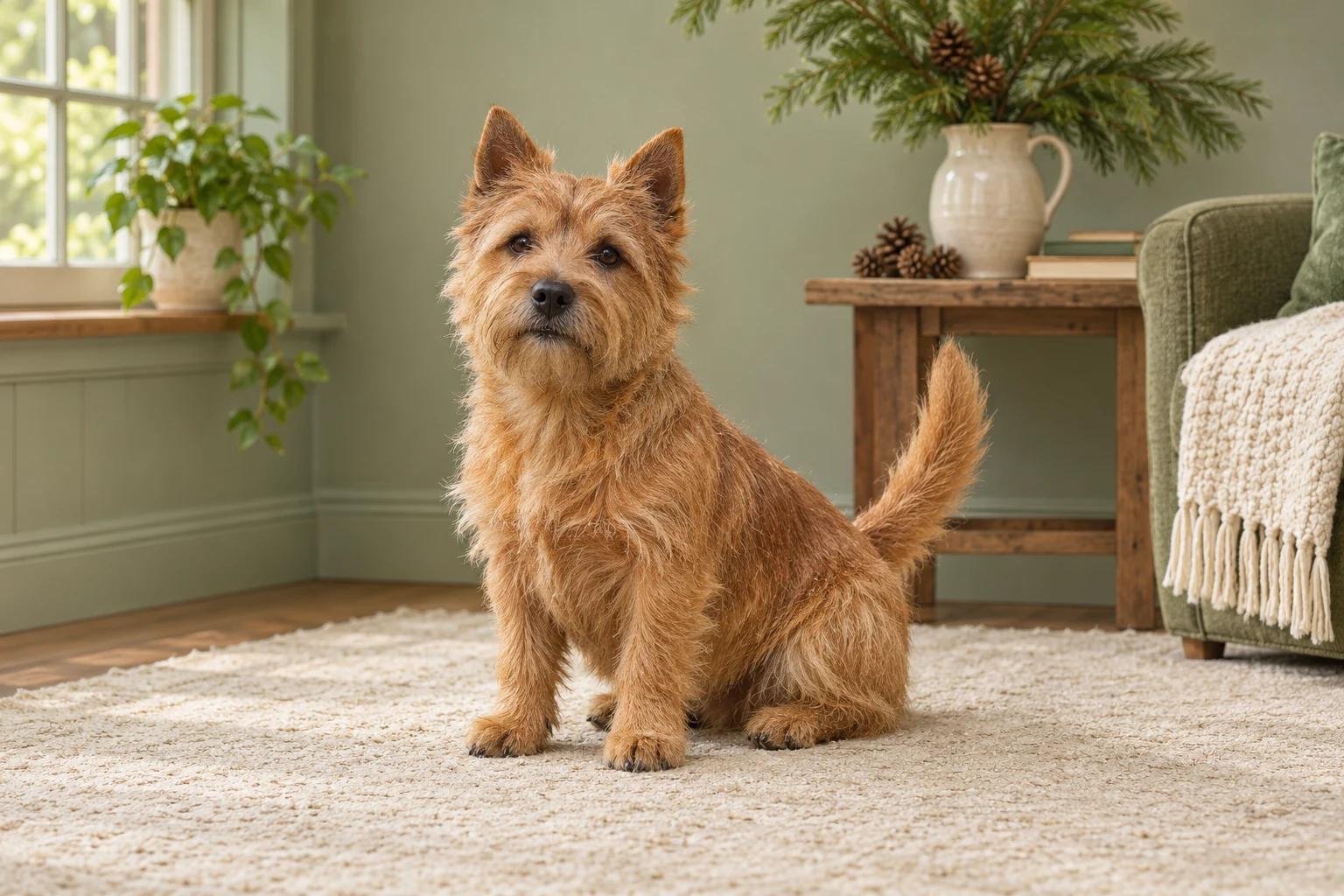
Norwich Terrier vs Westie is a comparison between two small terriers, not between a working-minded dog and a decorative companion. Both deserve walks, learning and an owner who enjoys an active participant in household life. The Norwich offers a particularly compact package; the Westie brings its recognisable white coat and a slightly different grooming commitment. Neither is a shortcut to a quiet, maintenance-free pet.
Read the Norwich Terrier profile and the West Highland White Terrier profile together. Their practical demands overlap enough that the individual dog and your routine may decide the choice.
Norwich Terrier vs Westie at a glance
The Royal Kennel Club describes the Norwich as a compact, strong terrier with an ideal height of 10 inches. Its wiry coat comes in several colours, including red, wheaten, black and tan, and grizzle. Norwich Terrier standard.
My Breed Atlas lists the Westie at 10 inches for females and 11 inches for males. That is not a dramatic difference in shoulder height, so avoid imagining one as a large dog beside the other. Think instead about the actual dog's dimensions, body shape and fit in your home.
The clearest planning contrasts are these:
- Norwich: very compact stature, a coloured wiry coat, and a care plan that should include knowledgeable advice about maintaining that coat.
- Westie: a white double coat, a somewhat more frequent brushing expectation in the breed profile, and a strong reason to plan for vocal responses to everyday activity.
- Both: time for exercise, purposeful learning, secure outdoor arrangements and introductions suited to the individual.
What their character means on a normal day
The UK Norwich Terrier Club emphasises that the breed's small appearance can disguise an active dog that enjoys company and digging. It also notes that boldness and sensitivity may occur together. Norwich Terrier Club.
VCA describes the Westie as busy, watchful and independent, with reward-based games useful for learning. Its overview also highlights exploration and the possibility of following hunting interests rather than returning when called. VCA Westie overview.
In a Westie vs Norwich Terrier decision, those descriptions should lead to questions rather than a personality ranking. Ask each caregiver what the dog does when an activity stops. Does it settle nearby, find another occupation, or need help with the transition? Ask what happens at a garden boundary and how the dog responds to a familiar recall cue outdoors.
If you want a companion for shared projects, these questions can be encouraging rather than discouraging. The important point is that you enjoy teaching and observing, not merely looking at a small terrier on the sofa.
Barking is a housing question
The My Breed Atlas profiles flag vocal tendencies in both breeds, with the Westie rated higher. That is a reason to investigate the Westie's sound triggers carefully, not a promise that every Norwich will be quieter than every Westie.
Picture the actual entrance to your home. Does the dog see every passer-by through glass? Is there a lift opposite the door? Will a dog walker arrive while you are on a work call? A small dog can still make those events significant for neighbours.
When meeting either breed, ask about a recent barking episode: what started it, how long it continued, and what helped. A caregiver who can explain the pattern provides more useful information than one who simply says all terriers bark. Consider whether you can alter the setup, such as moving a bed away from the front window, before deciding that training alone will solve everything.
Coat care beyond the colour you prefer
The difference between Norwich Terrier and Westie coat care is not simply brown hair versus white hair on furniture. The Norwich club discusses hand-stripping as part of maintaining its wiry coat. VCA describes regular combing and shaping for the Westie. Neither description means a pet owner should attempt an unfamiliar grooming technique without instruction.
Ask a groomer who knows the breed to explain the options for the actual dog. Discuss coat texture, comfort, your ability to brush between visits, and the appointment schedule you can sustain. Do this before choosing a puppy on the assumption that a short-looking coat requires almost no attention.
For a practical comparison, request a demonstration rather than just a price. Watch how the caregiver works around the face, body and legs and how the dog responds to being handled. Your willingness to maintain that routine is more relevant than whether you prefer a freshly styled photograph.
Outdoor space and the terrier household
A garden can make toilet trips convenient, but it is not an automatic exercise programme. For either breed, inspect boundaries at the dog's level and consider what happens when visitors open the gate. A fenced area is useful only when its entrances and gaps are managed.
Decide where outdoor exploration is welcome. If you value immaculate beds of seedlings, plan separation rather than hoping the dog will infer which patches of soil are off limits. An owner who enjoys some supervised outdoor mess may find this easier than someone whose entire garden is delicate planting.
Discuss other pets specifically. Do not translate a generally sociable description into permission for unrestricted contact with small animals or unfamiliar dogs. Household introductions require information about the individual, controlled arrangements and the ability to separate animals when needed.
Choosing between the two
If you are asking whether to choose a Norwich Terrier or Westie, first identify a genuine non-negotiable. Perhaps you need a very small adult frame, can commit to a particular grooming arrangement, or live somewhere that makes barking unusually difficult. Then ask which individual dog has the strongest evidence of fitting those conditions.
Meet adults if possible. See them before and after an outing rather than only during the excitement of a first greeting. For a puppy, ask about the parents' everyday behaviour and the experiences already introduced. A breed comparison can prepare you, but it cannot substitute for those details.
Appearance deserves its own careful reading. Our article on Norwich Terrier ears at attention and rest explores one separate visual detail without turning a photograph into a complete assessment. Use the dog match quiz to test your expectations about daily life, not to declare a winner between two appealing faces.
FAQ
Is a Norwich Terrier smaller than a Westie?
Norwich Terriers are especially compact, with an ideal height of about 10 inches. The Westie profile lists about 10 to 11 inches depending on sex. Meet and measure the actual adult when dimensions matter; a breed label is not an equipment size.
Which breed needs less grooming?
The My Breed Atlas profile gives the Norwich a lower routine grooming-frequency rating, but its wiry coat still needs an informed care plan. Westies also need regular coat maintenance. Ask a breed-experienced groomer to explain the work between appointments for each.
Is the Norwich automatically the quieter choice?
No. The profiles indicate a stronger vocal tendency for Westies, but individual barking patterns matter. Ask about triggers and settling, and assess your building's sounds and sightlines before choosing either breed.
Sources behind this article
- Norwich Terrier Club UK: Is a Norwich the Right Dog for You? ↗
- Royal Kennel Club: Norwich Terrier Standard ↗
- VCA Animal Hospitals: West Highland White Terrier ↗
Article source checked: November 15, 2026. Source checked 2026-11-15
Keep reading

Affenpinscher vs Brussels Griffon: Everyday Differences
Read article →