Norwich Terrier size: height, weight and practical fit
Understand Norwich Terrier size, the 10-inch and 12-pound reference points, measuring for equipment and assessing the individual adult.
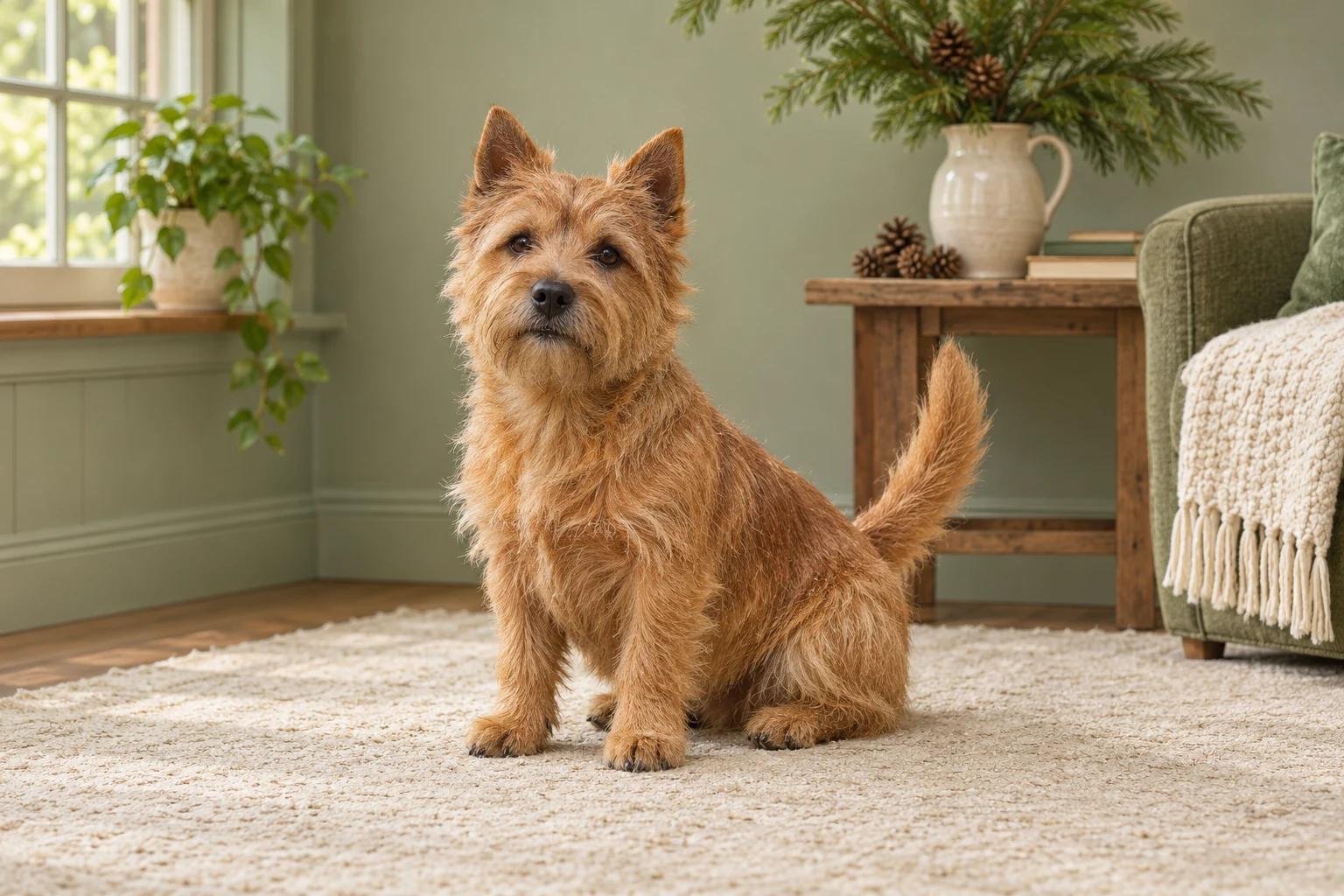
Norwich Terrier size is small enough to make the breed appealing to people with limited space, but the useful reference is a compact working terrier, not a miniature ornament. The familiar figures are about 10 inches at the shoulder and approximately 12 pounds. Those numbers help you picture an adult; they do not tell you which harness to buy, how much food to serve, or what a particular puppy will weigh.
The Norwich Terrier breed profile brings size together with activity, coat care and household considerations. Use the measurements alongside that wider picture rather than choosing a dog by weight alone.
Norwich Terrier size: what the standards actually say
The AKC standard gives an ideal height not exceeding 10 inches at the withers and an approximate weight of 12 pounds. It also relates weight to the dog's structure and balance. The Royal Kennel Club gives an ideal height of 25 centimetres, or 10 inches, and explicitly notes that actual dogs may differ from standard measurements. AKC standard, Royal Kennel Club standard.
For household planning, the live Norwich Terrier profile lists 10 inches at the shoulder and 11–12 pounds as adult references. The standard’s approximate 12-pound figure sits at the upper end of that profile range. A standard describes the breed's ideal, not a mandatory reading on your dog's veterinary record.
Keep the two measures separate. Norwich Terrier height describes how tall the dog stands at the shoulder. Norwich Terrier weight describes mass. Two dogs of similar height can differ in build, so one number cannot reliably replace the other.
A small frame with real substance
The breed standards describe a compact, strong dog with good bone. That is why a Norwich can look different from another small dog of comparable height. A fluffy photograph can also hide the body beneath the coat, making visual comparisons unreliable.
When someone asks how big do Norwich Terriers get, an adult meeting is often more informative than another puppy picture. Watch the dog move through an ordinary room, stand beside familiar objects and rest on a bed. You will get a better sense of its physical presence without reducing it to a number.
Do not use the word sturdy as permission for rough handling. A Norwich remains a small dog. Everyone in the household should know how to give it space around doors, chairs and feet, and children should be supervised rather than expected to judge handling from a breed description.
Measure for equipment, not for a label
A product marked small may be made for a very different body shape. Before buying a harness, follow that manufacturer's instructions for chest and neck measurements. Ask a knowledgeable fitter to check the result on the dog if you are unsure, especially when a puppy is growing.
Record measurements with the date and the product name. This prevents an old note becoming a permanent assumption. Recheck the fit after adjustments, after coat changes, and as the dog develops. An adjustable item still needs someone to notice that adjustment is necessary.
A bed also needs more than a weight limit. Observe whether your Norwich stretches on its side or curls tightly. Measure the available sleeping area rather than the outside edge of a thick bolster. The most attractive bed in a photograph may have surprisingly little usable space.
For a travel crate or carrier, follow the maker's and transport provider's current requirements and assess the dog's ability to stand, turn and rest comfortably. Do not assume that a small breed automatically meets an airline's cabin rules. Those rules and the individual dog's dimensions must be checked for the actual journey.
Think about the route through your home
Small size can reduce the amount of floor space occupied by equipment, but it does not eliminate planning. Identify where a bed can sit without becoming part of a busy walkway. Consider whether an excited arrival at the front door would put the dog beneath several people's feet.
Take a look at garden gates and barriers from close to floor level. The relevant question is not whether a human can pass through a gap. It is whether your particular dog can get through or work around it. Use secure physical arrangements rather than trusting a short training history beside an open exit.
If carrying a dog is important to your plans, consider the whole task. Can the person doing the carrying manage the dog and necessary equipment comfortably? Is the route crowded? Has the dog learned to tolerate being lifted? A weight figure alone does not answer those questions.
An upstairs flat also requires thinking beyond whether the dog fits on the sofa. Outdoor access, daily outings, barking and care during work hours still matter. A Norwich's compact dimensions are a convenience in some situations, not an exemption from an active dog's routine.
Puppy growth is not a shopping guarantee
Ask a breeder for the puppy's actual records and information about the adults in its family. Such information can help set expectations, but avoid treating a single early weight as a guaranteed adult forecast. Photographs of siblings at different ages are particularly poor substitutes for dated measurements.
Buy initial equipment with room for sensible adjustment, not with the expectation that it must last forever. Put a fit-check reminder into your normal care routine. If something starts rubbing, slipping or restricting comfortable movement, stop using it and get appropriate advice rather than waiting for the next planned purchase.
For questions about growth, body condition or a change in weight, consult your veterinarian. Do not try to force a dog toward the standard's approximate figure by changing food on your own. The important assessment is the individual dog's condition and development, not closeness to a breed-page number.
Keep size in its proper place when choosing
A useful shortlist might include the dog's measured dimensions, the space available for rest, and the practical carrying or travel requirements you actually have. Alongside those, write down the time available for walks, teaching and coat care. The second list can be more demanding than the first for a lively small terrier.
Visual details are interesting but answer different questions. The article about Norwich Terrier ears at attention and rest explains one such detail; it does not replace records or an adult assessment. Use the dog match quiz to compare your routine with the broader ownership commitment.
FAQ
What is the usual adult Norwich Terrier weight?
Approximately 12 pounds, or about 5.4 kilograms, is the AKC standard's reference. It is not a target that every dog must reach. Ask a veterinarian to assess the individual dog's body condition and any concerning change in weight.
How tall is a Norwich Terrier?
About 10 inches, or 25 centimetres, at the shoulder is the breed reference. Shoulder height is not measured to the top of the head. Individual adults may differ from the ideal stated in a breed standard.
Does a Norwich Terrier fit in any small dog carrier?
No. Carrier dimensions, the individual dog's measurements and the intended use all matter. Check the maker's guidance and assess comfortable standing, turning and resting rather than relying only on a small-breed label or weight limit.
Sources behind this article
- American Kennel Club: Official Norwich Terrier Standard ↗
- Royal Kennel Club: Norwich Terrier Standard ↗
Article source checked: November 15, 2026. Source checked 2026-11-15
Keep reading

Airedale Terrier Temperament: What Everyday Life Can Feel Like
Read article →