Norwegian Lundehund temperament: life with a curious dog
Explore Norwegian Lundehund temperament, visitor routines, independence, barking and the questions to ask before bringing one home.
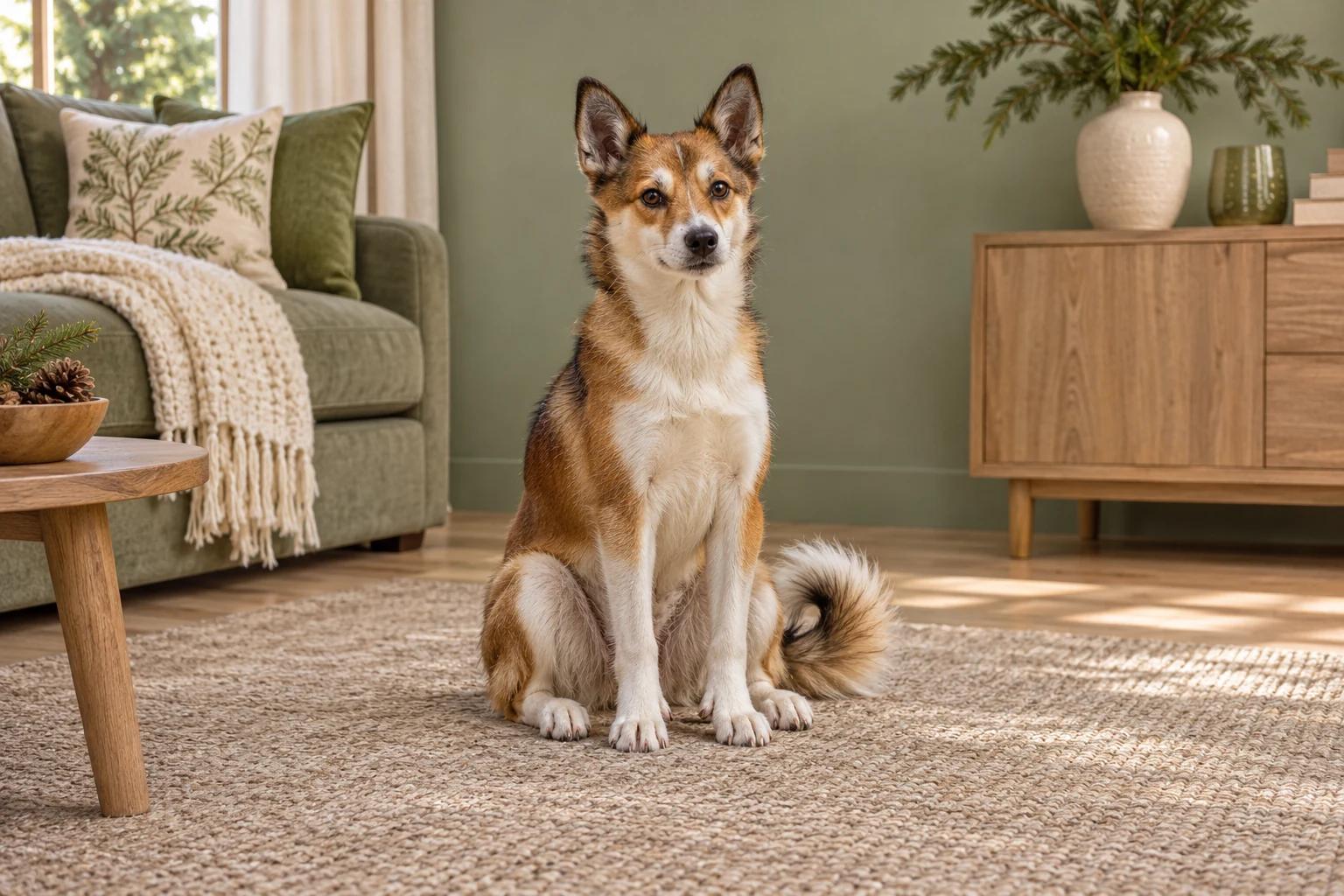
Norwegian Lundehund temperament is best understood through ordinary moments: who the dog follows, what catches its attention, and how it responds when someone new enters the room. This small Norwegian spitz can be an engaging companion without being an indiscriminate greeter. For a prospective owner, the important question is not whether the breed sounds charming. It is whether you enjoy living with a watchful, curious dog whose cooperation deserves thoughtful teaching.
Start with the Norwegian Lundehund breed profile for the wider care picture. Then look at the daily situations below with your own home in mind.
Norwegian Lundehund temperament beyond the first impression
The official AKC standard describes an alert dog that need not be outgoing toward strangers. The Norwegian Kennel Club adds a useful balance: curiosity and willingness to learn can coexist with a mind of the dog's own. These are tendencies, not a personality script for every puppy. AKC breed standard, Norwegian Kennel Club.
That combination matters when you meet one. A Lundehund that watches a visitor from beside its owner has not necessarily failed a friendliness test. Nor does a puppy running straight toward you establish how it will respond to crowded sidewalks as an adult. Look for the pattern across a visit rather than one photogenic reaction.
Ask the caregiver to describe a recent ordinary day. What happened when a delivery arrived? Where did the dog rest while dinner was prepared? Which outing was enjoyable, and which needed extra space? Concrete answers reveal more than labels such as sweet, stubborn or lively.
Company without a constant performance
VCA describes Lundehunds as playful and strongly attached to familiar people. That gives a more useful starting point than expecting equal enthusiasm for everyone. VCA breed overview.
For your household, draw up two kinds of shared time. One is active participation: a walk, a toy game, or a small teaching session. The other is quiet companionship while you read or work. Include both from the beginning rather than making every interaction an invitation to play.
Imagine a home office beside a busy front window. A bed next to your desk may offer company, while a bed overlooking the pavement may create a full-time observation post. Try the quieter position first. You are not trying to change Norwegian Lundehund personality by rearranging furniture. You are deciding which part of the environment receives most of the dog's attention.
Workdays deserve the same practical approach. Ask what time apart the individual already manages, who will provide care, and how transitions will work. Affection is not evidence that a dog can never be alone, and a quiet first afternoon is not proof that an entire workweek will be easy.
Visitors should not be a greeting examination
Give guests a simple plan before they arrive: come in, sit down, and let the dog decide whether to approach. Keep a resting area available away from the doorway. Avoid arranging a semicircle of people waiting to touch the new arrival.
For example, a first visit from one calm friend can happen while another household member handles the door. That separates two challenges: the noise of arrival and the unfamiliar person. Later you can assess whether the same arrangement works with another visitor. There is no prize for moving immediately to a busy party.
If your ideal dog must enjoy being passed between strangers at every gathering, take that preference seriously when assessing this breed. A Lundehund can be involved in your life without serving as the welcoming committee. Discuss persistent fear or escalating reactions with a qualified reward-based trainer rather than trying to force sociability.
Alertness and the sounds of home
The My Breed Atlas profile identifies a meaningful vocal tendency. Plan for barking rather than relying on small size to make it unobtrusive. In an apartment, the relevant questions include hallway traffic, windows, shared entrances and the timing of your own arrivals.
Keep a short sound diary during the settling-in period. Record the event, where the dog was, and what happened next. A response to footsteps outside the door calls for a different household arrangement from barking during an exciting toy game. Describing both simply as noisy hides the useful detail.
One practical goal is an alternative routine after an everyday sound. You might teach a comfortable resting spot away from the entrance and practise moving there when nothing exciting is happening. That gives you something clear to request later. Do not expect a cue introduced during a delivery commotion to already mean anything.
Curious does not mean endlessly demanding
Norwegian Lundehund characteristics should inform your plans without turning the day into an entertainment timetable. Choose activities you can repeat on a normal Tuesday. A walk with time to investigate, a brief indoor game, and time to rest make more sense than elaborate weekend adventures followed by several empty days.
Try offering a choice between two familiar toys and noticing what the dog does with each. Does one encourage shared play, while the other is carried to a bed? Those observations can shape your interactions. They are more actionable than deciding that all Lundehunds must enjoy a particular sport.
An independent response is also useful information. If the dog leaves a teaching session, consider the setting, the clarity of the task and whether you have continued too long. Treating every hesitation as defiance makes ordinary learning harder than it needs to be.
Questions that reveal the individual
When discussing Norwegian Lundehund behavior with a breeder or caregiver, ask for examples across settings. Find out how the dog responds to unfamiliar dogs, handling, changes in routine and new places. If children or other animals live with you, discuss those specific circumstances and plan supervised introductions and separate resting spaces.
You can also ask to watch a normal care interaction. The related article on Lundehund front and hind feet explains a separate aspect of the breed's care; unusual anatomy should not become a temperament test or a party trick.
Before committing, compare your routine with the dog match quiz. Use it to identify questions, then confirm the answers through the actual dog and the people who know it.
FAQ
Are Norwegian Lundehunds friendly with strangers?
Norwegian Lundehunds may be reserved with unfamiliar people. The breed standard does not require an outgoing greeting. Give an individual dog room to approach at its own pace rather than measuring friendliness by immediate physical contact.
Does an independent Lundehund still enjoy training?
Independence and interest in learning can coexist. Short, clearly explained tasks give an owner opportunities to discover what engages the dog. Assess progress through small useful skills, not through comparisons with another breed's performance.
Is a Lundehund quiet enough for an apartment?
Apartment fit depends partly on the dog's barking patterns and the building's layout. Hallway sounds, window views and access to quiet resting space deserve attention. Meet the individual, ask about its current routine, and have a realistic management plan.
Sources behind this article
- American Kennel Club: Official Norwegian Lundehund Standard ↗
- Norwegian Kennel Club: Norsk Lundehund ↗
- VCA Animal Hospitals: Norwegian Lundehund ↗
Article source checked: November 15, 2026. Source checked 2026-11-15
Keep reading

Airedale Terrier Temperament: What Everyday Life Can Feel Like
Read article →