Norwegian Elkhound vs Akita: Key Ownership Differences
Compare Norwegian Elkhound vs Akita for size, visitors, other dogs, noise and daily care, with practical questions for choosing an individual.
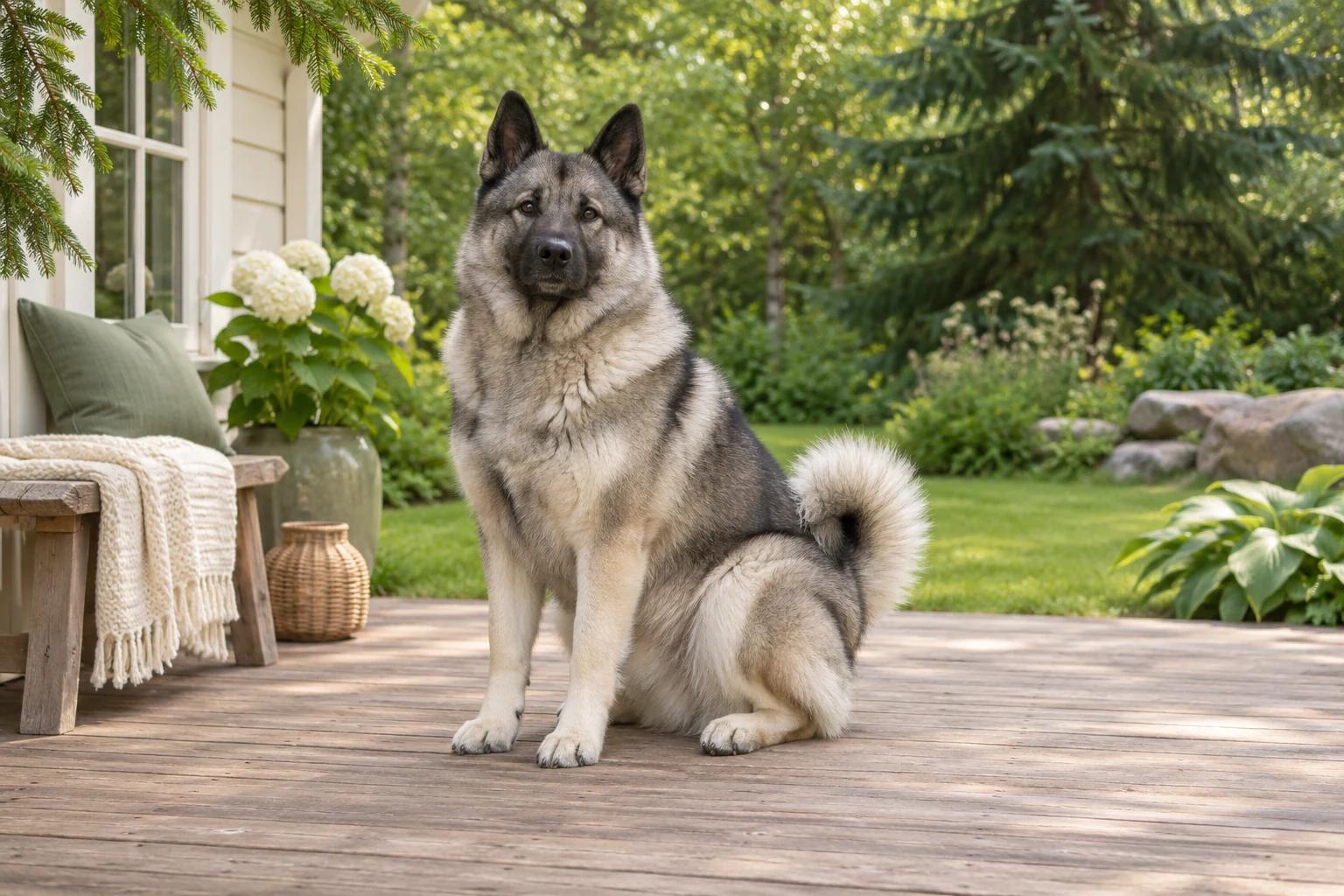
Norwegian Elkhound vs Akita is not simply a comparison of two curled tails and dense coats. The Akita brings substantially more physical presence, while differences in social expectations deserve at least as much attention as size. Before choosing, picture the dog at your doorway, on a narrow pavement and alongside any animals already in your home.
Here, Akita means the breed represented by the AKC Akita and the My Breed Atlas Akita profile, not a combined description of every breed carrying an Akita-related name. The Norwegian Elkhound profile gives the other side of the comparison.
Norwegian Elkhound vs Akita: start with handling
The Akita standard describes a large, powerful dog with substantial bone. The Elkhound's breed association describes a medium-sized, balanced dog. These are different practical handling commitments even when both dogs have learned good manners. Akita Club of America standard, Norwegian Elkhound Association of America
Think beyond the normal walk. Who can manage the dog if the usual walker is ill? How will it enter the car? Is there space to pass comfortably through the hallway while someone carries shopping? Could your backup caregiver handle the actual adult rather than just the puppy you first meet?
The Elkhound's smaller frame should not be mistaken for a negligible commitment. Check equipment fit and practice handling with either breed. The difference is the margin you have when something unexpected happens, not whether one dog deserves training and the other does not.
Before buying transport equipment, measure the individual dog and your vehicle. A picture of an Akita beside a person, or an Elkhound sitting in a garden, is not a reliable fitting guide.
Other dogs may decide the question early
The Akita standard explicitly notes possible intolerance of other dogs, particularly those of the same sex. This deserves serious discussion before adding an Akita to a multi-dog home or planning a lifestyle built around casual group play. Akita Club of America standard
Ask the caregiver about real encounters, current household arrangements and any management already in place. If you already own a dog, involve an appropriate professional in deciding how to assess compatibility. Do not arrange a pressured greeting and regard the absence of immediate trouble as a full answer.
An Elkhound is not an automatic solution to every multi-dog situation either. Ask the same history questions and plan considered introductions. The meaningful comparison is that the Akita's breed-specific caution should carry extra weight in your decision, not that the Elkhound comes with a social guarantee.
If your non-negotiable goal is easy participation in busy dog parks or unpredictable visiting-dog gatherings, reconsider whether an Akita fits that expectation. Choosing a dog does not oblige the dog to enjoy the social lifestyle you imagined.
Visitors: friendliness and reserve require different plans
AKC describes the Elkhound as dignified but friendly. The Akita Club of America describes an independent breed that can be aloof with strangers and emphasizes respecting the dog's space. AKC Elkhound profile, Akita Club of America
For a household with frequent visitors, compare the likely work at the door. Can visitors follow instructions rather than immediately reaching over the dog? Is there a comfortable place for the dog to be when the household is busy? Do you want a dog to join every gathering, or are you happy arranging separate quiet space?
Meet adults and ask to see how greetings progress after the first minute. A reserved dog does not need to become everyone's friend for a visit to be successful. A friendly dog still needs guidance around jumping, crowding and excitement. In either case, the aim is a manageable interaction, not a performance for guests.
Families with children need adult supervision and a dog retreat that is respected. Neither a loyal reputation nor an affectionate moment establishes child safety.
A quieter dog is not automatically an easier dog
The live profiles flag more vocal tendency for the Elkhound and less for the Akita. The Akita club also describes the breed as generally quiet. Treat that as one difference to investigate, not a reason to dismiss the other demands. Akita Club of America
Ask about the particular sounds and situations you would live with: arrivals, passing animals, play and time alone. An Akita vs Norwegian Elkhound decision based only on barking could overlook handling and social-management needs that matter more in your home.
Conversely, if noise is a strict constraint, be candid about it. You need a realistic picture of the individual dog's patterns and your building, not reassurance that enough training will make the issue disappear.
Compare the whole care routine
Both profiles describe double coats. Include grooming space, household cleaning and time for handling in your plan. Ask each caregiver to demonstrate the coat routine instead of assuming that a tidy outline means little work.
For activity, avoid choosing either dog as a way to avoid daily engagement. Ask what the adult currently does, which activities it enjoys and how it settles afterward. A walk route that works beautifully for one dog may be unsuitable for another because of crowding, surfaces or frequent close encounters.
Give learning the same practical treatment. Can you make time for short, consistent lessons? Will all caregivers follow the same rules at doors and around food or resting places? These arrangements matter more than arguing over which breed is more intelligent.
Make a choice you can support on an inconvenient day
The difference between Norwegian Elkhound and Akita should be tested against your resources. List the routines you can maintain, the help available and any limits you cannot change. Then compare those with evidence about the actual dogs under consideration.
If you prefer the Elkhound's smaller scale and more outwardly friendly description, investigate individuals rather than assuming the decision is finished. If you are drawn to an Akita's reserve and presence, make sure you also accept the handling and social responsibilities that come with the choice.
The dog match quiz can help organize those priorities. For an appearance question separate from this ownership decision, see the explanation of the Elkhound's harness marking. Choose a Norwegian Elkhound or Akita for a sustainable daily partnership, not a striking outline alone.
FAQ
Which breed is larger?
The Akita is substantially larger and more heavily built than the Norwegian Elkhound. Meet adults and measure the actual dog for equipment. Consider backup handling, vehicle access and space as well as ordinary walking.
Is an Elkhound more likely to suit a multi-dog household?
The Akita standard carries a specific caution about other-dog intolerance, especially with the same sex. That makes careful assessment particularly important. An Elkhound still needs individual compatibility checks and appropriate introductions.
Which breed is quieter?
The reference profiles describe lower vocal tendency for the Akita. Individual patterns still matter, and quietness does not determine overall ease of ownership. Ask about specific triggers and evaluate handling, social expectations and care together.
Is either breed automatically suitable for children?
No breed description establishes that an individual dog is safe with children. Consider the dog's history, the household setup and adult supervision. Provide an undisturbed resting area and clear rules for interactions.
Sources behind this article
- American Kennel Club: Norwegian Elkhound ↗
- Norwegian Elkhound Association of America: About Elkhounds ↗
- Akita Club of America: AKC Akita Standard ↗
- Akita Club of America: Meet the Akita ↗
Article source checked: November 15, 2026. Source checked 2026-11-15
Keep reading

Affenpinscher vs Brussels Griffon: Everyday Differences
Read article →