Norwegian Elkhound Temperament: A Confident Companion
Explore Norwegian Elkhound temperament, independence, sociability and watchfulness through the questions that matter in everyday ownership.
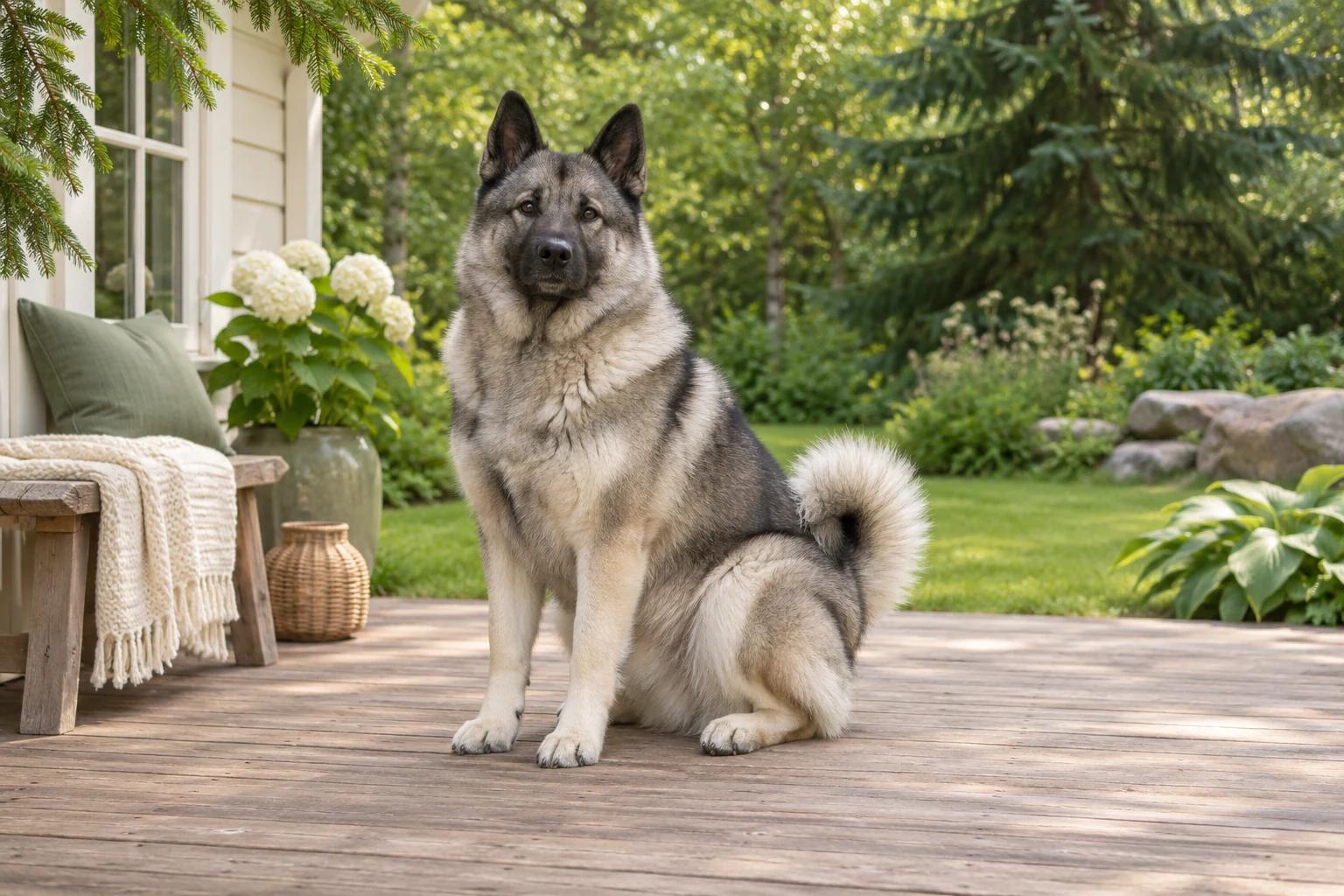
Norwegian Elkhound temperament can appeal to someone who wants a friendly companion with its own interests. This is not a contradiction. A dog can enjoy your company and still find a scent, sound or event outside worth investigating before it turns back to you. Understanding that combination helps you plan a partnership rather than expecting either constant obedience or complete self-sufficiency.
The breed's appearance may draw you in, but temperament is what you live with during ordinary decisions. How does the dog share space, respond to visitors, recover from excitement and cooperate when your plans differ from its own?
Norwegian Elkhound temperament: friendly is not passive
AKC describes the Elkhound's manner as dignified but friendly. The FCI standard describes courage and energy. These are compatible qualities: sociability does not mean a dog has little to notice or no opinions about what happens next. AKC breed profile, FCI standard
When meeting an adult, observe how it approaches and what it does after the introduction. Does it choose to remain nearby, investigate the room or return to its caregiver? Ask which parts are familiar behavior and which might reflect the novelty of your visit.
A dog that accepts your attention for a moment has not demonstrated everything about its personality. Likewise, an individual that pauses before approaching is not necessarily failing to match its breed description. Gather examples across situations instead of trying to score the dog from one greeting.
Independence changes the way you cooperate
The Norwegian Elkhound Association of America describes an independent hunting dog and emphasizes training as an ongoing part of life. That is a useful ownership distinction: you are maintaining communication, not installing a finished set of commands once and expecting no further work. Norwegian Elkhound Association of America
For example, suppose your dog pauses at an interesting patch of ground when you need to move on. The practical question is whether you have taught a clear transition and made responding worthwhile. Repeating the same word more loudly does not explain what you want any better.
Agree on a few useful household skills and practice them in easy settings: returning to you, moving away from a doorway, waiting while equipment is adjusted and going to a resting place. The aim is cooperation that works in your actual home, not an impressive list of cues nobody uses.
If you enjoy a dog that participates but does not seem mechanically compliant, this part of the Norwegian Elkhound personality may be attractive. If every delayed response would feel like a personal challenge, consider whether the relationship would frustrate you.
Watchfulness needs a job description at home
The Norwegian Elkhound profile highlights watchfulness and a meaningful vocal tendency. Plan for the dog noticing activity. Do not assume that a friendly manner will prevent barking at something outside or that watchfulness must be encouraged into a guarding role.
Choose what you want to happen after the dog notices something. Perhaps you look, call it away and continue a familiar activity. Perhaps a curtain or a different resting spot reduces repeated attention to a busy pavement. Those choices are easier to make before a pattern becomes the soundtrack to your working day.
Ask the caregiver about distinct situations: strangers approaching the home, familiar visitors, passing dogs and ordinary household sounds. Also ask how quickly the dog returns to what it was doing. The response and the recovery together give a fuller picture than a simple “barks” or “doesn't bark.”
A quiet moment in a kennel visit does not establish a quiet home, and one excited episode does not describe the whole dog. Seek the routine behind the example.
A confident dog still needs an understandable day
Confidence is not a reason to leave every transition unplanned. Moving to a new home changes the people, sounds, resting places and timing a dog recognizes. Ask what routine it currently follows, then use that information to make the first days less confusing.
Decide where food is prepared, where walking gear is kept and where the dog can rest undisturbed. Give everyone in the home the same basic plan. You are not trying to control every movement; you are removing avoidable uncertainty from frequent events.
The Norwegian Elkhound characteristics that interest many owners, such as confidence and engagement, can be easier to appreciate when the household is organized. There is more room to enjoy exploration and play when the practical routines are not renegotiated at every doorway.
Do not assume confidence predicts comfort alone. Ask about previous experience with absences and arrange daytime support where needed. A dog that enjoys visitors and walks may still need gradual adjustment to a different pattern of departures.
Sociability must be assessed one relationship at a time
Friendly breed descriptions are not compatibility certificates. For a home with another dog, request a specific social history and discuss suitable introductions. For cats or smaller animals, ask what the individual has actually lived with rather than treating a vague “fine with pets” as enough information.
With children, adults should manage supervision, handling and access to the dog's resting place. Teach the household to recognize when an interaction should end and make it easy for the dog to move away. The expectation is respectful coexistence, not that the dog accepts every approach.
If you are adopting an adult, ask for examples of successful arrangements as well as difficulties. A caregiver who can explain the dog's limits gives you information you can use. An answer that every situation is fine offers less help in designing the home.
Choose questions that reveal a real routine
Before a visit, write down what you need to know about Norwegian Elkhound behavior in your circumstances. A useful short list might include:
- What does the dog do when an outing ends?
- How does it respond when someone new enters the home?
- Which distractions make cooperation harder?
- How does it spend a quiet afternoon?
- What has helped with previous training challenges?
- What changed when its routine last changed?
Listen for descriptions, not just adjectives. “It rests beside the desk after its usual morning outing” tells you more than “it is easy.” You can then ask what that outing and settling routine involve.
The dog match quiz can help you identify priorities before meeting dogs. For a separate appearance detail, the harness marking article explains the name of a coat pattern. Neither that pattern nor a particularly appealing photograph tells you how an individual will fit your day.
FAQ
Is a Norwegian Elkhound stubborn?
Independent behavior is a more useful starting point than a label. Examine what the dog understands, what is distracting it and how a response has been taught. A qualified reward-based trainer can help when cooperation is difficult.
Does a friendly Elkhound welcome every stranger?
No breed description predicts every greeting. Give the individual space and ask about its history with visitors. Friendly dogs still benefit from clear routines, and nobody needs to force contact for an introduction to count as successful.
Can an Elkhound be both affectionate and independent?
Yes. Enjoying human company does not mean responding instantly in every situation or seeking constant touch. Learn how the individual prefers to share time and build practical communication around those preferences.
What if my dog's temperament seems to change suddenly?
Discuss a sudden or unexplained behavioral change with your veterinarian. Record what changed and when rather than assuming it is simply a breed trait. Professional assessment can guide the next step for the individual dog.
Sources behind this article
- American Kennel Club: Norwegian Elkhound ↗
- FCI: Norwegian Elkhound Grey Standard No. 242 ↗
- Norwegian Elkhound Association of America: About Elkhounds ↗
Article source checked: November 15, 2026. Source checked 2026-11-15
Keep reading

Airedale Terrier Temperament: What Everyday Life Can Feel Like
Read article →