Norwegian Elkhound Exercise Needs: Build a Daily Plan
Plan Norwegian Elkhound exercise needs around regular walks, exploration, learning and recovery, adapting the routine to your individual dog.
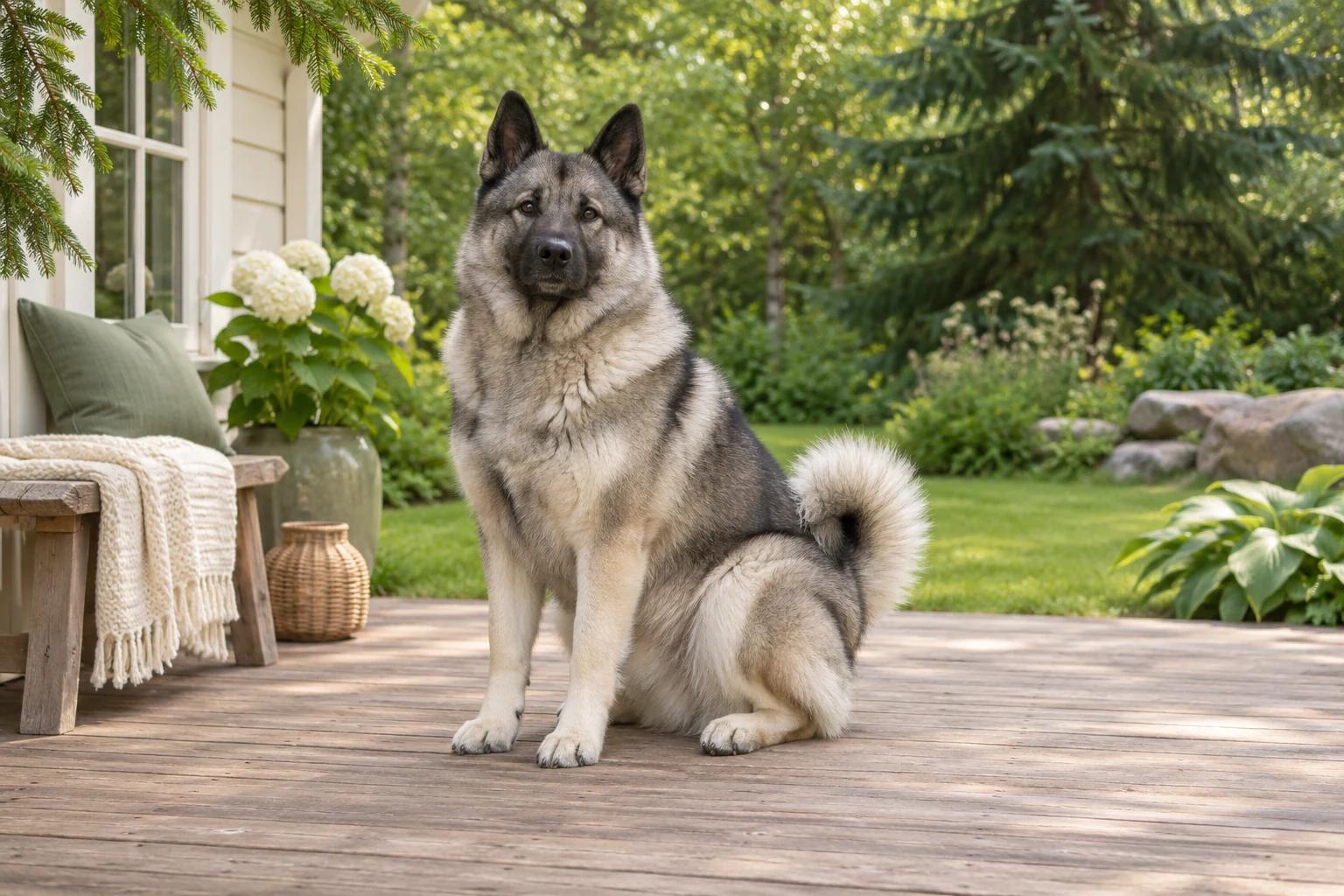
Norwegian Elkhound exercise needs call for a regular place in your day, not a long outing whenever the calendar happens to allow one. This is an energetic hunting breed, and an enjoyable routine should give it opportunities to move, investigate and use its attention. The goal is not to produce an exhausted dog. It is to build a pattern you can sustain and adjust.
If you are asking how much exercise does a Norwegian Elkhound need, begin with the individual dog's age, condition and current routine. A breed description helps you plan; it does not prescribe the same workload for every puppy, adult or senior.
Norwegian Elkhound exercise needs: consistency first
The Norwegian Elkhound Association of America emphasizes daily exercise and suggests two outings of roughly 20–30 minutes as general guidance. That is a starting reference, not a universal ceiling, a puppy program or proof that a particular dog has had enough. Discuss an appropriate plan with your veterinarian. Norwegian Elkhound Association of America
For your schedule, divide the problem into opportunities rather than a single total. When can the dog move before the household becomes busy? Who covers daytime needs? What can happen in the evening without depending on everyone finishing work early?
A repeatable plan usually tells you more than an ambitious weekend target. If your weekday arrangements are uncertain, adding a longer Sunday trip does not answer who will provide Tuesday's outing.
What an Elkhound brings to a walk
AKC's breed feature describes the Elkhound's history of tracking independently and working with stamina over rugged ground. In a companion routine, that background is a useful reason to make room for investigation rather than measuring success only in distance covered. AKC Elkhound facts
A Norwegian Elkhound daily walk can contain different sections. You might move together through a narrow pavement, allow a pause at an appropriate sniffing spot and practice a familiar check-in before crossing to the next area. This makes the walk a shared activity without turning every step into a formal lesson.
Choose the route according to what you can manage that day. If you have only a straightforward window of time, a familiar loop may work better than a new trail with uncertain footing and distractions. Save exploration for an outing where you have room to respond to what you find.
Use secure equipment and follow local access requirements. Do not treat a breed's outdoor heritage as evidence that the individual can safely roam without boundaries.
Build a menu, not an endurance contest
Your weekly activity menu can include several kinds of engagement:
- A familiar walking route that is easy to repeat.
- A less hurried outing with appropriate opportunities to investigate.
- Brief practice of useful skills during ordinary transitions.
- A suitable game or structured activity you both enjoy.
- Quiet recovery between active periods.
These are categories to organize your day, not five tasks that must all happen at every outing. Pick combinations that suit the dog's present abilities and your surroundings.
For example, a morning outing might be mainly steady movement with a few sniffing pauses. Later, you could spend a short period learning a new task at home. Another day, an unfamiliar but manageable route might supply the interesting part of the routine without adding a longer training session afterward.
Keep a distinction between an activity you enjoy imagining and one the dog actually enjoys doing. If the dog shows little interest in a game, there is no need to make that game the center of the plan simply because another Elkhound loves it.
Give the nose a separate project
Scent work offers a structured activity in which a dog searches for an odor and communicates a find to its handler. AKC's introductory guide explains the sport and points to classes and other learning resources. AKC Scent Work introduction
For an owner interested in trying it, a beginner class can turn “my dog likes sniffing” into a project you learn together. Ask how the instructor introduces the work, handles waiting dogs and adapts tasks to beginners. You do not need to commit to competition before deciding whether the activity suits you.
Do not equate a mental task with a fixed number of walking minutes. Searching, movement and rest are different parts of a day. Use the activity to add variety, not as an arithmetic substitute for every outing.
You can also keep records of what the dog finds engaging. Note whether it stayed interested, whether the setup was manageable and whether you enjoyed repeating it. Those observations are more useful than calling every new toy “enrichment” and assuming the job is finished.
Adjust the plan when the conditions change
Norwegian Elkhound activity level should be considered alongside weather, surfaces and the dog's current condition. A dense-coated appearance is not permission to ignore conditions or demand the same route on every day of the year.
Have a fallback plan before you need one: a shorter appropriate outing, a quieter route, indoor learning or help from another caregiver. The point is not to push through a predetermined target when circumstances have changed.
Do not suddenly turn a modest routine into a demanding hike because the breed is described as enduring. Ask your veterinarian about building activity appropriately, particularly for a young dog, an older dog or one returning after illness or injury. New reluctance to move or an unexpected change in tolerance deserves veterinary attention rather than an assumption of laziness.
Observe recovery, not just enthusiasm
An eager departure is only one piece of information. Notice the dog during the outing and afterward, and keep notes if you are adjusting the schedule. Include what you did, where you went and any change you want to discuss with your veterinarian.
Also consider the household side. Can everyone maintain the routine without rushing? Is the dog getting opportunities for undisturbed rest, or does each family member start another game because they have just arrived home? Shared responsibility works best with a shared record of what has already happened.
The Norwegian Elkhound profile helps place activity alongside training and company. Use the dog match quiz if you are still comparing breeds. The separate harness marking article explains a coat term, not exercise equipment or an activity requirement.
FAQ
Is one long weekend walk enough?
It does not replace a workable daily routine. Plan regular opportunities for movement and engagement across the week, then treat longer outings as additions suited to the individual dog's preparation and condition.
Does an Elkhound need to run off lead?
Off-lead running is not a requirement for a useful routine. Appropriate walks, secure spaces and structured activities can provide options. Choose safeguards according to the individual dog, setting and local access rules.
Can scent work replace walking?
Scent work adds a different kind of engagement, but there is no universal conversion between a search session and walking time. Plan mental activity and physical movement as complementary parts of the dog's day.
How do I plan exercise for a puppy or senior?
Do not apply an adult breed guideline unchanged. Ask your veterinarian about appropriate activity for the dog's life stage and circumstances, and adapt the routine as needs change rather than chasing a fixed breed quota.
Sources behind this article
- Norwegian Elkhound Association of America: About Elkhounds ↗
- American Kennel Club: Norwegian Elkhound Facts ↗
- American Kennel Club: Getting Started in Scent Work ↗
Article source checked: November 15, 2026. Source checked 2026-11-15
Keep reading

Afghan Hound Exercise Needs: Build a Workable Active Day
Read article →