Norfolk Terrier size: adult dimensions and daily fit
Understand Norfolk Terrier size, adult height and weight, and what a compact terrier needs from equipment, home space and everyday handling.
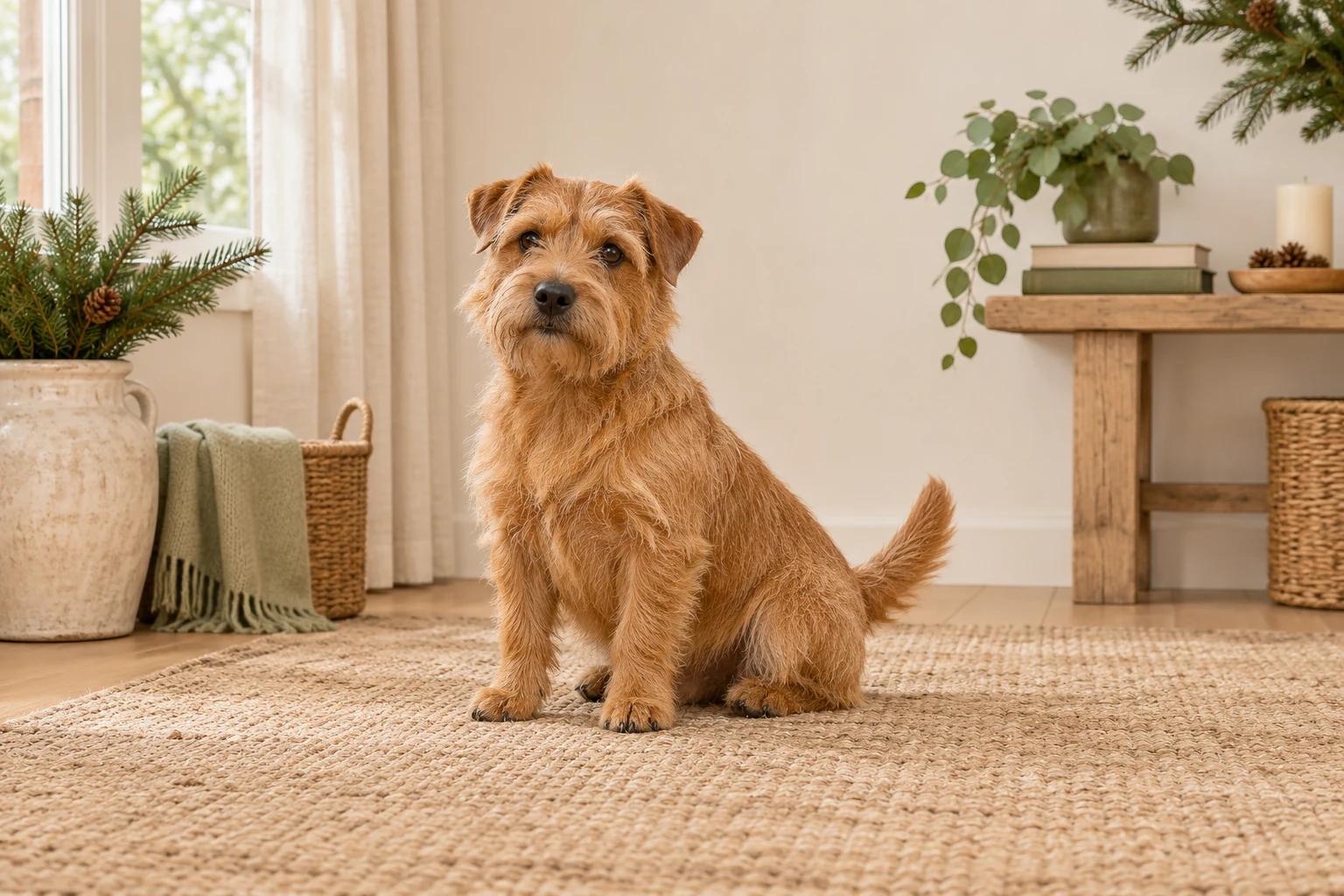
Norfolk Terrier size puts this breed among the compact dogs many people can picture in a modest home. The useful picture, however, is a sturdy terrier moving around at floor level, not simply a small shape curled on a cushion. Adult dimensions help you plan, but they do not describe the whole ownership commitment.
Use size information for concrete decisions: choosing equipment, arranging a resting place, checking boundaries and planning transport. Avoid treating a reference number as a promise about a puppy or a target that every adult must reach. Your actual dog's measurements and veterinary assessment remain more important than matching a table.
Norfolk Terrier size in height and weight
The UKC Norfolk Terrier standard gives an ideal height of ten inches and a weight reference of eleven to twelve pounds, with weight proportionate to the individual dog's structure. The breed is compact, low to the ground and substantial rather than fine-boned.
The Norfolk Terrier profile lists an adult height range of nine to ten inches and adult weight around eleven to twelve pounds. These are adult reference points, not a week-by-week growth chart or an assurance that a particular puppy will finish at an exact measurement.
Norfolk Terrier height is measured at the shoulder, not at the top of the ears. That distinction matters when you compare descriptions or discuss equipment. If you are uncertain about measuring your dog, ask someone experienced to demonstrate on a stable surface while the dog stands comfortably.
Read the frame as well as the number
A Norfolk Terrier weight entry describes mass, not the shape that must fit through an opening or inside a travel carrier. Two dogs with similar weights can need different adjustments to the same item. Chest shape, body length and the product's design all matter.
For example, a harness advertised for a broad weight band may still sit awkwardly on your dog. Follow the manufacturer's measurement instructions and assess the actual fit rather than ordering by the breed name alone. Keep a note of the measurements you used so you can compare future purchases sensibly.
Similarly, a small-looking bed may have less usable resting space than its outside dimensions suggest. Raised edges and thick padding can reduce the interior area. Watch how your dog chooses to sleep, then select enough room for that posture instead of assuming every small dog prefers a tightly curled position.
How big do Norfolk Terriers get?
For planning purposes, expect a small adult terrier rather than a miniature version of a large breed. The adult reference range is useful when preparing your home, but it cannot accurately predict an individual puppy's final dimensions from one early weighing.
Ask the breeder about the puppy's parents and the information already available about its development. If you are adopting an adult, ask for recent measurements rather than relying on the size it appears in a photograph. A dog beside a large sofa can look smaller than the same dog photographed close to the camera.
Keep routine veterinary weight records together. If the growth pattern or adult weight raises questions, discuss it with the veterinarian. Do not change feeding merely to make the dog fit a breed-range number, and do not assume that the smallest possible adult is the most suitable choice.
Check your home at terrier height
A low, compact dog experiences familiar spaces from a different angle. Look under gates, beside storage units and around the outdoor boundary rather than only checking what is visible at standing human height. Pay attention to places where a small dog could pass through or become difficult to reach.
Move loose cables and stored objects out of the dog's main route. Check that doors can open without trapping the resting area behind them. In a busy kitchen, choose a waiting place away from the path between the cooker, sink and refrigerator.
These changes need not turn your home into an obstacle course. The aim is the opposite: a clear layout in which a small dog is easy to notice. Ask visitors where they are putting bags and coats, and keep the dog's familiar resting space available during gatherings rather than filling it with temporary storage.
Plan transport around usable space
Before buying a carrier, find out how the manufacturer wants length and height measured. Compare those instructions with the dog's actual dimensions, then check the internal space. Exterior measurements alone do not show how much room remains once padding and the door structure are included.
A carrier that fits in the car may still be awkward to carry along your usual route. Consider where you will put it down, how doors will open and whether you can manage the dog and your other belongings without rushing. Test the arrangement at home before relying on it for a time-sensitive journey.
If a transport service imposes size limits, check its current requirements directly before booking. Breed size descriptions are not acceptance rules. Keep your dog's comfort and the carrier's appropriate use separate from the question of whether an item technically fits beneath a seat or in a storage area.
Small stature does not provide a complete lifestyle match
The AKC Norfolk introduction emphasizes a sturdy, confident terrier behind the small appearance. That distinction is helpful when deciding what you want from a companion: physical compactness does not mean a dog content with being carried everywhere.
Think about the outings, exploration and learning you can provide as well as how easily a bed fits your room. A small dog may suit your available space while still requiring more engagement than your schedule allows. Consider those as separate decisions rather than letting a convenient size answer both.
For historical background, the existing article on the Norfolk name in older records addresses a different question. The dog match quiz can help you look beyond dimensions to the everyday routine you would offer.
FAQ
What is the usual adult Norfolk Terrier weight?
The breed references used here give approximately eleven to twelve pounds. An individual dog's appropriate weight depends on its build and veterinary assessment, so the reference is not a feeding target or a reason to pursue a particular scale reading.
How tall is a Norfolk Terrier?
The breed profile lists nine to ten inches at the shoulder, while the UKC standard gives ten inches as the ideal. Measure shoulder height rather than head height, and use the actual dog's dimensions for equipment.
Does Norfolk Terrier size make the breed suitable for any flat?
No. A compact body may fit the available floor space, but outdoor access, noise, company and daily activity still matter. Assess those needs separately instead of assuming that a small bed means a small overall commitment.
Sources behind this article
Article source checked: November 15, 2026. Source checked 2026-11-15
Keep reading

Airedale Terrier Temperament: What Everyday Life Can Feel Like
Read article →