Nederlandse Kooikerhondje vs Brittany: which routine fits?
Compare Nederlandse Kooikerhondje and Brittany activity, size, coat care and everyday expectations beyond their similar coloring.
Explore the
Nederlandse Kooikerhondje
Background, care, and everyday considerations.
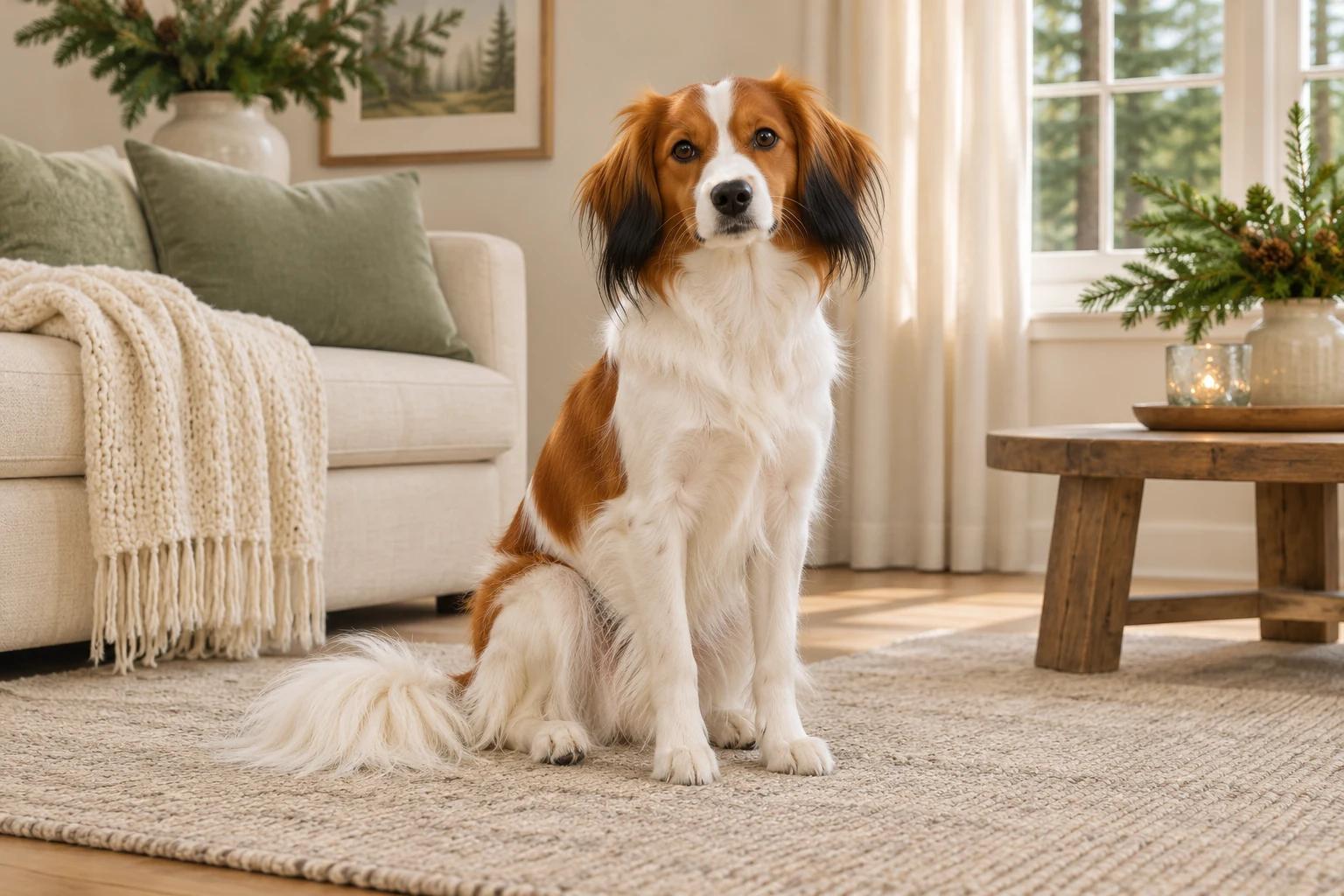
View breed profile →Nederlandse Kooikerhondje vs Brittany can begin with a photograph: orange-and-white markings, an expressive face and a dog that looks ready to go somewhere. The more useful comparison begins after the photograph. How much of your day can revolve around outings? Do you enjoy teaching? What happens on the days when an outdoor adventure is impossible?
Both deserve to be considered as active companions rather than decorative smaller sporting dogs. The distinction is not that one needs engagement and the other does not. It is how their size, routines and individual preferences fit the life you can offer.
Nederlandse Kooikerhondje vs Brittany at a glance
The Kooikerhondje standard published by NKCUSA describes a small sporting dog with nearly square proportions and a feathered tail. The UKC Brittany standard describes a compact, leggy, energetic pointing dog. Shared coloring does not make their outlines or working backgrounds interchangeable.
For scale, compare adults rather than puppy photographs. The Nederlandse Kooikerhondje profile lists a smaller adult frame than the Brittany profile. That matters when planning transport or the space beside your desk, but a smaller frame should not be translated into a smaller need for daily involvement.
Look at ordinary movement as well as a standing pose. Ask to see the dog on a normal outing and resting afterward. You are trying to picture a companion in your week, not award points for an outline.
Start with the busiest weekday
My Breed Atlas places both breeds toward the active end of its reference scale, with the Brittany higher. A Brittany vs Nederlandse Kooikerhondje choice therefore deserves an honest activity discussion. Neither should be selected because a garden appears to solve the whole exercise question.
Take a day when you have an early meeting and an evening commitment. Who provides the first outing? Where does the dog spend the middle of the day? What shared activity remains possible when you return? If your answer is “we make up for it on Saturday,” reconsider the schedule before selecting either breed.
For the Brittany, ask detailed questions about the caregiver’s ordinary activity routine and the kinds of work the dog enjoys. For the Kooiker, ask how outdoor time, learning and household company are balanced. Do not assume that the word “companion” means contentment with little participation.
An outdoor hobby can be a useful part of ownership, but describe it accurately. A relaxed nature walk, a competitive training class and a long remote hike impose different demands. Discuss the particular dog’s suitability with the people who know it and its veterinarian.
Learning is part of the relationship
UKC describes the Brittany as responsive to a gentle approach and notes its interest in human attention. That is not the same as arriving with reliable manners. An eager dog still needs to learn which behavior earns access to the door, a toy or a greeting.
For either breed, think about whether you enjoy the process of teaching. You might practise a short recall game in an enclosed area, work on a tidy lead departure or attend a class. If every lesson feels like an obstacle between you and a “finished” dog, reconsider what you expect from an active sporting companion.
Ask a caregiver to show you one ordinary cue and explain how it was taught. Watch the human’s part: timing, consistency and management of distractions. You will inherit the responsibility for maintaining those skills, not merely the list of words the dog currently recognizes.
Compare greetings without staging a test
The difference between Nederlandse Kooikerhondje and Brittany cannot be reduced to one being sociable and the other reserved. Breed descriptions are broad, and a meeting is only a sample. Ask how the individual responds to familiar visitors, unfamiliar people and new locations.
Give the dog room to choose whether to approach. Do not recruit a crowd to find out how much attention it can tolerate. A quiet introduction lets you observe more than a forced greeting does.
If your household frequently hosts people, explain that pattern before placement. A dog that is comfortable with two familiar adults in a quiet home may need a different introduction plan for a busy gathering. Request practical examples of what helps the dog settle rather than a promise that it will love everyone.
Coat care belongs in the weekly calendar
Both profiles include ongoing shedding, so cleaning is part of either choice. Compare the actual coat routine, including what happens after wet or muddy outings. Ask which areas need attention and how the dog participates in brushing.
A Kooiker’s feathered outline is worth seeing outside a formal photograph. Notice the tail, legs and ears after an ordinary walk. For a Brittany, ask how the caregiver deals with debris picked up during its usual outdoor activities. The relevant comparison is what you will do at your own back door, not which dog looks tidier in a studio.
Set aside a place for towels and tools before the dog arrives. A small, convenient care station can make routine cleanup easier to maintain. If supplies live in several cupboards, a quick check can become a task everyone postpones.
Decide what you want to do together
Choosing a Nederlandse Kooikerhondje or Brittany is easier when your preferences are specific. Perhaps you enjoy frequent short training sessions but do not want your whole weekend organized around field activities. Perhaps you actively want a sporting partner and can provide substantial daily engagement. Describe that distinction honestly to a breeder or rescue.
Ask about adult relatives and the individual’s current routine. Request examples of downtime as well as activity. A dog’s ability to participate in a busy day and its experience of an ordinary quiet evening both matter.
For background on the Kooiker’s distinct working setting, read its duck-decoy story. Use the dog match quiz to clarify your practical priorities. Then compare dogs through those priorities rather than letting a shared coat pattern make the decision.
FAQ
Is a Kooikerhondje a small Brittany?
No. The Nederlandse Kooikerhondje and Brittany are distinct sporting breeds with different outlines and histories. A Kooiker is generally smaller, but size alone does not describe the activity, teaching or company it will need in your home.
Which breed is more active?
My Breed Atlas places the Brittany higher on its activity reference scale, while also describing the Kooikerhondje as active. Ask about the individual dog’s routine rather than using that comparison as a fixed exercise prescription or assuming the smaller breed needs little engagement.
What is the best question to ask before choosing?
Ask the caregiver to describe an ordinary weekday from waking to bedtime. Follow up about outings, training, time alone, coat care and settling. Those concrete details make the commitment clearer than asking whether either breed is easy to own.
Sources behind this article
Article source checked: November 15, 2026. Source checked 2026-11-15
Keep reading

Affenpinscher vs Brussels Griffon: Everyday Differences
Read article →