Neapolitan Mastiff vs Bullmastiff: daily-life differences
Compare Neapolitan Mastiff and Bullmastiff size, home routines, activity and handling before choosing the dog you can live with.
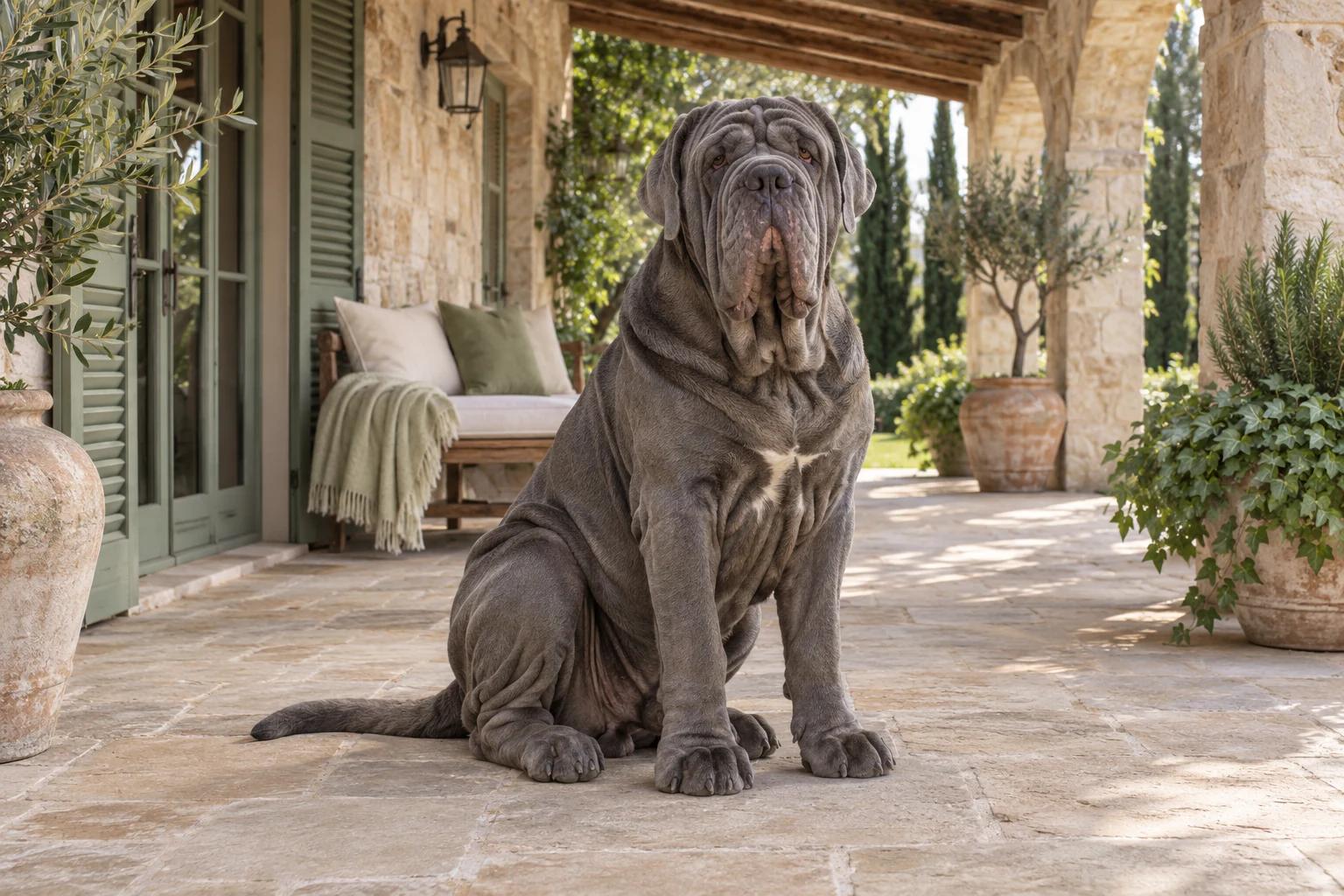
Neapolitan Mastiff vs Bullmastiff is a choice between two substantial dogs, not between a large commitment and an easy alternative. Both need an owner who can organize everyday handling before strength becomes a practical problem. The useful questions concern your front door, walking routes, available help and expectations of a companion, rather than which dog looks more imposing.
Start by imagining each dog in your real home. Where would it rest while groceries arrive? Who would walk it if you were ill? Can your car accommodate it without displacing every passenger? Those details make the comparison concrete and often reveal more than an attractive portrait.
Neapolitan Mastiff vs Bullmastiff: the visible distinction
The UKC Neapolitan Mastiff standard describes a massive dog with a substantial head and loose skin. The UKC Bullmastiff standard describes a powerful, active dog with a broad, square head. Both belong to UKC’s Guardian Dog Group, but they are separate breeds with different outlines.
The difference between Neapolitan Mastiff and Bullmastiff is not merely a matter of facial expression. Compare adults standing beside an ordinary doorway or walking beside a handler. Photographs taken from low angles can distort your sense of scale. Ask to see the particular dog turn, lie down and move through a familiar room, rather than judging its household footprint from a weight label.
The Neapolitan Mastiff profile and Bullmastiff profile provide separate reference points. Use them alongside actual adult relatives and the caregiver’s account of the dog you are considering.
Which ordinary day sounds more like yours?
My Breed Atlas describes the Neapolitan’s activity tendency at the lower end of its scale and the Bullmastiff’s toward the higher end. That makes activity worth investigating rather than assuming all mastiff-type dogs want the same day. Neither description tells you how long a particular dog should walk.
For a Neapolitan, ask what happens between outings. Does the dog settle near its people, change rooms to follow household activity, or need help relaxing when the environment changes? For a Bullmastiff, ask what kinds of play and learning fill its current day. Request an account of yesterday, including the uninteresting stretches, not a statement that the dog is “easy.”
If your ideal companion joins every weekend expedition, describe the terrain, travel and pace. If you want quiet company while working, explain the length of your calls and where the dog would be. A breeder or rescue can respond more usefully to those details than to “I want a calm dog.”
Put visitor arrangements on the comparison sheet
UKC identifies alertness in both breeds. Treat that as a reason to ask about real arrivals, not as permission to leave either dog in charge of deciding who enters. A household with frequent deliveries needs an entrance arrangement that works even when someone is late, carrying bags or distracted.
Sketch the space between the front door and the main room. Identify a resting area away from the opening door and decide who will manage the dog while another person receives a visitor. If there is no separate area, work out another arrangement before bringing a large dog home.
During a meeting, ask the caregiver to describe a familiar visitor and an unfamiliar one. How does the dog respond initially? What happens after the person sits down? Is the routine different for a tradesperson bringing equipment? Specific examples are more useful than either breed’s reputation.
Handling is a shared requirement, not a tie-breaker
A Bullmastiff vs Neapolitan Mastiff shortlist should include the people who will actually provide care. An enthusiastic primary owner is not the entire plan if a partner, walker or relative must sometimes manage the dog alone.
Ask whether you can watch an ordinary leash outing. Observe how the handler starts, turns, passes an entrance and returns home. You are not trying to test the dog by creating distractions. You are learning which skills are already established and which will need support.
Then discuss lessons, not just equipment. A heavier lead or a larger harness does not teach the dog to move with a person. Budget for instruction from someone comfortable working with substantial dogs, and arrange a realistic practice routine. It is easier to compare two commitments when both include the training they actually require.
Short coats do not remove the housework
Both breed profiles describe relatively straightforward brushing routines, but choosing a short-coated dog does not eliminate cleaning. Consider where towels will live, which furnishings are washable and how you will manage the area around the water bowl. Ask each caregiver what they clean most often and what surprised them after ownership began.
Arrange a care demonstration rather than buying a large collection of tools in advance. Notice how the dog participates and how much room the task needs. Your setup might require a washable floor area and another adult nearby more than an elaborate grooming station.
For the Neapolitan’s distinctive appearance, read how its breed description treats wrinkles. Keep that separate from your practical comparison of cleaning time, handling and household space.
Make the final choice with an actual dog in view
When deciding on a Neapolitan Mastiff or Bullmastiff, keep a short list of non-negotiables. These might include manageable entrances, a workable transport plan, available daytime care and willingness to practice everyday skills. Do not turn preferences such as coat color or a dramatic outline into substitutes for those essentials.
Meet adults where possible. Ask what support continues after placement and what information comes home with the dog. Compare written routines and records, rather than ranking sellers by the confidence of their promises.
The dog match quiz can help clarify your priorities before those conversations. The final decision should reflect the individual dog and the routine you can sustain on ordinary weekdays, including weeks when your schedule is inconvenient.
FAQ
Is a Bullmastiff simply a smaller Neapolitan Mastiff?
No. Bullmastiffs and Neapolitan Mastiffs are distinct breeds with different outlines and backgrounds. Both are substantial dogs, so neither should be treated as a compact substitute. Compare adult individuals and household arrangements rather than choosing by a single size label.
Which breed needs more activity?
My Breed Atlas gives the Bullmastiff a higher activity tendency than the Neapolitan Mastiff. That is a starting point for questions, not a prescribed exercise schedule. Ask about the individual dog’s established routine and discuss appropriate activities with its veterinarian.
What should I compare during a first meeting?
Watch routine movement, handling and settling without provoking the dog. Ask about visitor arrivals, leash skills, transport and care between appointments. The caregiver’s specific examples will help you assess the practical commitment more effectively than a breed stereotype.
Sources behind this article
Article source checked: November 15, 2026. Source checked 2026-11-15
Keep reading

Affenpinscher vs Brussels Griffon: Everyday Differences
Read article →