Neapolitan Mastiff exercise needs: a workable day
Plan Neapolitan Mastiff walks, sniffing time and home activities without confusing a lower activity tendency with no daily exercise.
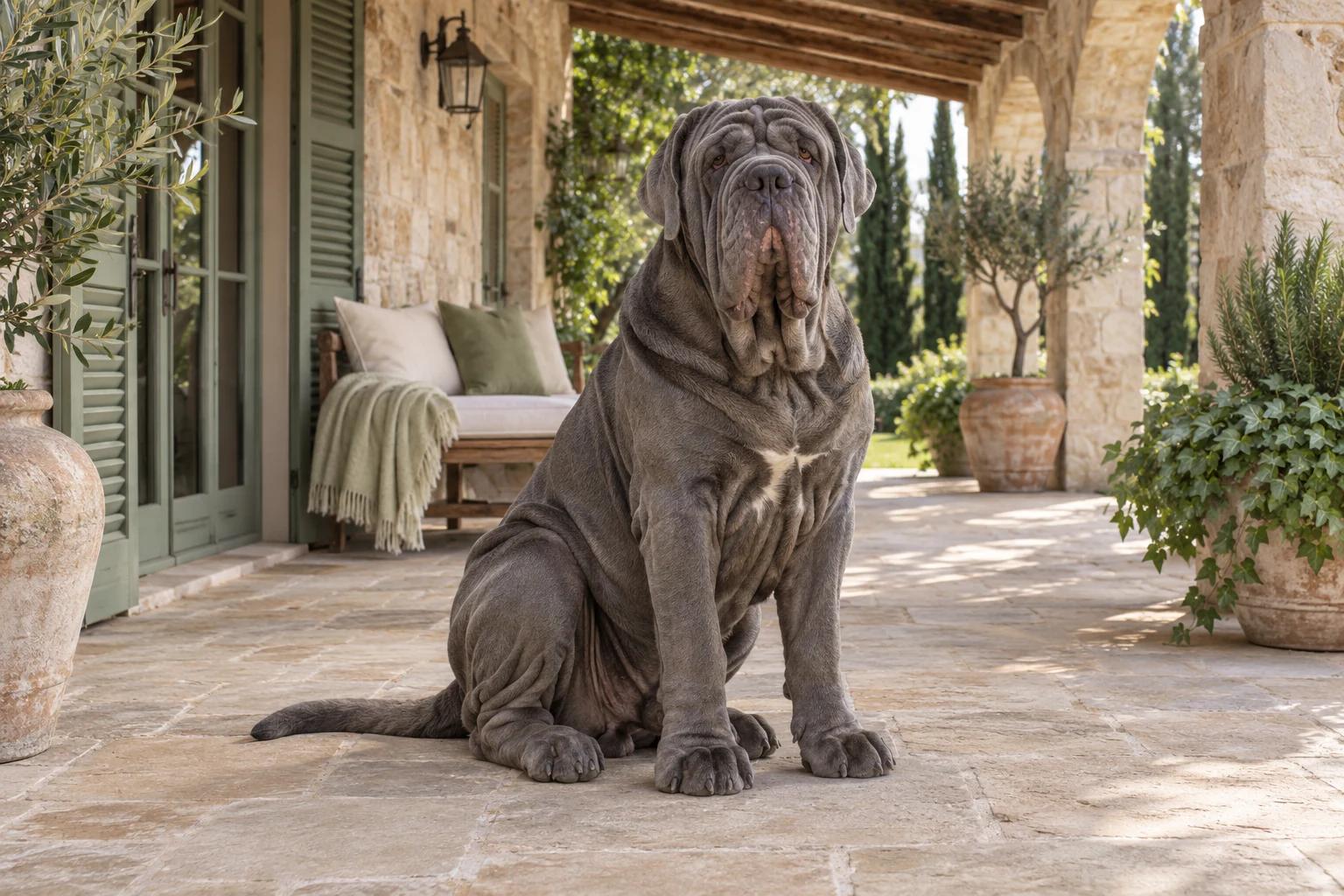
Neapolitan Mastiff exercise needs are best met through a repeatable day, not an occasional ambitious outing. Think of a comfortable walk, opportunities to investigate the world, brief learning activities and genuine rest. A lower activity tendency does not mean a dog can spend every day waiting for someone to become available.
Before choosing a route, consider the individual dog’s established routine and ask its veterinarian about suitable duration and intensity. A puppy, an adult already accustomed to regular outings and an older dog should not inherit the same plan simply because all three are Neapolitans.
Neapolitan Mastiff exercise needs: purpose before minutes
The Neapolitan Mastiff profile places the breed’s activity tendency toward the lower end of its scale. That is useful context when comparing lifestyles, but it is not a stopwatch setting. Start by deciding what each outing is meant to provide.
A toilet trip, a leisurely investigation of a quiet verge and a focused walking lesson are different experiences. Combining them can work, but treating every trip as nothing more than a bathroom break leaves little room for exploration. Conversely, making every walk a formal training session can crowd out the chance to enjoy familiar surroundings.
Write down what already happens across a normal weekday. Include who takes the dog out, which routes are available and when the household is busiest. You may find that the missing piece is an unrushed outing after work rather than a longer weekend hike.
Build a route with an easy return
For a Neapolitan Mastiff daily walk, choose a route that allows adjustments. A loop with several exits or an out-and-back path gives you options. A remote destination that requires completing a long circuit does not.
Look beyond distance. Check where the pavement narrows, where you can step aside and whether the route becomes crowded at the time you usually walk. A substantial dog occupies real space beside its handler. A short stretch beside a busy school entrance may be less convenient than a slightly different route with room to pass.
Prepare before opening the door. Have waste bags, water when appropriate and any necessary supplies ready. If you spend the first part of every outing searching for equipment, the walk begins with a household scramble rather than a settled departure.
A backup route is worth choosing in advance. Roadworks, an event or an unfamiliar loose dog can change the usual walk. Knowing an alternative avoids turning a simple adjustment into an argument about continuing.
Let the nose contribute to the outing
The AKC’s guide to sniff walks distinguishes scent-led exploration from walking mainly to cover distance. Allowing a dog time to investigate can make a modest route more interesting without turning it into a speed challenge.
Choose places where stopping will not block other people. A broad verge or quiet path offers more flexibility than a narrow pavement outside a shop. You remain responsible for where the dog goes and what it can reach; giving it choices does not mean surrendering the route to every distraction.
Try alternating a straightforward walking section with a suitable place to pause. This is a practical way to make the walk legible to you as well as enjoyable for the dog. You know where you need to keep moving and where there is room to linger.
Do not judge the outing solely by a fitness tracker. A slower walk can include worthwhile exploration, while a longer distance can be mostly hurried travel. Your notes about the dog’s engagement may be more informative than the route total.
Add small activities that fit a large dog
The UKC standard describes a large, massive breed. At home, that means choosing activities with room for an unhurried turn rather than squeezing games between furniture. Clear the space before beginning, especially if several people share the room.
An indoor lesson might involve walking to a mat from two different starting points. Another could practise moving with you between the kitchen and a resting place. These activities do not need dramatic speed or elaborate equipment to give you something useful to work on together.
Keep toys appropriate to the individual dog and supervise their use. Ask the current caregiver which activities the dog already understands. Building on a familiar game can be easier than purchasing a complex puzzle and assuming the dog will know what to do.
Treat indoor learning as one part of the day rather than a permanent replacement for going outside. If weather disrupts a planned outing, you still need arrangements for toileting and a sensible return to the normal routine when conditions permit.
Read the whole day, not one lively moment
Neapolitan Mastiff activity level can look different during a greeting, a walk and an evening at home. A burst of enthusiasm when you pick up the lead does not establish readiness for a much longer expedition. Equally, resting after an outing does not prove that every aspect of the routine is ideal.
Keep observations specific. Note the route, conditions and any unusual hesitation. Bring changes in willingness or comfort to a veterinarian rather than interpreting them as laziness. The purpose of a record is to help you describe the dog accurately, not to diagnose a problem yourself.
Review the human side too. If the plan depends on one person always being free, identify a backup caregiver. Give that person the ordinary route and instructions, including where the dog rests afterward. Consistency is easier when the practical information is written down.
Choose a sustainable version of an active life
If you are asking how much exercise does a Neapolitan Mastiff need, first ask how much suitable time you can reliably provide. A realistic plan includes workdays, rain, appointments and the occasional late finish. It should not depend on a heroic outing to make up for a week with little engagement.
Discuss the proposed routine before placement. Ask the breeder or rescue what the individual currently does and what changes they would expect in your home. Use the dog match quiz to check your expectations against the broader ownership commitment.
For appearance context, see the Neapolitan Mastiff’s wrinkle description. On an ordinary walk, the more useful focus is the dog’s participation and your ability to provide a routine that remains manageable tomorrow.
FAQ
How many minutes should a Neapolitan Mastiff walk?
There is no single walking duration appropriate to every Neapolitan Mastiff. Discuss the individual dog’s age, current routine and circumstances with its veterinarian. Plan repeatable outings with options to shorten the route rather than treating a breed-level estimate as a target.
Is a garden enough exercise?
A garden provides outdoor access, but its existence does not tell you how the dog spends its day. Include purposeful shared activities and suitable outings in the plan. Ask what the dog actually does outside rather than assuming an open door supplies engagement.
Can sniffing be part of the daily walk?
Yes. A Neapolitan Mastiff daily walk can include time to investigate scents in appropriate places. Keep the dog under control, avoid blocking paths and distinguish exploration time from sections where you need to keep moving. Distance is not the only measure of an outing.
Sources behind this article
- United Kennel Club: Neapolitan Mastiff ↗
- American Kennel Club: Why Sniff Walks Are So Good for Your Dog ↗
Article source checked: November 15, 2026. Source checked 2026-11-15
Keep reading

Afghan Hound Exercise Needs: Build a Workable Active Day
Read article →