Munchkin cat vs British Shorthair: build and companionship
Compare Munchkin cat vs British Shorthair adult weights, body proportions, coat and companionship without assuming every individual behaves alike.
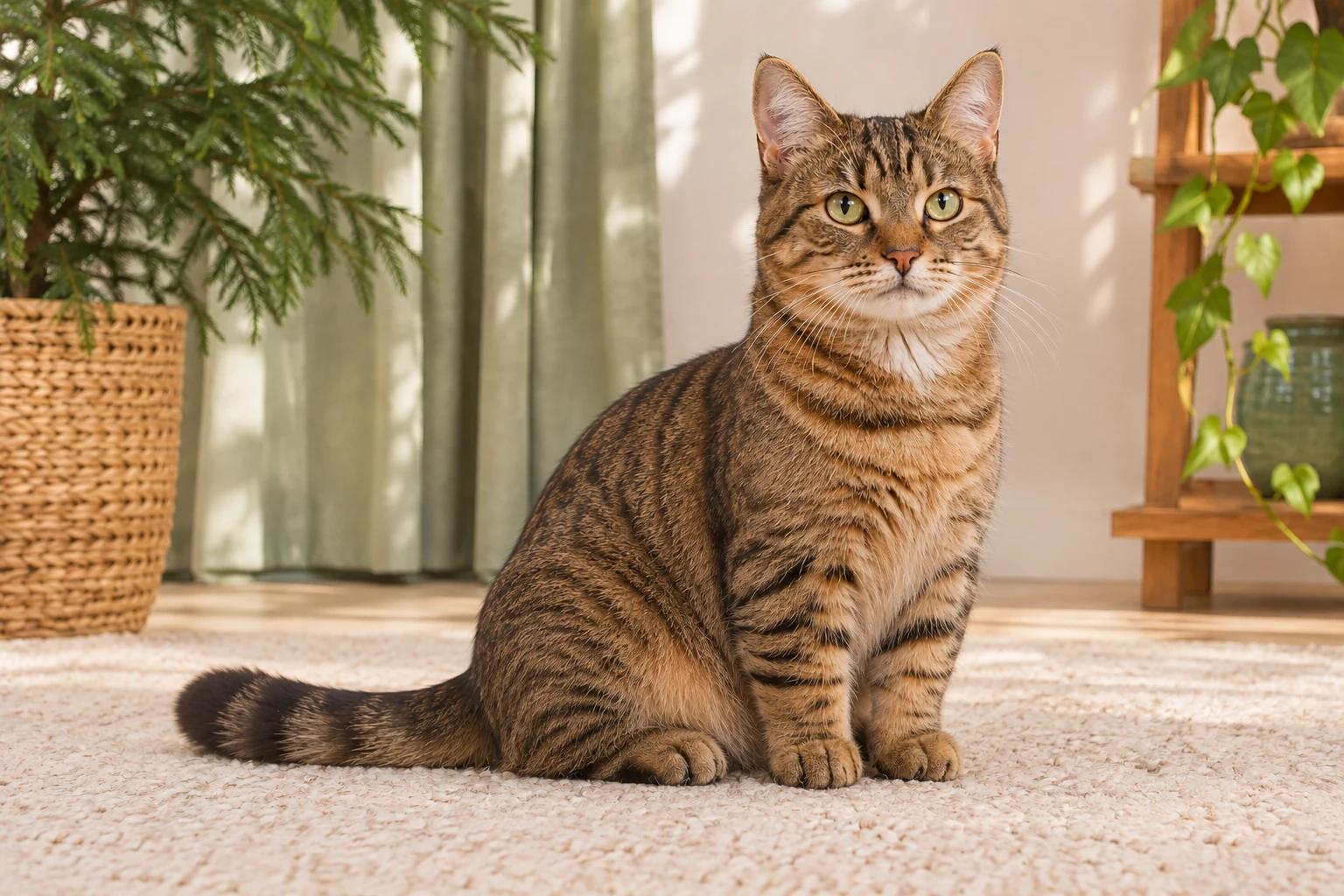
A Munchkin cat vs British Shorthair comparison works best when it separates measurements, physical outline and ordinary interaction. Those are different questions, and answering one does not settle the others. Start with the adult references, then consider the anatomical descriptions and the kind of companionship you actually want. This is a comparison of two named breeds, not a competition in which one photograph or one appealing adjective produces an overall winner.
Munchkin cat vs British Shorthair adult weights
The current Munchkin profile gives adult females as 5–7 pounds and males as 7–10 pounds. The current British Shorthair profile gives females as 8–11 pounds and males as 10–16 pounds. Keep those sex labels attached when using the figures: the overall ranges of 5–10 and 8–16 pounds combine different groups.
For a British Shorthair vs Munchkin cat weight comparison, the female ranges do not overlap, while the male ranges meet at 10 pounds. Across the overall ranges there is an overlap from 8 to 10 pounds. These are three different comparisons, all using the same references. Saying simply that the ranges overlap misses the information provided by the sex-specific figures.
A 10-pound adult male could therefore sit at the upper end of the Munchkin reference and the lower end of the British reference. That is a numerical example, not a predicted weight for a kitten or a target for an individual. The ranges describe the references being compared; they do not identify a cat’s breed from a scale reading.
Read the Munchkin outline beyond one feature
LOOF’s Munchkin description presents a moderate type with a softly triangular head and a rectangular body outline. The ears are medium, broad at the base and spaced apart. The legs are short and solid, with medium bone and muscular substance. The tail tapers toward a rounded end. Both shorthaired and longhaired varieties occur.
The useful distinction is between an overall shape and a single conspicuous feature. A rectangular outline directs attention along the torso, while the head description concerns a separate part of the animal. Neither becomes a description of the whole cat merely because it is easy to notice first.
When comparing pictures, look for a view that actually shows the feature under discussion. A face portrait cannot explain the relationship between the torso and the legs; a distant side view may say little about the ear bases. This is an application of the anatomical description, not a requirement to pose or handle a cat for inspection. Ordinary views can answer different questions.
The British Shorthair’s rounded structure
The CFA British Shorthair standard describes a compact, powerful cat with a broad chest, rounded paws and a round head. Its legs are strong and proportionate rather than foreshortened. The tail is thick at its base and tapers toward a rounded tip. Its short coat is dense and resilient.
These features form a connected outline. “Round” is not just an affectionate nickname for the face: the head, cheeks and paws contribute to the description, while the broad chest and body depth supply a different dimension. Equally, “compact” concerns proportion, not a claim that every individual weighs little.
For someone deciding between a Munchkin cat or British Shorthair, this gives a more informative visual question than simply asking which looks smaller. Consider the distribution of substance and the relationship of the parts. Do not use coat volume as a substitute for a scale reading, or interpret a rounded outline as a statement about the cat’s willingness to be held. Anatomy does not answer that handling question.
Munchkin play can involve carrying and returning objects
TICA’s Munchkin account describes curiosity, retrieving small objects and collecting items into hiding places. These are breed accounts, not promises about every Munchkin. They suggest looking beyond a short video of pursuit: what happens after the cat reaches an object can be part of the interest.
For example, a cat may carry a toy away without returning it. That is not the same event as bringing it back to a person, and neither should be labelled a failed version of the other. The owner who enjoys watching a cat investigate and relocate objects may value something different from the owner hoping for an organized retrieving game.
Keep that distinction when meeting an individual. Ask what it does with its own cat toys in familiar surroundings, rather than assuming that the breed description guarantees a ready-made game with a stranger. An account of carrying, returning or stashing gives more concrete information than calling the cat entertaining. No new performance needs to be demanded to make the account useful.
British companionship can include quiet company and play
TICA’s British Shorthair account describes cats that enjoy being beside their people, with an otherwise calm manner punctuated by playful episodes. Toy mice appear in its description of play. This is not a rule that a quiet cat never plays or that company must take the form of sitting in a lap.
Consider the actual interaction you hope to share. Sitting together while the cat occupies an adjacent place is a different experience from having it settle directly on you. Both can be welcome, but the second should not be assumed from a general description of affection. Likewise, an occasional lively game does not erase an otherwise quieter pattern of company.
The difference between Munchkin cat and British Shorthair ownership cannot be reduced to a universal activity ranking. Use these descriptions to recognize possible forms of interaction, then find out which ones the individual chooses. A familiar caregiver’s examples of ordinary evenings and play are more informative than treating a breed adjective as an instruction the cat must follow.
For separate individual-care questions, read the Munchkin comfort and movement guide. Use the cat quiz to organize broader preferences, not to certify a particular match.
Frequently asked questions
Which adult weight references apply to these breeds?
Munchkin females are listed at 5–7 pounds and males at 7–10; British Shorthair females at 8–11 and males at 10–16. These current profile references retain the sex qualifiers.
Does the Munchkin weight range identify an individual cat?
The Munchkin weight range does not identify a cat’s breed. A scale reading is one measurement, and the current overall Munchkin and British Shorthair references overlap from 8 to 10 pounds.
Is there a numerical height comparison here?
This Munchkin and British Shorthair comparison does not supply numerical heights. The current profiles provide adult weight references; substituting an invented height would answer a different question with unsupported precision.
Sources behind this article
Article source checked: November 16, 2026. Source checked 2026-11-16
Keep reading

Abyssinian vs Somali: Coat, Size and Everyday Company
Read article →