Mountain Cur size: height and practical planning
Understand Mountain Cur height, individual build and the measurements that matter for equipment, transport and home space.
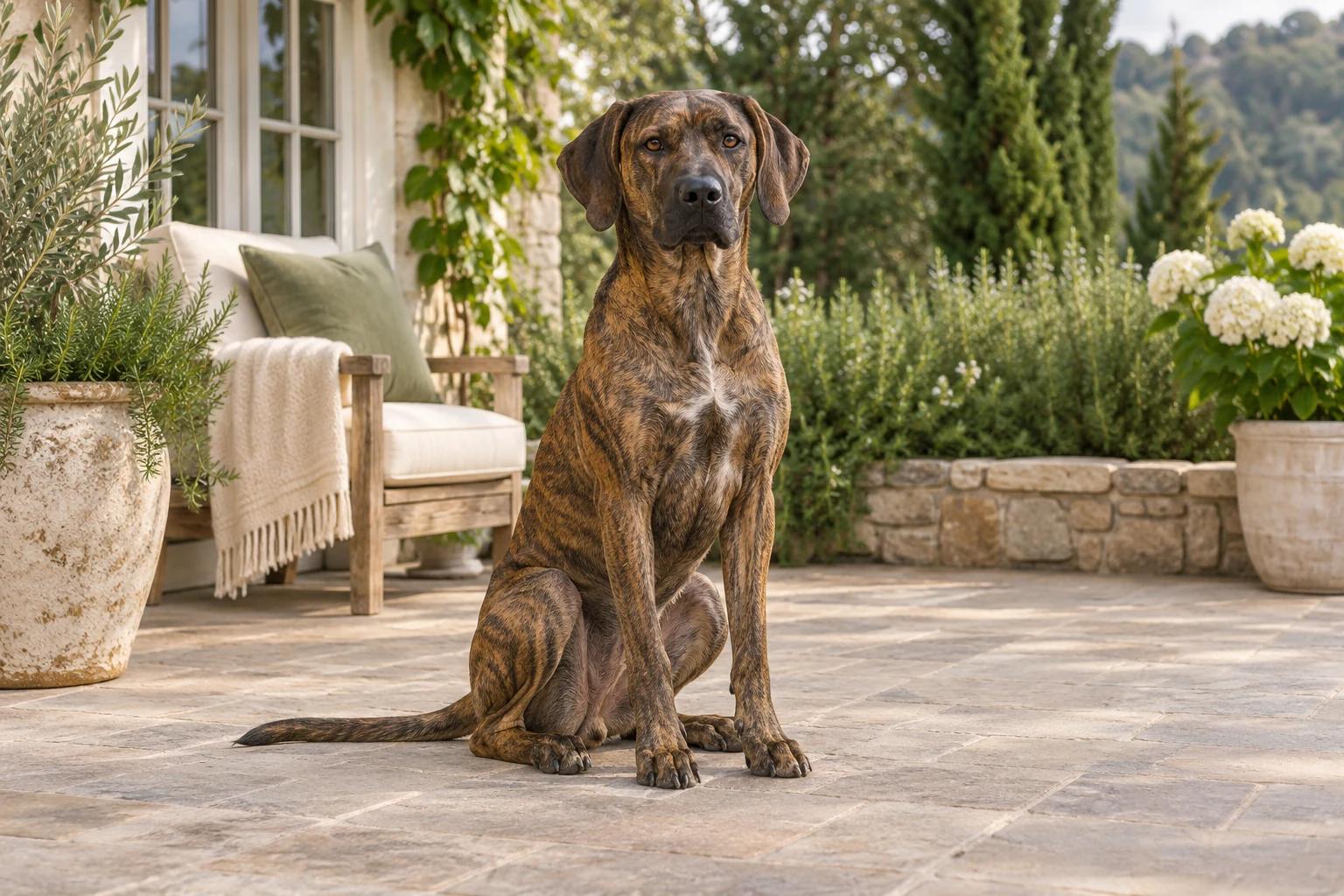
Mountain Cur size is best understood as an athletic, medium-sized frame with meaningful variation between adults. The breed's height range is useful for picturing that frame, but it is not a shopping list for collars, harnesses or vehicle crates. To prepare properly, combine the reference measurements with the dimensions and routine of the individual dog.
Start with the Mountain Cur profile, then think about the places where size will matter: the car, a narrow doorway, the sleeping area and the equipment you will handle every day.
Mountain Cur size in the breed standard
The UKC Mountain Cur standard gives mature males a height range of 18–26 inches and mature females 16–24 inches. It describes weight in proportion to height rather than setting one numerical target. The overall picture is a capable working frame, not maximum bulk.
There is substantial overlap between the male and female height ranges. Sex alone therefore cannot tell you how much space a particular adult will occupy. When size is consequential for your household, ask for current measurements instead of assuming a female will always be smaller than a male.
“How big do Mountain Curs get?” also means different things to different people. One person needs shoulder height for a housing rule; another wants to know whether a dog will fit comfortably in the car. Clarify the practical question before deciding which number answers it.
Height is not length, and neither is equipment size
Mountain Cur height refers to the dog's standing frame, not the top of its ears. A dog can share a shoulder height with another dog yet differ in chest circumference or back length. Those differences matter when fitting gear.
The AKC's measuring guide distinguishes back length, chest girth and neck girth, and explains that product sizing varies. Record the measurements a specific manufacturer requests rather than ordering a generic “medium dog” size.
Keep a simple measurement card on your phone. Include the date, measurement, units and what it was taken for. A number labelled only “chest 24” is less useful later than a clear record stating inches and identifying the product's measuring position.
When two people measure, compare methods before worrying about a small difference. A dog turning toward a treat, a tape placed differently or a change in posture can alter the result. Aim for a calm, repeatable setup rather than wrestling for apparent precision.
Use weight as information, not an ambition
The My Breed Atlas profile lists adult Mountain Cur weight at 40–60 pounds overall: 40–50 pounds for females and 45–60 pounds for males. These are reference ranges, not feeding targets. A Mountain Cur weight record can be valuable without becoming a contest to reach the upper end of a range. Ask the veterinary team what is appropriate for your dog's build and life stage. Do not adjust food or activity simply to make the scale match an online example.
Record weights obtained during routine veterinary visits with their dates. If you are concerned about a change, bring the sequence rather than relying on memory. The clinician can interpret it alongside the dog's history and examination.
For equipment, weight can be one specification among several. A product's load limit does not automatically mean it has enough usable space. Check both dimensions and the intended use before assuming that a numerical capacity settles the fit.
This distinction is especially useful for transport. A dog may fall within a stated weight allowance but still need a different shape of enclosure or arrangement. Read the product instructions and, for commercial travel, the carrier's own requirements rather than extrapolating from breed size.
Plan the vehicle around the adult dog
Before buying large equipment, measure the available vehicle space. Include the opening through which the item must pass, not just the area where you hope it will sit. A container that theoretically fits inside may be awkward to load through a narrower opening.
Think through the whole journey. Where will the dog wait while equipment is arranged? Can doors open without creating an uncontrolled exit? Is there still room for the supplies you normally carry? These are practical layout questions, not reasons to select a smaller-than-needed enclosure.
If you are meeting an adult Mountain Cur, ask how it currently travels and whether you can see the existing arrangement. You may learn more from that ordinary setup than from comparing catalogue labels at home.
For a growing puppy, avoid buying every future item on the assumption that one estimate is exact. Identify what must fit now, what can be adjusted and what can wait until you have better information. Keep receipts and product measurements together so replacements are easier to organize.
An athletic frame needs usable home space
A Mountain Cur's footprint is more than the rectangle occupied by its bed. Leave room for the dog to approach, turn and settle without navigating stacked bags or a constantly moving chair. Choose a resting location that does not double as the household's narrowest thoroughfare.
Walk through your home as if you were carrying shopping while managing the dog. Where do doors swing? Which gate gets opened for visitors? Can someone pass the resting area without stepping over the dog? This exercise often reveals more than measuring the total floor area.
Outdoor access has its own dimensions. Look at gaps, gate operation and shared entrances rather than relying on the broad label “fenced garden.” The breed's active lifestyle makes a usable management arrangement important, but no height chart can certify that arrangement for an individual dog.
Size should also be considered alongside the person doing the handling. Discuss lead skills and actual experience with the caregiver. Being a medium-sized dog does not mean a Mountain Cur automatically feels easy for every handler to manage.
Ask useful questions before committing
Request the adult dog's current measurements and the date they were taken. For a puppy, ask about the parents and the basis for any size estimate, while leaving room for uncertainty. Ask what gear fits now and how frequently the caregiver checks it.
Keep other ownership questions separate so size does not crowd them out. The Mountain Cur voice guide explores another practical consideration. The breed quiz can help you weigh activity, company and housing alongside physical dimensions.
FAQ
Are male Mountain Curs always taller than females?
No. The UKC's male and female height ranges overlap. Ask for the actual adult dog's measurement if height matters to your home, transport or equipment plans.
Can I select a harness using Mountain Cur height?
Height alone is insufficient. Follow the harness maker's instructions for the relevant body measurements, compare the sizing chart and check the fit on the dog before use.
Is there one correct Mountain Cur weight?
No single weight suits every Mountain Cur. Build and life stage matter, and the UKC standard describes weight as proportional to height. Your veterinarian can assess what is appropriate for the individual rather than treating a breed number as a feeding goal.
Sources behind this article
Article source checked: November 15, 2026. Source checked 2026-11-15
Keep reading

Airedale Terrier Temperament: What Everyday Life Can Feel Like
Read article →