Miniature Schnauzer vs Standard Schnauzer: daily life
Compare Miniature and Standard Schnauzers through size, walks, learning, visitors and the practical commitments of an ordinary day.
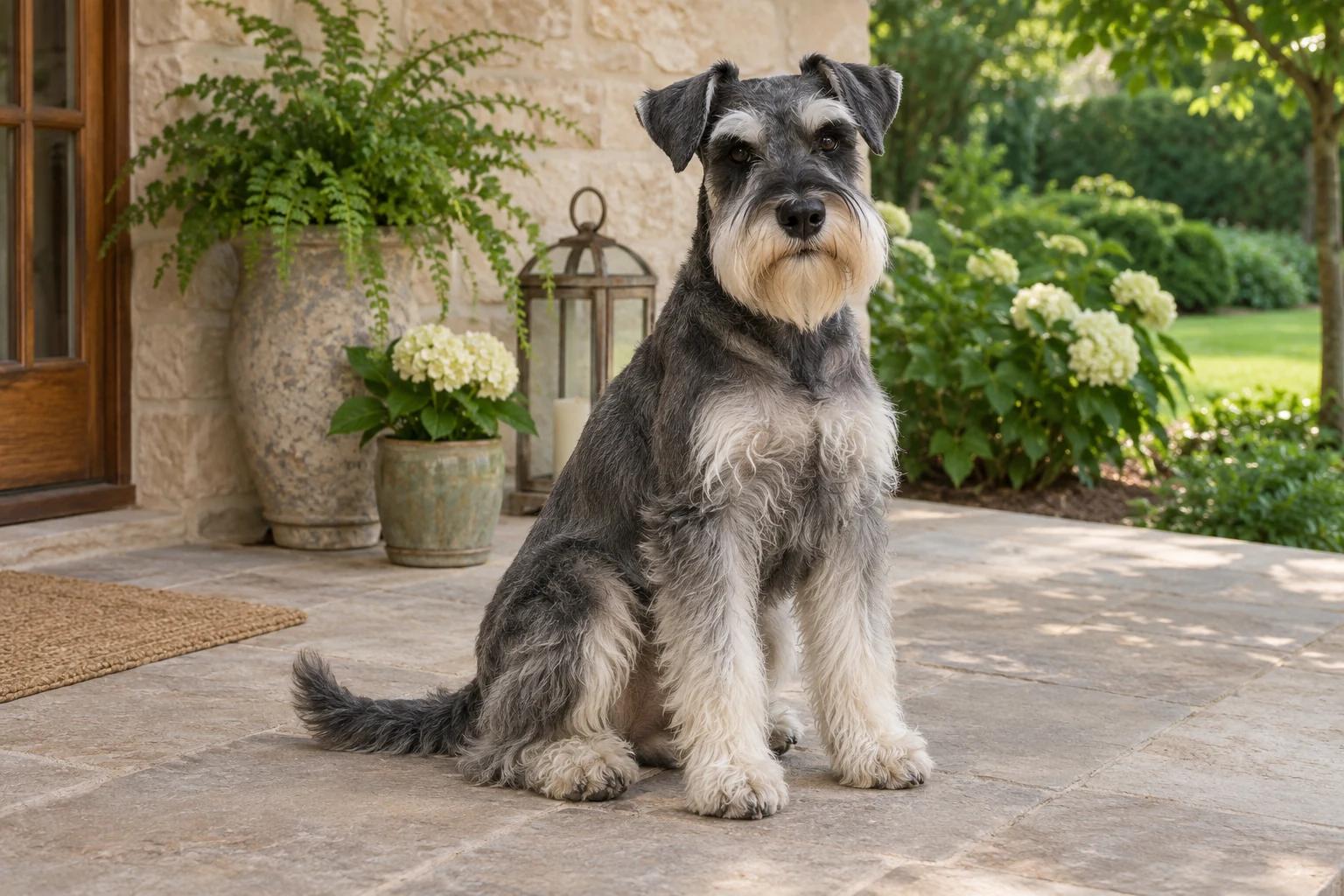
The Miniature Schnauzer vs Standard Schnauzer decision involves more than choosing a beard in the size you like. These are distinct breeds. Their shared outline can make the differences seem smaller than they feel when a dog is beside your desk, waiting at a gate or travelling in your car.
Try comparing them through an ordinary day. You will quickly discover which questions concern physical size, which concern household routines and which can only be answered by meeting a particular dog.
Miniature Schnauzer vs Standard Schnauzer: the visible difference
My Breed Atlas lists the Miniature's adult height at 12–14 inches. The Standard reference is 18.5–19.5 inches for males and 17.5–18.5 inches for females. The Miniature Schnauzer profile and Standard Schnauzer profile provide the wider ownership context for those measurements.
The UKC Standard Schnauzer standard describes a robust, square-built dog with a dense, harsh coat and a lively but composed temperament. The American Miniature Schnauzer Club describes the smaller breed as alert, playful and affectionate. Those descriptions help you formulate questions; they do not settle how an individual will behave in your home.
Measure the places where size is consequential. A bed may fit beneath a desk while leaving too little room for your chair. A vehicle opening may accommodate a crate while making it awkward to load. Include the space around equipment, not merely the measurements printed on its box.
Morning: who prepares and who walks?
Imagine everyone trying to leave the house. Where is the dog while breakfast is cleared? Who takes the first outing? Where do wet towels or walking equipment go afterwards? The difference between Miniature Schnauzer and Standard Schnauzer size becomes practical when the hallway is full of shoes and bags.
Arrange enough space to equip the dog without crowding it into a corner. Check whether every regular walker can comfortably manage the chosen setup. A bigger dog may require different handling arrangements, while a smaller one still needs a clear routine rather than being lifted around the morning rush.
Ask the caregiver to demonstrate a normal departure. Observe what the dog already understands and what the person does to help. If you are considering a puppy, identify who will teach that routine rather than assuming it will emerge automatically.
Midday: company and useful occupation
Both My Breed Atlas profiles describe an interest in family interaction and meaningful mental engagement. If you work from home, consider what happens during a long call, not just the pleasure of having a dog beside the desk. If you work elsewhere, arrange care rather than leaving the workday as an unanswered question.
You might plan a quiet resting area within the shared room and keep outings separate from times when you cannot be interrupted. Think through the arrangement on a busy day as well as on the relaxed afternoon you picture when browsing breed photographs.
Discuss the individual's current routine in detail. Does it rest while its caregiver works? Which activities happen before and after that period? What support is needed when the usual person leaves? An answer grounded in experience is more helpful than a claim that either breed adapts to every lifestyle.
Afternoon: learning is part of the relationship
A Standard Schnauzer vs Miniature Schnauzer comparison should include your interest in teaching. Both profiles describe responsive learners, but responsiveness is not the same as arriving with your household rules already learned.
Choose a few jobs you would enjoy practising: returning attention to you on walks, moving to a resting place or participating in grooming preparation. Ask what the candidate dog has already learned and which rewards or activities it enjoys. For a class, consider travel time and the instructor's approach as well as the schedule.
You do not need competitive ambitions to make learning worthwhile. A short piece of practice that improves everyday cooperation can be a satisfying shared activity. Equally, if you hope to pursue a particular sport, discuss the individual dog's suitability and the club's current requirements before committing to a plan.
Evening: visitors and neighbourhood noise
My Breed Atlas records a higher vocal tendency for the Miniature than for the Standard. If you live near a busy path or share walls, ask about the candidate dog's responses to movement, door sounds and visitors. Avoid turning a breed-level tendency into a prediction of exactly how often your dog will bark.
Describe your evenings honestly. A home with frequent guests needs different arrangements from a quiet household that rarely answers the door after dark. Decide where the dog can rest during arrivals and who will manage the entrance while another person welcomes visitors.
Observe what happens after the initial greeting. Does the dog choose to approach again, remain nearby or prefer another space? Ask the caregiver which part is typical. A lively first minute does not explain the whole visit, and a quiet meeting in an unfamiliar room may not resemble home behaviour.
Care takes a place in the calendar
Both breeds require a real coat-care plan. The details belong in a conversation with an experienced groomer, not in an assumption that a neat outline maintains itself. Ask about time at home, professional availability and the handling skills the dog already has.
Keep grooming costs separate from the purchase of walking equipment and bedding. Recurring care needs a recurring place in your budget. The existing Miniature Schnauzer grooming guide covers coat-method choices in more detail, so you can explore that decision separately from choosing a breed.
A larger coat-care appointment may involve different logistics, while the Miniature still needs consistent attention. Choose the arrangement you can maintain rather than a photograph that depends on work you do not want to do.
Which ordinary day can you actually offer?
When deciding on a Miniature Schnauzer or Standard Schnauzer, compare your written day with the individual dog's known routine. Mark the gaps: an uncovered midday outing, an unsuitable travel arrangement or an unrealistic expectation of silence.
Some gaps have straightforward solutions. Others may mean waiting or considering a different dog. Use the dog match quiz as a prompt to clarify priorities, then make the decision from actual arrangements and conversations. Shared eyebrows are appealing; a workable day is what makes the choice sustainable.
FAQ
Are Miniature and Standard Schnauzers the same breed?
No. They are distinct breeds with a similar recognisable outline. Their adult size differs substantially, and the individual dog's habits and care needs still need to be discussed separately.
Which is more practical for a small home?
The Miniature takes up less physical space, but housing fit also depends on sound, outdoor access, care arrangements and daily routine. Evaluate those factors rather than deciding by floor area alone.
Does the Standard need no grooming because it is a working breed?
No. The Standard Schnauzer's coat needs a deliberate care plan, just as the Miniature's does. Ask an experienced groomer to explain the work involved and how to maintain the chosen presentation.
Sources behind this article
Article source checked: November 15, 2026. Source checked 2026-11-15
Keep reading

Affenpinscher vs Brussels Griffon: Everyday Differences
Read article →