Miniature Schnauzer temperament: living with an alert dog
Explore Miniature Schnauzer personality through company, learning, visitors and everyday behaviour, with questions to ask about a real dog.
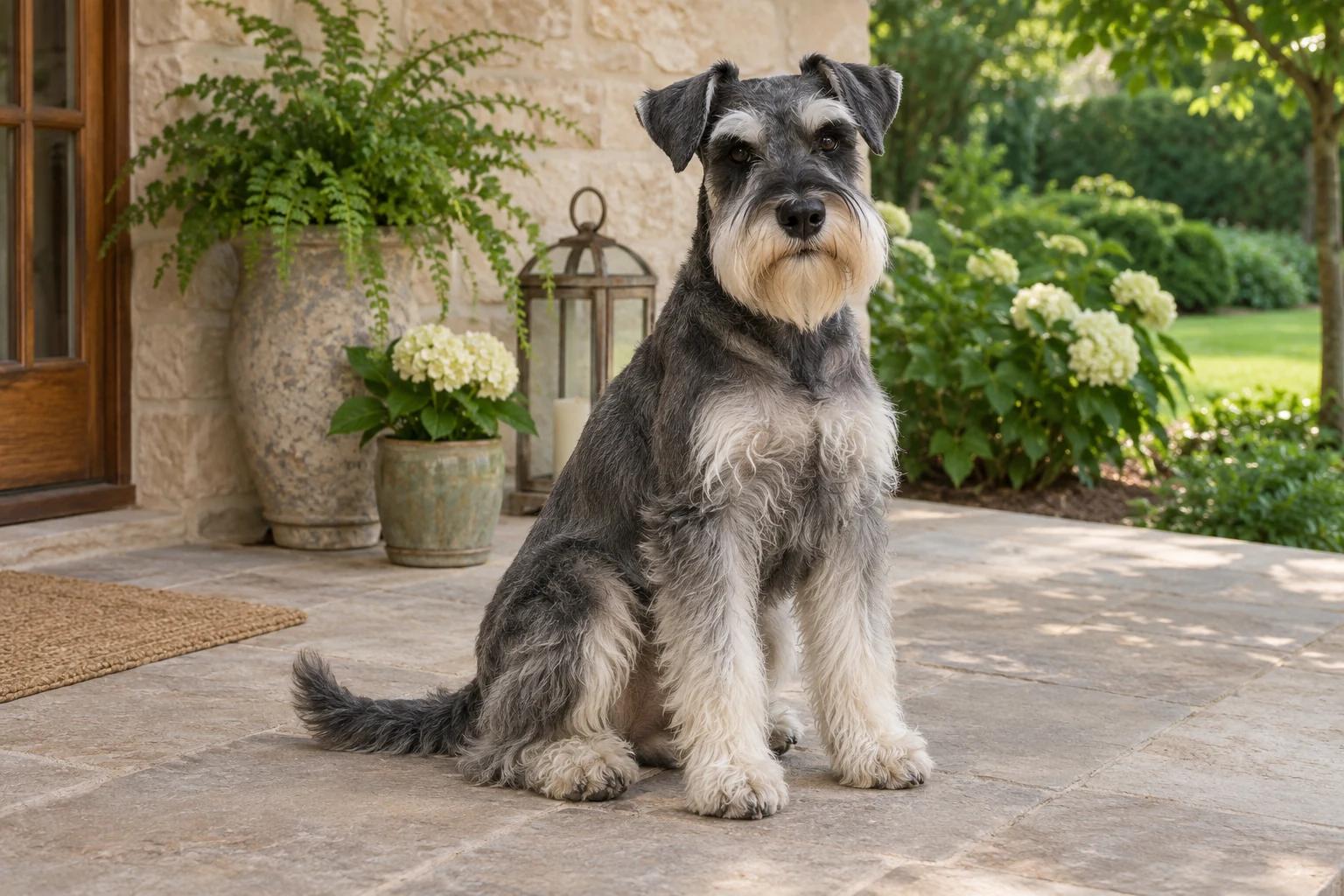
Miniature Schnauzer temperament is often described with words such as friendly, alert and intelligent. Those words become useful when you translate them into scenes: a dog noticing someone at the window, joining an activity or learning the routine around your kitchen.
The breed's expressive face makes it tempting to read a complete personality into a photograph. Instead, ask what the dog does, what happened just before it and how its familiar person responds. That approach helps you appreciate the individual without expecting every Schnauzer to play the same role.
Miniature Schnauzer temperament: alertness has an everyday side
The American Miniature Schnauzer Club describes a playful, affectionate and sometimes vocal dog. Alertness can be part of what owners enjoy: the dog notices changes and participates in household life. It also deserves consideration if your windows overlook a busy path or your entrance receives frequent deliveries.
Ask about ordinary triggers, not just whether the dog barks. What happens when a neighbour passes? What about a knock, a wheeled suitcase or someone arriving at an unusual hour? Does the caregiver use a familiar routine to help the dog move on to another activity?
You do not need to collect dramatic examples. A precise description of a normal Tuesday gives you more to work with than “excellent watchdog.” It also avoids building expectations around a dog providing protection, which is not a useful basis for selecting a household companion.
Company means making a place in your day
The AKC's Miniature Schnauzer lifestyle guide highlights affection toward familiar people and interest in household activities. If that appeals to you, picture where the dog will be while you cook, work, read or get ready to leave.
You may enjoy a companion nearby without wanting constant interaction. Make space for both shared activities and quiet rest. A dog bed beside a desk needs to be out of the chair's path; a resting place near the kitchen should not be where everyone repeatedly steps over it.
Before choosing a dog, explain your normal absences to its caregiver. Ask what is known about the individual's experience of time apart and what support may be needed. Affection is not evidence that a dog can manage any length of absence, and a sociable meeting does not answer the workday question.
Intelligence is an invitation to teach, not a shortcut
One appealing part of Miniature Schnauzer personality is an interest in learning. The AKC recommends keeping practice brief and varying activities to sustain engagement. That does not mean a dog will automatically infer the rules you meant to teach.
Pick a practical skill and describe it in observable terms. “Wait beside the mat while I put away groceries” is clearer than “behave in the kitchen.” Decide which household member will demonstrate the routine and how everyone else will use the same cues.
When meeting an adult, ask the caregiver to show a familiar exercise. Notice how the dog is invited to participate and what happens when the task ends. Ask which skills are well established and which still need work. With a puppy, the conversation should focus on the teaching you will undertake rather than on predictions of effortless obedience.
Friendliness does not require greeting everyone
A friendly breed description can create pressure to make every interaction successful. Give that expectation some room. A dog may enjoy familiar visitors while needing more space with someone new, or prefer a calm meeting to a crowded room.
Ask how introductions are usually arranged. Where does the visitor stand? Can the dog approach without being surrounded? Is there a quiet place it can use during the visit? These questions turn an abstract trait into a plan you can actually follow.
The AKC notes that interest in playing with other dogs varies by individual. If you already have a dog, discuss the particular pairing and arrange introductions with appropriate help. Do not assume a sociable label means unrestricted dog-park play is the right activity for every Miniature Schnauzer.
Separate a personality trait from a specific problem
Miniature Schnauzer behavior should be described before it is labelled. “Barked when the courier arrived and then stayed by the door” is an observation. “Dominant” or “jealous” adds an explanation you may not have evidence for.
A simple note can record the situation, the behaviour and what followed. Include changes in the environment, such as new building work or a different caregiver. This gives a qualified trainer or veterinarian useful information if you need help.
Do not dismiss a sudden change as typical terrier character. New distress, discomfort or an unexpected behaviour change deserves veterinary attention. A breed profile can explain general tendencies; it cannot determine why one dog is acting differently today.
Ask questions that reveal the individual
When exploring Miniature Schnauzer characteristics, use a few situations you genuinely care about rather than asking for a perfect dog in every category. You might ask:
- What does this dog choose to do during a quiet evening?
- How does it respond when the usual routine changes?
- Which familiar activities does it enjoy sharing with people?
- What arrangements help when visitors arrive?
- What would a new caregiver need to know on the first day?
Ask for examples and follow-up details. If someone says the dog loves attention, ask what that looks like. If they say it learns quickly, ask which skill was taught most recently. Specific answers help you understand both strengths and the support the dog may need.
For a puppy, accept that some questions remain open. Ask about the current environment and the experiences already provided, then discuss what you will continue at home. No short meeting can reveal every aspect of an adult personality that has not yet developed.
Decide whether you enjoy the likely relationship
An alert, engaged companion can be delightful if you want a dog involved in daily life and enjoy teaching. It may be less appealing if you mainly want a silent presence requiring little participation. Being honest about that preference is kinder than expecting a dog to become a different kind of companion.
Use the Miniature Schnauzer profile to put temperament beside activity and care. The dog match quiz can help organise your preferences, while the Miniature Schnauzer grooming article explains another recurring commitment. Then return to the individual dog's actual history and the life you can offer.
FAQ
Are Miniature Schnauzers usually quiet dogs?
Alertness and vocal communication are part of the breed picture. Ask about the individual dog's responses to your likely triggers, such as visitors or corridor noise, rather than expecting a general description to predict silence.
Does intelligence make a Miniature Schnauzer easy to own?
Intelligence can make shared learning enjoyable, but household skills still need teaching. Clear routines, suitable activities and consistent cues matter more than assuming a clever dog already understands your expectations.
Will a Miniature Schnauzer enjoy every other dog?
Not necessarily. Interest in other dogs varies, and compatibility concerns specific individuals. Discuss social history and arrange appropriate introductions rather than treating breed friendliness as a promise of a successful pairing.
Sources behind this article
- American Miniature Schnauzer Club: All About Miniature Schnauzers ↗
- AKC: Is the Miniature Schnauzer Right for You? ↗
Article source checked: November 15, 2026. Source checked 2026-11-15
Keep reading

Airedale Terrier Temperament: What Everyday Life Can Feel Like
Read article →