Miniature Schnauzer exercise needs: build a varied day
Plan walks, sniffing, play and rest around your Miniature Schnauzer rather than chasing a universal exercise target.
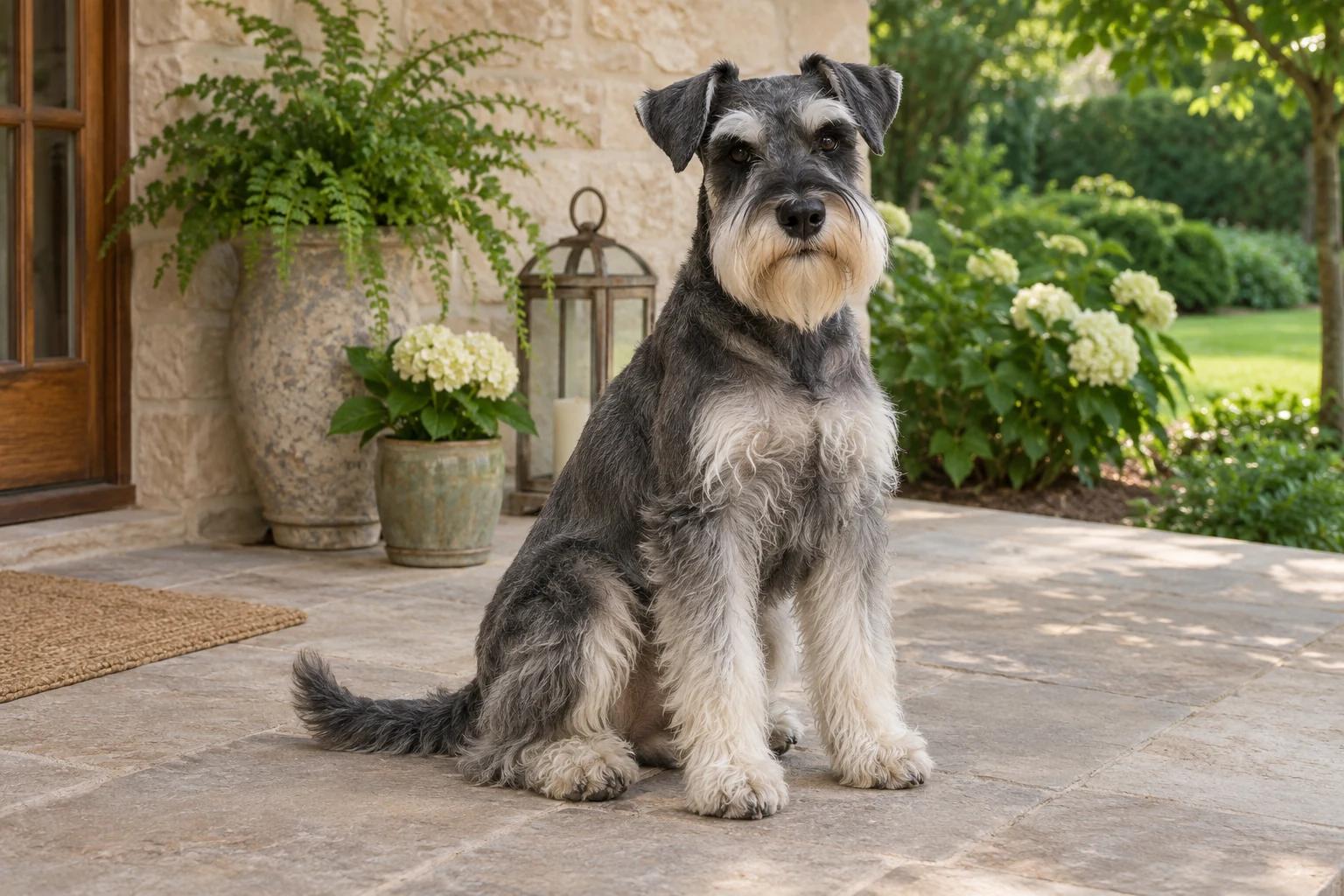
Miniature Schnauzer exercise needs are best met with a varied routine you can repeat, rather than one exhausting outing saved for the weekend. Think about walking, opportunities to investigate, shared play and time to settle. The useful question is not simply how many minutes appear on a tracker, but what the dog does during them.
My Breed Atlas places the breed's activity tendency around the middle of its reference scale while giving mental engagement an important place. That combination makes a thoughtful daily plan more useful than treating a small body as a reason to skip activity.
Miniature Schnauzer exercise needs are not a stopwatch rule
When asking how much exercise does a Miniature Schnauzer need, start with the individual dog's age, current routine and veterinary advice. The American Miniature Schnauzer Club describes moderate exercise and involvement in family life. That is a broad ownership picture, not a fixed prescription for every dog.
VCA's play and exercise guidance recommends activities suited to the dog's preferences and abilities, with veterinary input before rigorous exercise. It also recognises sniffing walks as a form of engagement. More effort is not automatically a better answer when the activity or setting is unsuitable.
Before changing a routine, write down what currently happens. Include toilet outings, purposeful walks, play and rest separately. Otherwise, a brief trip outside may accidentally be counted as the day's main walk simply because both involved putting on a lead.
Give each outing a purpose
A Miniature Schnauzer daily walk can serve more than one purpose, but it helps to know your main aim. One outing may be an unhurried chance to sniff. Another may include a short piece of familiar leash practice. A practical toilet trip between meetings is useful too, but it is a different event.
Choose routes accordingly. A narrow pavement beside fast traffic may be a necessary passage rather than the best place for a relaxed exploration. A quieter loop with room to pause may be easier to share at the dog's pace. Think about crossings, exits and where you can turn back without completing a long circuit.
If you are trying a new route, leave some flexibility in your own schedule. A dog investigating unfamiliar surroundings does not know that you have promised to be home at an exact minute. Plan a shorter route with time to spare rather than hurrying through the only outing you intended to make enriching.
Keep the chasing instinct in the plan
The breed club notes an interest in pursuing small prey and recommends on-leash walks or secure fencing. A bird or rodent can change the outing very quickly, so choose the environment and equipment before the interesting distraction appears.
Check gates and boundaries in any enclosed area you intend to use. Do not assume that a place described casually as a dog field is fully secure for your dog. If you use a new facility, understand the entrance arrangement and whether other dogs will share the space.
At home, decide who checks the gate after gardening or a delivery. A useful exercise area depends on consistent human habits as well as a fence. The dog should not be responsible for remembering that a previously closed opening is now accessible.
Add a small menu of shared activities
A varied day does not require buying a new puzzle every week. Start with activities you can organise and tidy away easily: a familiar toy game, a simple search with suitable items or a brief practice of an established skill. Ask a qualified trainer for help choosing and introducing activities if you are unsure.
Keep a short list of options rather than using the same game automatically. Beside each, note the space it needs and what preparation is involved. An activity that works in a clear living room may not suit the kitchen while someone is cooking.
Watch whether both participants can finish comfortably. If a game becomes difficult to interrupt, reconsider its setup with professional guidance instead of extending it in the hope that exhaustion will solve the problem. The goal is a repeatable shared activity, not a competition against the dog's enthusiasm.
Plan for the unglamorous days
Rain, late meetings and a caregiver's illness are ordinary parts of ownership. Write a fallback plan before they happen. Who can cover an outing? Which quieter route is usable? Where can you do a little appropriate indoor practice without moving all the furniture?
A backup is not a promise that indoor games replace every outdoor need. It is a way to keep the day organised when the usual schedule changes. Prepare equipment and contact details so a helper does not have to guess where the lead is or which route you normally take.
Avoid making a much larger weekend effort the automatic repayment for several thin weekdays. If you want to introduce longer or more strenuous activities, discuss the plan with your veterinarian. Build the schedule around the dog rather than around guilt about a missed outing.
Observe the whole day, including rest
Miniature Schnauzer activity level is easier to understand when you consider what happens after an outing as well as during it. Keep simple notes about the route, the activity and anything unusual you noticed later. You are gathering information, not diagnosing a problem from a single evening.
Do not push through apparent discomfort or a sudden change in willingness to move. Stop the activity and contact your veterinarian when you are concerned. A dog declining an activity does not need to prove enthusiasm to match a breed description.
For a weekly review, ask three practical questions: did the routine fit our schedule, did the activities seem manageable, and what should we discuss with a professional? Change one part at a time so you can tell what actually improved the arrangement.
Fit activity beside the rest of care
The Miniature Schnauzer profile shows exercise as one part of the ownership commitment. Leave time after outings for ordinary cleanup and coat attention; the grooming guide explains that separate routine.
If you are still choosing a dog, use the dog match quiz to consider whether you enjoy the daily participation involved. The best exercise plan is not the most impressive one on paper. It is a suitable routine you can provide consistently and adapt with informed help.
FAQ
Does every Miniature Schnauzer need the same exercise time?
No. Age, current condition, established activity and individual needs matter. Use breed descriptions as orientation and ask your veterinarian about a suitable plan, especially before introducing strenuous activity.
Do sniffing walks count as activity?
Yes. An outing that allows appropriate exploration and sniffing can provide engagement as well as movement. Choose a suitable setting and equipment rather than judging the walk only by speed or distance.
Is a garden enough by itself?
A garden can support supervised activities, but it does not organise them. Plan shared walks, play or learning as appropriate, and check that gates and boundaries remain secure whenever the area is used.
Sources behind this article
- American Miniature Schnauzer Club: All About Miniature Schnauzers ↗
- VCA: Dog Behavior and Training, Play and Exercise ↗
Article source checked: November 15, 2026. Source checked 2026-11-15
Keep reading

Afghan Hound Exercise Needs: Build a Workable Active Day
Read article →