Miniature Pinscher vs German Pinscher: home and handling
Compare Miniature Pinscher and German Pinscher size, entrances, walks, noise and care when deciding which dog fits your household.
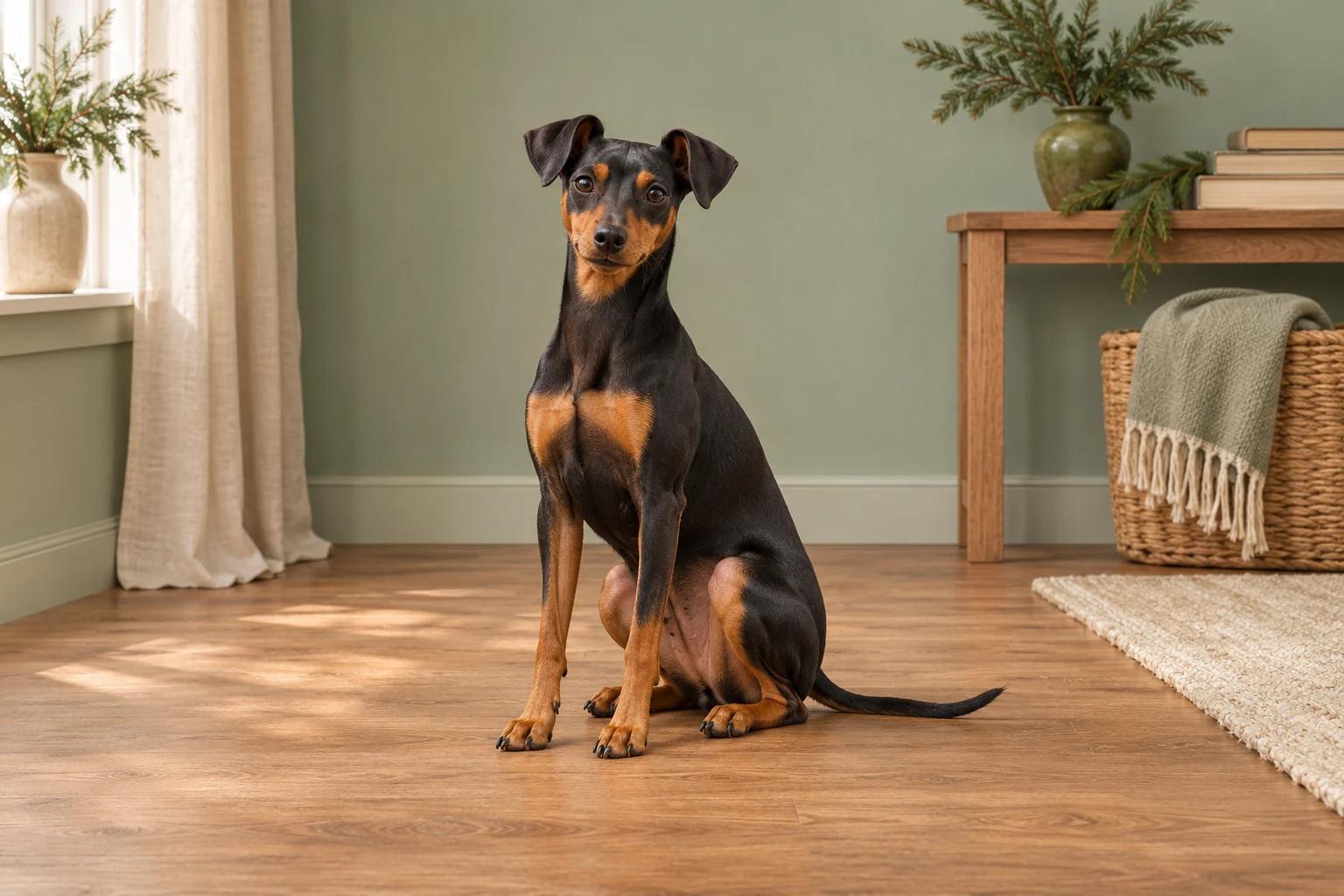
A Miniature Pinscher vs German Pinscher comparison is especially useful when you admire a sleek, compact outline but have not yet pictured the dog in your home. The height difference is substantial. The ownership decision also involves how you arrange entrances, share walking duties and make time for teaching.
Rather than asking which is the better Pinscher, ask which practical arrangements you can make reliably. A smaller footprint can be convenient, but it does not answer questions about company, noise or the individual's established habits.
Miniature Pinscher vs German Pinscher: start at shoulder height
The Miniature Pinscher Club of America's introduction describes a compact, short-coated dog standing 10–12.5 inches at the shoulder. The UKC German Pinscher standard describes a medium-sized, muscular, square-built dog at 17–20 inches, with a short, dense coat and an alert, playful character.
Those measurements give you a clear first distinction without relying on a photograph's scale. A German Pinscher standing beside a kitchen chair occupies a different amount of space from a Min Pin. Both still need equipment fitted to their own bodies, rather than accessories chosen solely by breed name.
Read the Miniature Pinscher profile and German Pinscher profile before arranging meetings. Then bring questions about the exact dog you might live with. Reference descriptions are useful starting points, while a caregiver's examples explain how daily life currently works.
Walk through your entrance before choosing
The front door is a revealing place to begin this comparison. Where does the dog wait while someone opens it? Is there a second barrier? Can visitors enter without everyone crowding the same narrow patch of floor?
With a small Min Pin, pay particular attention to gaps and sightlines near your feet. With the larger German Pinscher, consider turning room and where you will stand while attaching equipment. Neither situation is solved simply by having a garden somewhere beyond the house.
Rehearse the human side without a dog present. Carry a shopping bag through the entrance, put down your keys and close the door. Notice the moments when your attention is elsewhere. Decide which door stays shut and who is responsible for checking it. A routine that depends on everyone remembering a complicated sequence will be hard to maintain.
Compare walks by responsibility, not by enthusiasm
If several people will walk the dog, include them in the decision. Ask each person about their usual route, confidence with equipment and available time. One enthusiastic weekend walker cannot cover all the ordinary weekday outings unless that is genuinely the agreed arrangement.
A German Pinscher vs Miniature Pinscher meeting should include watching the dog on a familiar route with its caregiver. Look at preparation, pauses and transitions, not just whether it walks neatly for a few seconds. Ask which environments are straightforward and which require extra help.
Avoid assuming the Min Pin can always be carried when walking becomes inconvenient. Likewise, do not choose the German Pinscher because you imagine a larger dog automatically suits every outdoor ambition. Discuss the individual's present routine and any proposed new activities with appropriate professional guidance.
Include the sounds of your actual home
My Breed Atlas records a higher vocal tendency for the Miniature Pinscher than for the German Pinscher. That makes sound an important discussion, particularly if your home has a shared corridor, frequent deliveries or neighbours close to the windows.
Describe those conditions to the caregiver. Ask what the dog does when someone passes outside or knocks at the door. Does it return to another activity after the event? What does the person usually do? The answer should be an example, not a promise that a breed is silent.
You can also make a practical plan before a dog arrives. Decide where it can rest away from the busiest window and how deliveries will be handled. If a quiet home is non-negotiable, be honest about that requirement rather than expecting training to remove all normal vocal communication.
Short coats simplify one job, not the whole commitment
Both Pinschers have smooth coats, and their My Breed Atlas profiles describe relatively light grooming schedules. That can appeal to someone who does not want to maintain a long coat. It does not mean housekeeping or care appointments disappear.
Ask to see the routine the current caregiver uses. Where does brushing happen? Who handles nails? How is bedding washed? If a professional helps, find out what service is booked and how the dog responds to the visit.
Think about the equipment you already own, too. A large brush or heavy lead left over from another dog may not suit a Min Pin. A compact travel setup used for a smaller companion may not suit a German Pinscher. Check dimensions and fit rather than treating the difference as a reason to buy everything in matching colours immediately.
Decide what you want to learn together
For either breed, describe the household skills that would make life easier. Perhaps you need a dog to settle beside a desk, pause while a gate is opened or travel comfortably to a regular caregiver. Those are more useful priorities than choosing a dog because a description calls it intelligent.
Ask how the candidate responds to familiar cues and which rewards it enjoys. For an adult, request a handover of cue words and routines. For a puppy, think about who will teach those skills and how practice fits around work.
If your household already includes animals, discuss their routines before making a decision. The relevant issue is the particular pairing and the arrangements for introductions and separate space, not which breed wins a general sociability comparison.
Make the choice with constraints in view
The difference between Miniature Pinscher and German Pinscher ownership becomes clearer when you name your limits. A small car, limited lifting ability, a shared entrance or a fixed walking schedule are not trivial details. They are the setting in which your relationship with the dog will happen.
When choosing a Miniature Pinscher or German Pinscher, use the dog match quiz to organise priorities, then compare them with direct observations. The Min Pin background article provides further context without replacing those practical conversations.
FAQ
Which Pinscher is smaller?
The Miniature Pinscher is substantially shorter: its reference height is 10–12.5 inches, compared with 17–20 inches for the German Pinscher. Measure an individual dog when selecting equipment or checking travel arrangements.
Is a Min Pin automatically better for an apartment?
No. Its smaller size may help with space, but noise, outdoor access, time with people and the dog's habits also matter. Describe your building and routine to the caregiver before deciding.
Do both breeds have short coats?
Yes. Both have smooth, short coats. They still need regular care, including an appropriate brushing routine and arrangements for tasks such as nails. Ask for a demonstration on the dog you are considering.
Sources behind this article
Article source checked: November 15, 2026. Source checked 2026-11-15
Keep reading

Affenpinscher vs Brussels Griffon: Everyday Differences
Read article →