Miniature Bull Terrier vs Bull Terrier: everyday fit
Compare Miniature Bull Terrier and Bull Terrier size, handling, coat care and daily routines before choosing an individual dog.
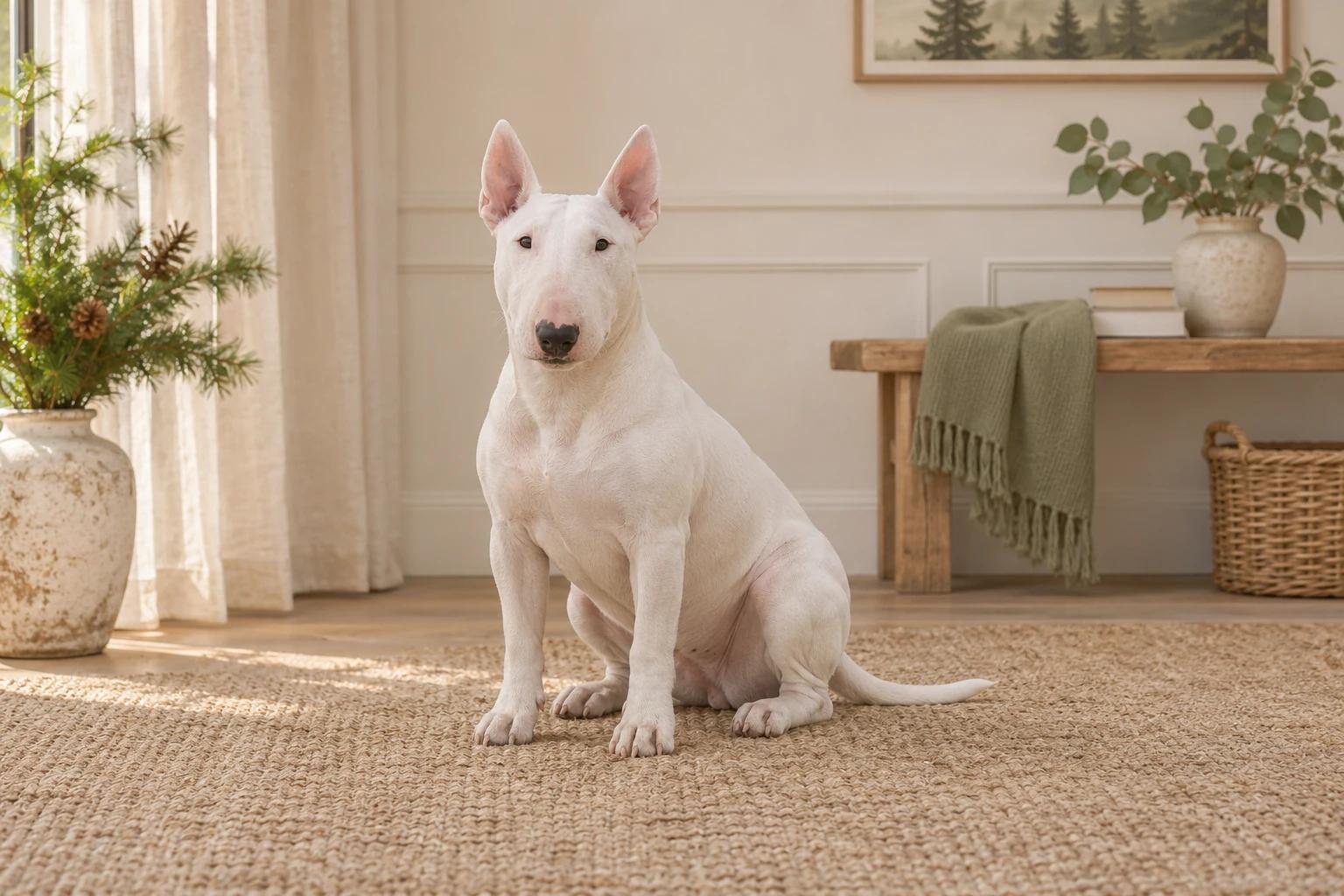
The Miniature Bull Terrier vs Bull Terrier choice starts with a very visible difference: scale. Both have a distinctive curved head and substantial build, but the smaller dog changes the practical business of fitting equipment, sharing a hallway and travelling. It does not automatically turn terrier ownership into an easier project.
Choose with your ordinary surroundings in mind. A photograph can show the look you prefer; it cannot tell you how a dog waits at your front door or settles after an outing. Those details deserve as much attention as measurements.
Miniature Bull Terrier vs Bull Terrier: what changes in size?
The UKC Miniature Bull Terrier standard sets a maximum height of 14 inches at the withers and describes a muscular, active dog. The UKC Bull Terrier standard has no height or weight limit. Both standards describe the characteristic egg-shaped head and a short, close coat.
For everyday reference, the Miniature Bull Terrier profile lists adults at 10–14 inches and 18–28 pounds. The Bull Terrier profile lists a much taller 21–22-inch reference height. Measurements of an actual adult are more useful than estimating proportions from a puppy photograph.
That difference between Miniature Bull Terrier and Bull Terrier size matters at home. Sketch where a bed would sit, including the space needed to walk around it. Measure the vehicle area intended for a suitable restraint or crate. Check the narrow doorway between the kitchen and garden. A compact dog may make these arrangements simpler without removing the need to plan them.
Handling is a daily task, not a strength contest
Imagine the first minute of a walk: collecting a lead, opening a door, passing a neighbour and reaching the pavement. Which parts are already awkward in your building? A bigger dog can make a crowded entrance harder to manage, especially before a shared routine is established.
Ask to observe the prospective dog being equipped and walked by its familiar caregiver. Notice where the person stands, how the dog responds to a pause, and what happens when the route changes. If possible, practise under that person's guidance in an appropriate setting. Watching a polished video is less informative than understanding the routine you will inherit.
Do not buy a Miniature solely because you expect to lift it whenever something becomes difficult. Handling should include teaching and suitable equipment, not relying on carrying as the answer to every doorway or distraction. Discuss practical help for stairs, transport and appointments before bringing either dog home.
Make room for shared activities
Both My Breed Atlas profiles place activity and mental engagement toward the higher end of their reference scales. The Miniature therefore belongs on the shortlist for someone who wants to participate, not someone seeking a decorative version of a larger dog.
Picture a day with a walk, a little purposeful practice, play and uninterrupted rest. Where would those pieces fit? A garden might provide space for a game, but it does not arrange the game or teach the household routine. If your plan consists of opening a door and hoping the dog entertains itself, revisit it before choosing either breed.
Ask the caregiver for examples from a normal weekday. What does the dog enjoy when nobody is visiting? How long does preparing an outing take? What happens after play ends? These questions reveal more than asking which breed has “more energy,” because they describe work you would actually do.
Similar coats do not settle the housekeeping question
Both breeds have short coats, so neither requires the daily management of long feathering or a floor-length coat. Nevertheless, compare the practical cleanup rather than assuming short hair disappears. My Breed Atlas records lighter shedding for the Miniature and heavier shedding for the Bull Terrier.
Look at the dog's usual bedding and ask how it is cleaned. If the dog will travel with you, consider washable covers and where they will dry. If your favourite sofa is difficult to clean, decide whether a designated cover or another resting place would suit the household before establishing habits.
Request a demonstration of routine care. Does the dog stand comfortably for brushing? What arrangements are used for nails? Which tasks does the caregiver manage and which involve a professional? A short coat narrows one part of grooming; it does not answer every care question.
Compare two real dogs, not two labels
A Bull Terrier vs Miniature Bull Terrier search can make temperament sound like a menu of fixed settings. Instead, write down the situations most relevant to your home and ask about each one. Meeting visitors, travelling, being left with a caregiver and passing other dogs are separate experiences.
If another animal already lives with you, disclose that early. Ask what is actually known about the candidate dog's history and how introductions could be arranged with appropriate help. A breed description is not evidence that two particular animals will share space comfortably.
For an adult dog, request a clear account of its established routine and any support it needs. For a puppy, ask what the household will be expected to teach. The smaller option may fit your car better while requiring just as much planning around daily manners.
A practical way to make the final choice
When deciding on a Miniature Bull Terrier or Bull Terrier, separate your notes into three columns: space, participation and known individual needs. Put measurements in the first, your available walking and teaching time in the second, and the caregiver's concrete examples in the third.
A size preference is legitimate. So is deciding that neither dog suits your current schedule. Use the dog match quiz to examine your priorities, then return to the notes from actual meetings rather than treating the result as a verdict.
For background beyond this everyday comparison, read the Miniature Bull Terrier's comeback story. Knowing the breed's background can deepen your interest, while the everyday decision still rests on the dog and the life you can share.
FAQ
Is a Miniature Bull Terrier simply a tiny Bull Terrier?
The two share a distinctive appearance, but the Miniature has its own breed identity and a smaller height standard. Choose equipment using the dog's actual measurements, not the word miniature on a label.
Is the Miniature automatically easier to walk?
A smaller body can make handling more manageable, but leash behaviour depends on the individual and its training. Observe a real outing and ask which skills you will need to continue practising.
Which breed needs less coat cleanup?
My Breed Atlas records lighter shedding for the Miniature Bull Terrier than for the Bull Terrier. Both still need a workable brushing and cleaning routine. Ask about the specific dog's coat and usual care before making plans.
Sources behind this article
Article source checked: November 15, 2026. Source checked 2026-11-15
Keep reading

Affenpinscher vs Brussels Griffon: Everyday Differences
Read article →