Miniature Bull Terrier size: planning for an adult
Understand Miniature Bull Terrier height and weight, measure for equipment, and plan for a compact but substantial adult dog.
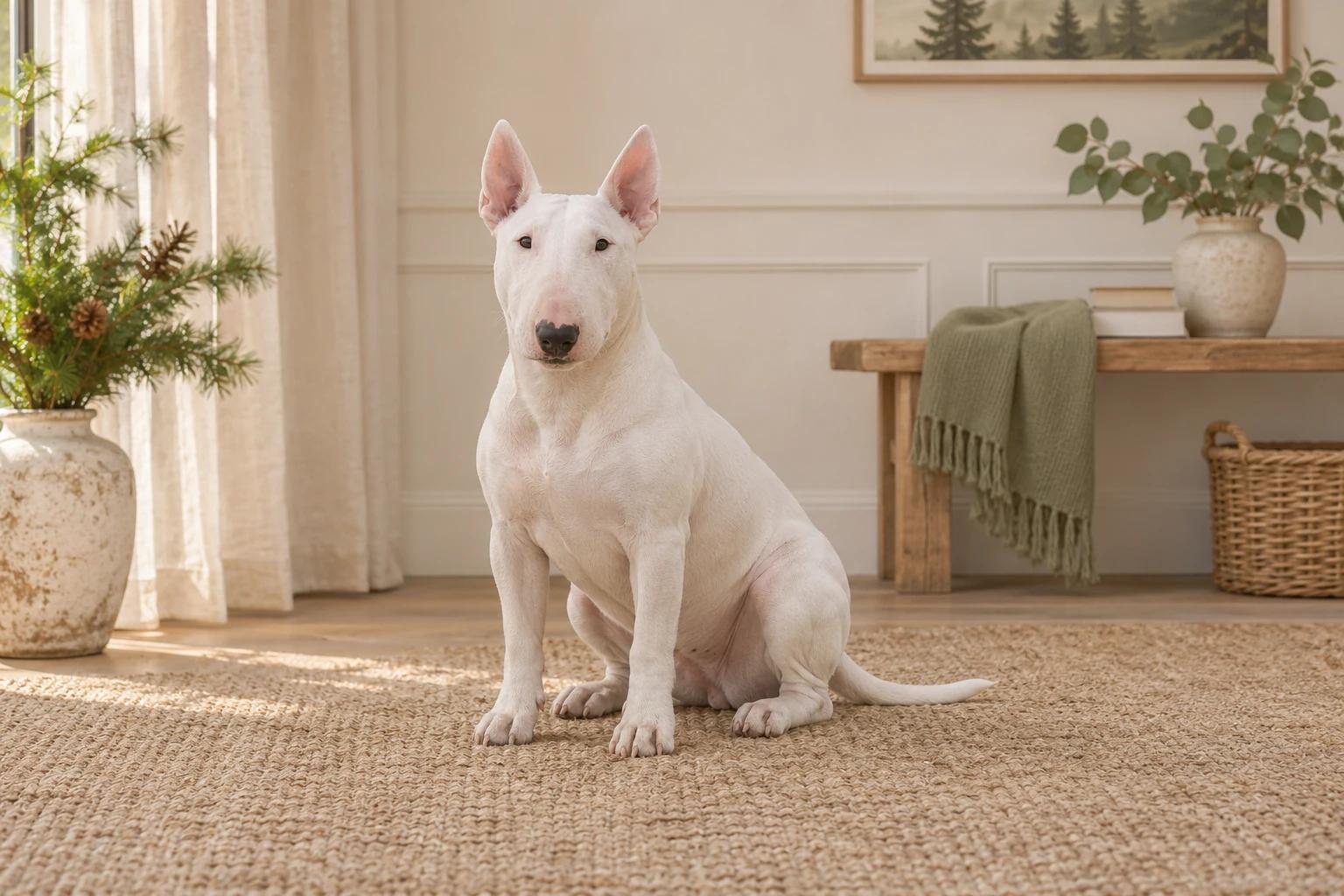
Miniature Bull Terrier size is best understood as compact and substantial, not pocket-sized. My Breed Atlas lists an adult reference range of 10–14 inches tall and 18–28 pounds. Those figures help with early planning, but the dog's chest, body length and actual measurements will decide whether a harness, bed or travel setup fits.
Before ordering a complete matching kit, separate what you know from what you are estimating. An adult can be measured directly. A growing puppy needs equipment checks and room in the budget for changes.
Miniature Bull Terrier size: height and weight mean different things
Miniature Bull Terrier height is measured at the withers, the shoulder area, rather than at the top of the ears. The UKC standard sets a maximum of 14 inches there. It specifies no weight limit, describing substance in relation to the individual dog's size instead.
A breed standard is not a forecast for a particular puppy. Likewise, the 18–28-pound reference on the Miniature Bull Terrier profile is a useful orientation, not a personal target to reach. Keep those different purposes in mind when comparing a listing, a measurement and a scale reading.
For the question “how big do Miniature Bull Terriers get,” the most useful answer combines the breed reference with information about the dog. Ask for current measurements and the age when they were taken. For a puppy, discuss the parents' adult dimensions and what remains uncertain rather than requesting an exact adult promise.
Measure for the item, not for the breed label
A seller's small, medium and large categories are not universal. A harness marked small may suit one body shape and fail to fit another. Miniature Bull Terriers have a substantial frame, so do not assume equipment intended for a lightly built small dog will work.
Read the item's measurement instructions before taking out the tape. For a harness, record the requested chest and neck measurements and check the adjustment range. For a coat, the maker may also need back length. Write the units beside every number so centimetres and inches do not get mixed up during an online order.
After fitting, observe the dog walking and turning. Ask a knowledgeable fitter to check the arrangement if you are unsure. Do not treat a product photograph or a breed-name recommendation as a substitute for fit. Keep packaging until you have checked the seller's return conditions and the item's suitability.
Make a simple equipment card
A note on your phone can hold the measurement date, chest, neck, back length and current weight. Add the brand and size of equipment that actually fits. If several people buy supplies, share that note rather than asking each person to remember a number.
Keep past entries instead of overwriting them. The point is not to create an elaborate growth spreadsheet. It is to avoid ordering yesterday's size because an old message happened to be easier to find.
A compact dog still occupies real space
Use the dog's resting posture when choosing a bed. A curled-up photograph can underestimate how much floor space is needed when the dog stretches out. Consider both the sleeping surface and the outside footprint of any raised edges.
At home, try marking the intended bed area with removable tape before buying. Can you still open the cupboard? Does the dog have a resting place away from the busiest route? Will a person carrying laundry need to step over it? These questions matter more than whether the bed looks proportional in the shop.
For travel, take measurements of both the dog and the available vehicle space. Check the chosen product's instructions and arrange suitable restraint. Do not assume a carrier will be usable simply because the dog's weight falls below a number printed on it. Body dimensions and the intended use also matter.
Plan around the dog you can handle
An adult Miniature Bull Terrier can be a meaningful weight to lift. Consider who will help if carrying becomes necessary and where assistance would be awkward: a high vehicle opening, a staircase or a slippery entrance. Discuss suitable handling arrangements with a veterinarian or experienced caregiver instead of improvising under pressure.
The everyday goal is not to carry the dog everywhere. A well-organised entrance, accessible equipment and a practised routine may reduce unnecessary lifting. Think about where the lead is stored and where the dog waits while you put on shoes.
If you travel frequently, ask caregivers what their setup allows. A friend who can host a small dog in principle may have restrictions about stairs, transport or available space. Share actual dimensions and routines rather than saying only that you have a miniature breed.
Do not turn a reference weight into a feeding goal
Miniature Bull Terrier weight tells you what the scale records; it does not by itself explain body condition. VCA's body-condition guidance distinguishes fat coverage from the underlying frame and muscle. Ask your veterinary team to assess your dog and demonstrate what to monitor.
Keep the useful information together for appointments: dated weights, the current feeding routine and any questions about changes you have noticed. Avoid changing food amounts simply to move the dog closer to the middle of an online range. Personal feeding and weight questions belong with the veterinarian.
For household planning, reserve some flexibility. A puppy's first harness may not be its last. A bed that technically fits may not be the dog's preferred resting arrangement. Buy essentials carefully, then let observed use guide later purchases rather than filling the house with equipment based on a projected adult number.
Size is one part of the ownership decision
The breed's compact measurements should sit beside its need for activity, mental engagement and company when you assess fit. The dog match quiz can help organise those priorities. If you enjoy the breed's distinctive identity, the Miniature Bull Terrier history article offers a separate introduction to its background.
For now, aim to leave the size question with three usable pieces of information: a realistic adult reference, current measurements and a plan to recheck equipment. That is more valuable than finding the smallest possible number attached to the breed.
FAQ
What is the usual adult Miniature Bull Terrier size?
My Breed Atlas lists a reference of 10–14 inches tall and 18–28 pounds. These are planning ranges, not a guaranteed adult outcome for an individual puppy or a required weight for an adult.
Should I buy harnesses by weight alone?
No. Follow the manufacturer's measurement instructions and check the fit on the dog. Chest shape and the available adjustments matter as well as weight, especially for a compact, substantial breed.
Is a dog outside the listed weight range automatically overweight?
No. A scale reading alone cannot establish body condition. Ask a veterinarian to assess the individual dog rather than changing its food to match a breed reference range.
Sources behind this article
Article source checked: November 15, 2026. Source checked 2026-11-15
Keep reading

Airedale Terrier Temperament: What Everyday Life Can Feel Like
Read article →