Manchester Terrier Standard size: a practical guide
Understand Standard Manchester Terrier size, proportions and equipment fit, with practical ways to use measurements rather than appearance alone.
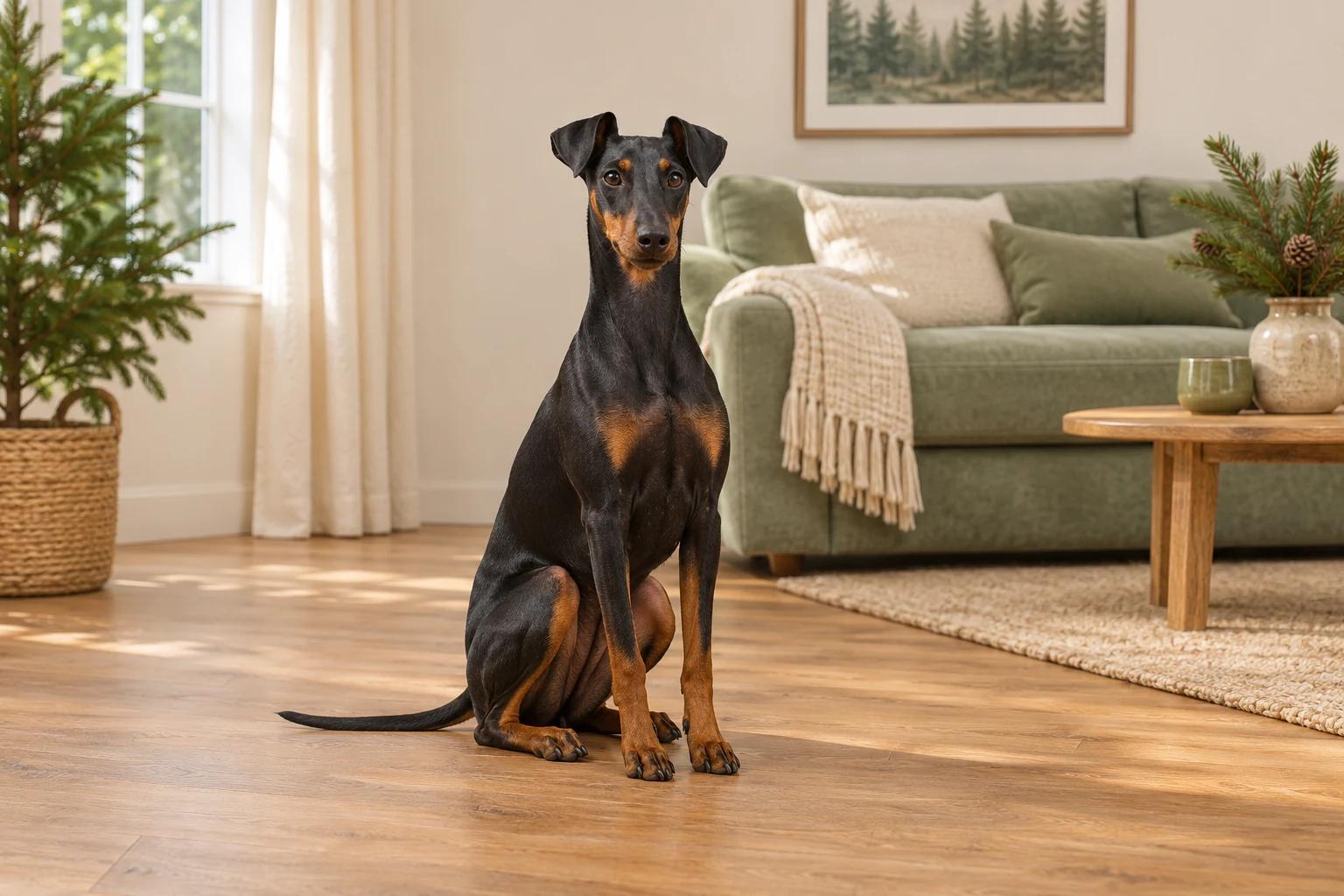
Explore the
Manchester Terrier (Standard)
Background, care, and everyday considerations.
View breed profile →Manchester Terrier Standard size describes a compact, athletic dog, not a miniature version of a large terrier's lifestyle. The sleek outline makes the breed look light and tidy, but choosing equipment or planning a home requires actual measurements. A weight figure alone cannot tell you how a harness will sit or whether a carrier provides enough room.
Start with the Standard variety's profile, then move quickly to the individual dog. The measurements you need depend on the decision: weight for a load limit, body dimensions for fit, and usable space for resting or travel.
Manchester Terrier Standard size in context
The Standard Manchester Terrier profile lists a typical adult height of 15–16 inches and an adult weight reference of 12–22 pounds. Treat that as a reference, not a measurement of the dog you are considering. Height is taken at the shoulder rather than to the top of the head or ears.
The American Manchester Terrier Club's standard sets an upper weight limit of 22 pounds for the Standard variety and describes a body slightly longer than tall. These are breed-standard reference points, not instructions to alter a companion dog's weight.
The word “Standard” distinguishes the variety; it does not mean large. When reading an advertisement, veterinary record or equipment recommendation, check that the full variety name has been retained. A page labeled simply “Manchester Terrier” may discuss more than one size.
Understand the outline before choosing equipment
The breed's close coat makes the body outline easier to see than it would be beneath long furnishings. Even so, a side photograph cannot replace a chest measurement or show how a strap sits when the dog moves.
Ask to see the dog standing naturally and walking, not only posed for a portrait. For equipment, follow the maker's fitting instructions on the actual dog. A product advertised for “small terriers” may have a different shape from the one you need.
When trying a harness, observe the fit after a few ordinary steps as well as while standing. Check that the adjustment has not shifted and that the design suits the dog's body. If you are uncertain, ask an experienced fitter rather than ordering repeatedly from a weight-only chart.
Our article on Standard Manchester portraits discusses a separate identification detail. For size planning, concentrate on body dimensions rather than using a head or ear silhouette as a shortcut.
Keep Manchester Terrier Standard weight separate from condition
VCA's body-condition explanation distinguishes the amount of body fat relative to the dog's build from its weight on a scale. Ask your veterinarian to interpret both for your individual Manchester rather than treating a breed figure as a personal target.
That distinction matters when comparing dogs. One adult may have different proportions from another, and a single weigh-in does not explain the difference. Keep a record of measurements taken during ordinary veterinary visits and ask about changes that concern you.
Do not reduce or increase food to make a dog match a show reference. A companion's feeding plan should reflect the veterinary assessment of that animal. If a puppy's adult estimate changes, update the equipment plan rather than trying to preserve the original prediction.
A useful measurement record is short and labeled
For Manchester Terrier Standard height, note the method and the date, especially if several people take measurements. A puppy stretching upward or crouching can produce an unhelpful result. Ask for assistance if you cannot obtain a calm standing measurement.
For shopping, record only what the item requires. A harness may need chest and neck measurements; a coat may use back length as well. Keep the manufacturer's diagram with the numbers so you remember exactly where the tape was placed.
Use one set of units consistently. If a retailer uses another, convert carefully and keep the original value beside the conversion. This prevents a hurried purchase based on a number copied without its unit.
A photograph can help you remember equipment fit, but label it with the date and item. It is a record of that fitting, not proof that the same size will continue to work as a young dog develops.
Plan resting and travel space around usable room
A dog can curl into a surprisingly small space, but that is not the only posture a bed or carrier must accommodate. Look at the interior, the entrance and the shape of the usable floor. Raised sides and padding can reduce the room suggested by external dimensions.
For a bed at home, consider where the dog tends to rest. An item that fits neatly beside a sofa may obstruct the path to the door when someone opens it. Measure the location as well as the product and leave space for ordinary household movement.
For travel, check the operator's current rules and arrange a fitting before the journey. A carrier that meets a transport limit does not automatically meet the dog's needs. Avoid making a trip depend on the assumption that every Standard Manchester will fit the same bag.
Growing dogs need adjustable plans
If you are asking how big do Manchester Terrier Standards get because you are preparing for a puppy, request adult family measurements and the caregiver's explanation of the estimate. Keep those details separate from the puppy's current dimensions.
Buy essential equipment that fits now and identify what can be adjusted. Check fit regularly rather than waiting until a strap looks obviously wrong. Ask the veterinary team which growth information would be useful to record between appointments.
It can be sensible to postpone a costly custom item until measurements are more settled. That is a purchasing decision, not a reason to delay necessary equipment. A straightforward temporary option may serve better than an elaborate item bought for an uncertain future size.
Size is one part of home suitability
A compact body does not decide whether a household can meet the dog's activity and learning needs. Consider routes for outings, storage for equipment and the time available for interaction alongside the footprint of a bed.
The dog match quiz can help you look beyond measurements. Before committing, write down both the physical arrangements and the daily responsibilities. Knowing that the dog fits your space is useful; knowing how its day will work is the next essential step.
FAQ
How tall is a Standard Manchester Terrier?
The My Breed Atlas profile gives 15–16 inches as a typical adult reference. Measure an individual at the shoulder when fit matters; head height and a posed photograph are not substitutes for that measurement.
Does the 22-pound standard limit tell me what my dog should weigh?
No. A breed-standard limit is not an individual feeding or body-condition target. Ask your veterinarian to interpret your dog's weight and condition rather than changing food to match a reference figure.
Should I buy a harness using breed name alone?
No. Follow the manufacturer's measurements and check the harness on the actual dog, including after ordinary movement. Dogs of similar weight can need different adjustments or designs.
Can I buy all adult equipment before a puppy arrives?
You can plan ahead, but essential equipment must fit the puppy now. Choose adjustable items where appropriate, recheck fit as the dog grows and postpone expensive custom purchases when adult measurements remain uncertain.
Sources behind this article
- American Manchester Terrier Club: Breed Standard ↗
- VCA Animal Hospitals: Body Condition Scoring in Dogs ↗
Article source checked: November 15, 2026. Source checked 2026-11-15
Keep reading

Airedale Terrier Temperament: What Everyday Life Can Feel Like
Read article →