Maltipoo size: planning beyond a puppy estimate
Understand Maltipoo size estimates, useful measurements and equipment fit without relying on a universal growth chart or a tiny-size label.
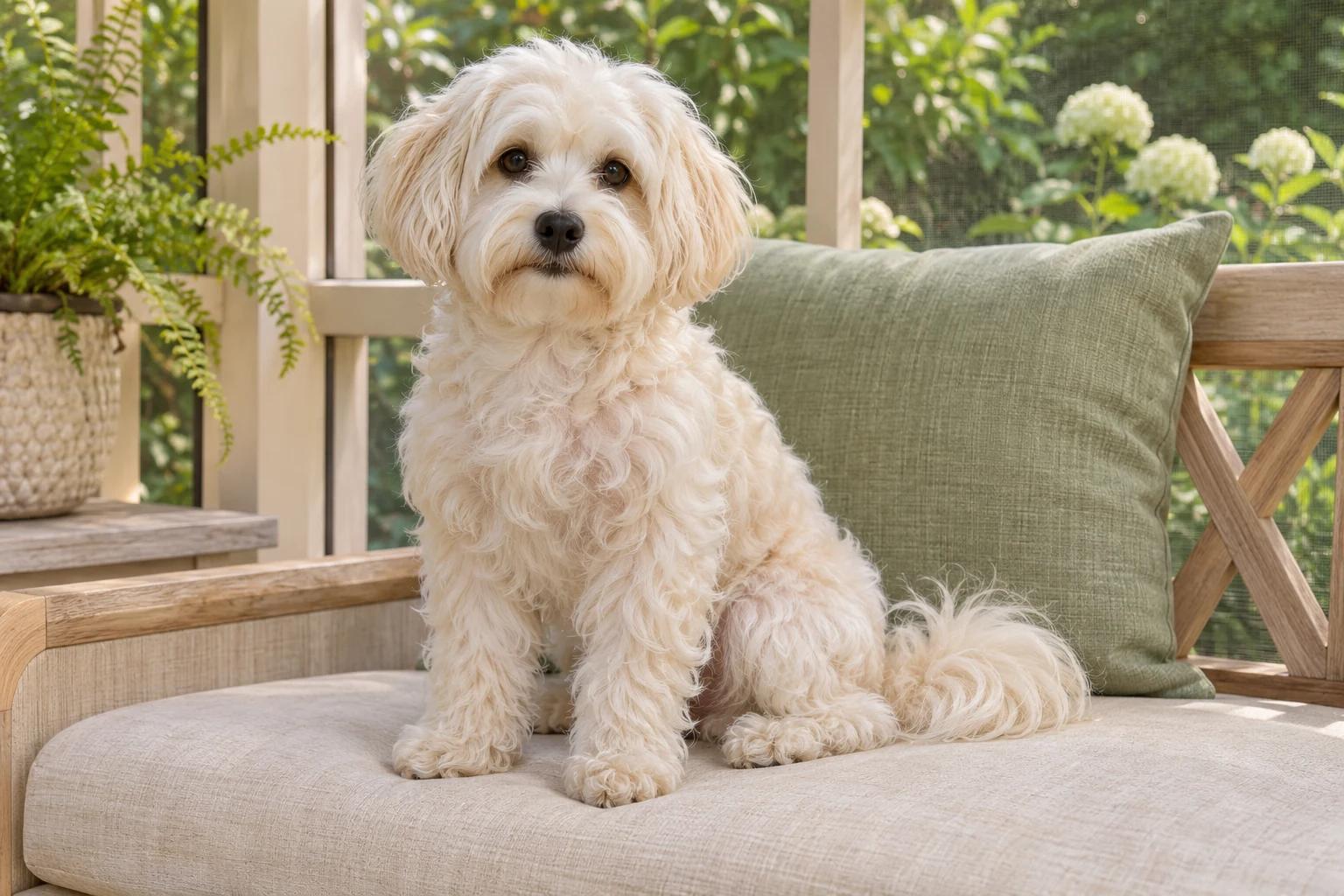
Maltipoo size is best approached as an estimate to investigate, not a fixed specification attached to the name. These dogs have Maltese and Poodle ancestry, and the actual family background matters when discussing how a puppy may mature. For an adult, direct measurements are more useful than any generalized description.
Most owners ask about size because something practical depends on it: a travel bag, a bed, a building's rules or the ability to lift a dog when necessary. Start by identifying that constraint. Then gather the measurement that answers it instead of searching for one number to cover every purpose.
Maltipoo size: what an estimate can and cannot do
The My Breed Atlas Maltipoo profile uses 8–14 inches at the shoulder and 5–20 pounds as adult reference ranges. They describe a broad planning range for this cross, not a guarantee that every puppy will mature within it. Actual family background and individual measurements still matter.
The AKC Poodle standard distinguishes Toy, Miniature and Standard varieties by height. Those are Poodle categories, not Maltipoo size guarantees. Ask which variety is in your Maltipoo's family and what is documented about the adult parents. A puppy's size estimate should come with its basis, not just an adjective.
Keep the estimate distinct from a current measurement. “Expected adult weight” and “weighed today” answer different questions. If a seller or caregiver gives both, record the date and units so you can revisit the information without confusion.
Do not build an essential travel or housing plan around a precise prediction that cannot be supported. If the adult measurement is a firm requirement rather than a preference, consider whether a mature dog would let you make a more informed decision.
Gather a small set of useful measurements
Maltipoo weight helps with equipment limits, but it does not tell you how long the dog is or how much room it needs to turn. Maltipoo height describes another dimension, and a full coat can make the body look larger than it is.
For shopping, follow the manufacturer's own measurement instructions. Harnesses commonly require body measurements, while clothing and carriers may use different reference points. Do not transfer a size letter from one brand to another and assume it means the same thing.
Make a simple record with the date, measurement, units and purpose. A note such as “chest measurement for harness” is more useful than an unlabeled number in a phone. Include the equipment model if you are checking whether the current item still fits.
Ask the veterinary team or an experienced fitter for help if the dog finds measurement difficult. Repeatedly repositioning a worried dog to obtain a perfect number can make the next attempt harder. An approximate shopping plan can wait for a calmer, better-supported measurement.
Replace the universal growth chart with a personal record
When asking how big do Maltipoos get, it is tempting to look for a chart that converts one puppy weigh-in into a final adult figure. A more useful record follows the individual over time and keeps the veterinarian involved in interpreting growth.
Record weights taken during routine veterinary visits and note the puppy's age. Use consistent units. If you also weigh at home, identify those readings separately so differences in equipment are not mistaken for a sudden change in the dog.
Keep photographs as a supplement, not a measuring tool. Use a similar position and ordinary coat presentation if you want to document development. A recent trim may change the silhouette dramatically without changing the underlying body dimensions.
Bring the record to appointments and ask what the pattern means for this dog. Do not change food simply to keep a puppy within an advertised size category. Feeding decisions belong with the veterinary team, not with a target taken from a listing.
A heavier number is not the same as a larger frame
VCA's body-condition guide distinguishes body fat relative to the dog's build from scale weight alone. Ask your veterinarian to assess your Maltipoo's condition; an internet size range is not an individual weight target.
Keep that distinction in mind when comparing adults. Two dogs of similar height may not have the same body shape, and two dogs of the same weight may need different equipment. Your task as a shopper is to fit the body that is present, not make it match another dog's measurements.
If a weight change concerns you, contact the veterinary team rather than assuming the dog is simply becoming a “larger type” of Maltipoo. A size article cannot determine why a change happened or what response is appropriate.
Plan a carrier from the inside out
Start with usable internal space. Look at the opening, floor dimensions and shape, then check the load limit. A bag's external dimensions may matter to transport rules, but they do not describe all the room available to the dog.
Before an important journey, arrange a fitting opportunity and time for the dog to become familiar with the carrier. Avoid making departure day the first time you discover whether the opening or interior works. Confirm the operator's current requirements separately.
For a growing puppy, think about which purchases can be adjusted and which may need replacing. A modest initial purchase that fits now may be more practical than an expensive item bought around an uncertain adult forecast. Keep receipts and check return conditions before removing labels where possible.
Small-home planning includes movement, not just floor area
A Maltipoo may occupy little space when curled up, but the home still needs clear routes, a place to rest and room for care. Measure the area where a pen or bed would actually go, including the space needed to open its door.
Look at household traffic. Can someone carry laundry past the resting area without stepping over the dog? Will the dog wait beside a frequently moving office chair? Small adjustments to furniture may be more useful than selecting the smallest possible dog.
Use the Maltipoo profile for the wider care picture and the dog match quiz to consider your routine as well as size. Our separate Maltipoo tear-stain guide addresses a care question that cannot be answered by body measurements.
FAQ
Is there one guaranteed adult Maltipoo size?
No. Maltipoo describes a cross, and an individual puppy's adult dimensions cannot be guaranteed by the name. Ask about the actual parents and how any estimate was made, then track development with your veterinarian.
What measurements matter when buying a harness?
Follow the particular manufacturer's fitting guide and measure the actual dog. A weight category or another brand's size letter may not describe the correct fit. Recheck adjustable equipment as a puppy grows.
Can a fluffy coat make a Maltipoo look bigger?
Yes, coat length and presentation can change the visible outline. Use direct body measurements for equipment rather than estimating from photographs, and ask for help if you are unsure where to measure.
Should I aim for the weight shown in an advertisement?
No. An advertised size estimate is not a feeding target. Ask your veterinarian to interpret growth, current weight and body condition for the individual dog, and follow that guidance rather than trying to preserve a marketing label.
Sources behind this article
- American Kennel Club: Official Standard of the Poodle ↗
- VCA Animal Hospitals: Body Condition Scoring in Dogs ↗
Article source checked: November 15, 2026. Source checked 2026-11-15
Keep reading

Airedale Terrier Temperament: What Everyday Life Can Feel Like
Read article →