Maltese vs Maltipoo: a practical choice guide
Compare Maltese and Maltipoo ancestry, appearance and daily commitments, with questions to help you choose an individual companion.
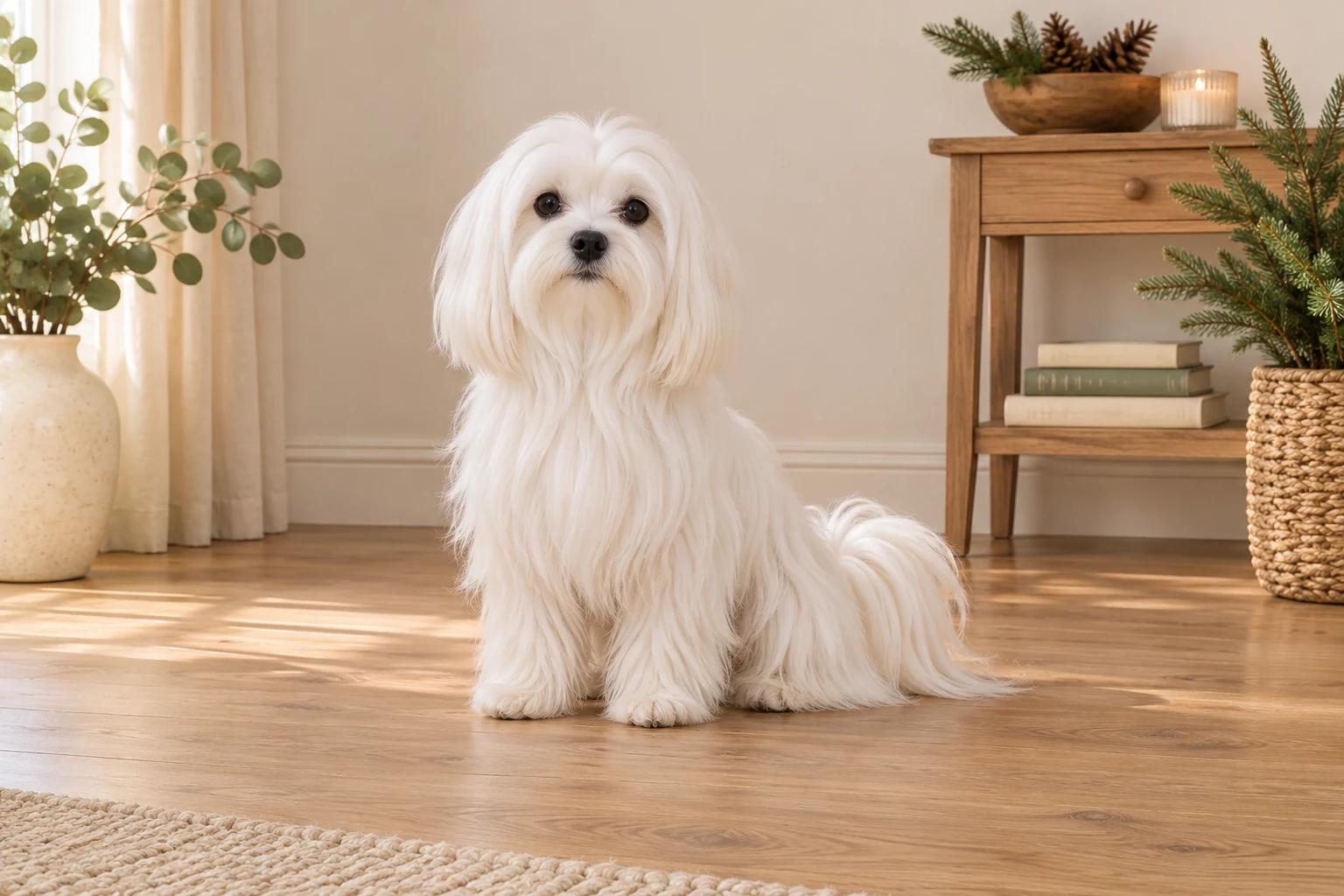
A Maltese vs Maltipoo comparison starts with a simple distinction: Maltese is a recognized purebred breed, while Maltipoo describes dogs with Maltese and Poodle ancestry. That difference matters when interpreting photographs, adult-size estimates and descriptions of personality. It does not tell you which individual will fit your home better.
If you like both, set aside the cutest photograph for a moment. Compare what is documented about each dog, what the current caregiver has observed, and what your household can actually provide. The most useful choice is not between two names but between two realistic arrangements for everyday life.
Maltese vs Maltipoo: what the names tell you
The American Maltese Association describes an outgoing little companion that enjoys walks, play and time on a lap. A Maltese has an established breed reference, although personality still needs to be assessed individually.
VCA's explanation of designer dogs identifies the Maltipoo as a Maltese–Poodle cross and explains that crossing breeds does not produce uniform inherited traits. Ask which Poodle variety appears in the actual family and whether the parents are purebred dogs or crosses themselves. A label alone cannot answer those questions.
For background, compare the Maltese profile with the Maltipoo profile. Keep a separate column for facts about the particular dog: current measurements, age, familiar routines and grooming experience. Those details are more useful for planning its first month than an assumed blend of parental characteristics.
Appearance: look beyond matching haircuts
A Maltese's straight, silky white coat differs from the range of coat appearances possible in Maltipoos. A short, rounded trim can make the two look surprisingly alike. Ask for a photograph taken before the most recent haircut and, if considering a puppy, photographs of adult relatives.
Do not use those pictures as a precise forecast. Instead, use them to start a grooming conversation. What does the current coat feel like? Which tools does the groomer use? How much work happens between appointments? Does the owner maintain a longer coat or a practical trim?
Bring that information to a groomer before buying a cupboard full of supplies. The relevant question is not which name sounds lower maintenance, but which coat routine you can repeat during busy weeks. A tidy photograph shows the result of care, not how many evenings or appointments went into it.
Our separate article on the Maltese coat and shedding explores a different aspect of coat choice. Here, focus on the practical work rather than assuming the same haircut means the same care plan.
Size: compare the dog, not the adjective
“Small,” “tiny” and “toy-sized” are not measurements. If you are deciding between a Maltese or Maltipoo for travel, ask for current height, body length and weight, together with the date measured. For a puppy, ask how the adult estimate was reached and what is known about the parents.
Before selecting a carrier, read its internal measurements as well as its weight limit. A dog needs usable room, and a bag that fits under a seat does not automatically fit the dog. If travel is essential, confirm the operator's current rules separately rather than accepting “airline size” in an advertisement.
Home equipment needs the same attention. Check harness fit on the actual body beneath the coat. Consider the opening of a bed, the route through a baby gate and where the dog will wait while an exterior door is opened. These are concrete questions you can settle without deciding which cross is supposedly smaller.
Compare a weekday, not a personality score
For a Maltipoo vs Maltese decision, ask both caregivers the same situational questions. What happens when someone begins working at a desk? How does the dog react to a knock? Can it rest while people move around? What does an ordinary outing look like?
Request examples rather than labels. “Affectionate” could mean quietly lying nearby or repeatedly seeking interaction. “Playful” could describe a short toy game or frequent invitations throughout the afternoon. Neither description tells you how a dog handles your particular schedule.
Write down your non-negotiable arrangements. Perhaps your apartment has a shared entrance, you work away from home twice a week, or a regular sitter will handle lunchtime care. Then ask what experience each dog has with those situations. This makes the conversation about fit instead of winning a comparison.
Company and care need named people
Both choices require more than someone vaguely being “around.” Decide who handles the morning outing, who notices when supplies run low and who can cover a delayed journey home. If several adults share care, put those responsibilities in writing before arrival.
A useful exercise is to plan one normal weekday and one disrupted day. On the normal day, there is time for walks, play, meals, rest and coat care. On the disrupted day, a meeting runs late or the regular helper is unavailable. If the second plan collapses, the missing piece is backup care, not a different breed label.
Ask the caregiver what currently happens when the dog is apart from people. An adult's observed history can be especially helpful here. A puppy's future routine is something you will need to develop, not a feature included with the purchase.
Make the final meeting useful
The difference between Maltese and Maltipoo ancestry should guide questions, not replace meeting the dog. Ask to observe a normal activity, such as preparing for a walk or returning to a resting place. Allow the dog to approach without making constant interaction the test.
Before committing, request written care information and arrange to discuss health records with your veterinarian. Keep the decision focused on evidence you can inspect, support you can contact and commitments you can maintain. The dog match quiz can help clarify your priorities, but it cannot choose a particular dog for you.
FAQ
Is a Maltipoo a Maltese?
A Maltipoo has Maltese and Poodle ancestry; it is not another name for a purebred Maltese. Ask about the actual parents and generation rather than inferring ancestry from a white coat or a similar haircut.
Which is easier to groom, a Maltese or Maltipoo?
Compare the individual coat, planned length and current care routine. Ask a groomer to explain the work between appointments. Neither a short trim nor a crossbreed name tells you the complete maintenance commitment.
Can I choose between them from puppy photographs?
Photographs help you see appearance, but they cannot establish adult measurements or everyday behavior. Combine them with family information, current care records and a conversation about the dog's observed routines.
Which should I choose for a working household?
Choose only after making a workable care schedule and asking about the individual dog's experience apart from people. Neither name substitutes for daytime support, gradual learning or a reliable backup when work runs late.
Sources behind this article
Article source checked: November 15, 2026. Source checked 2026-11-15
Keep reading

Affenpinscher vs Brussels Griffon: Everyday Differences
Read article →