Leonberger Size: Height, Weight and Space at Home
Understand Leonberger adult height and weight ranges, how to measure useful space and what giant-dog size means for equipment and daily life.
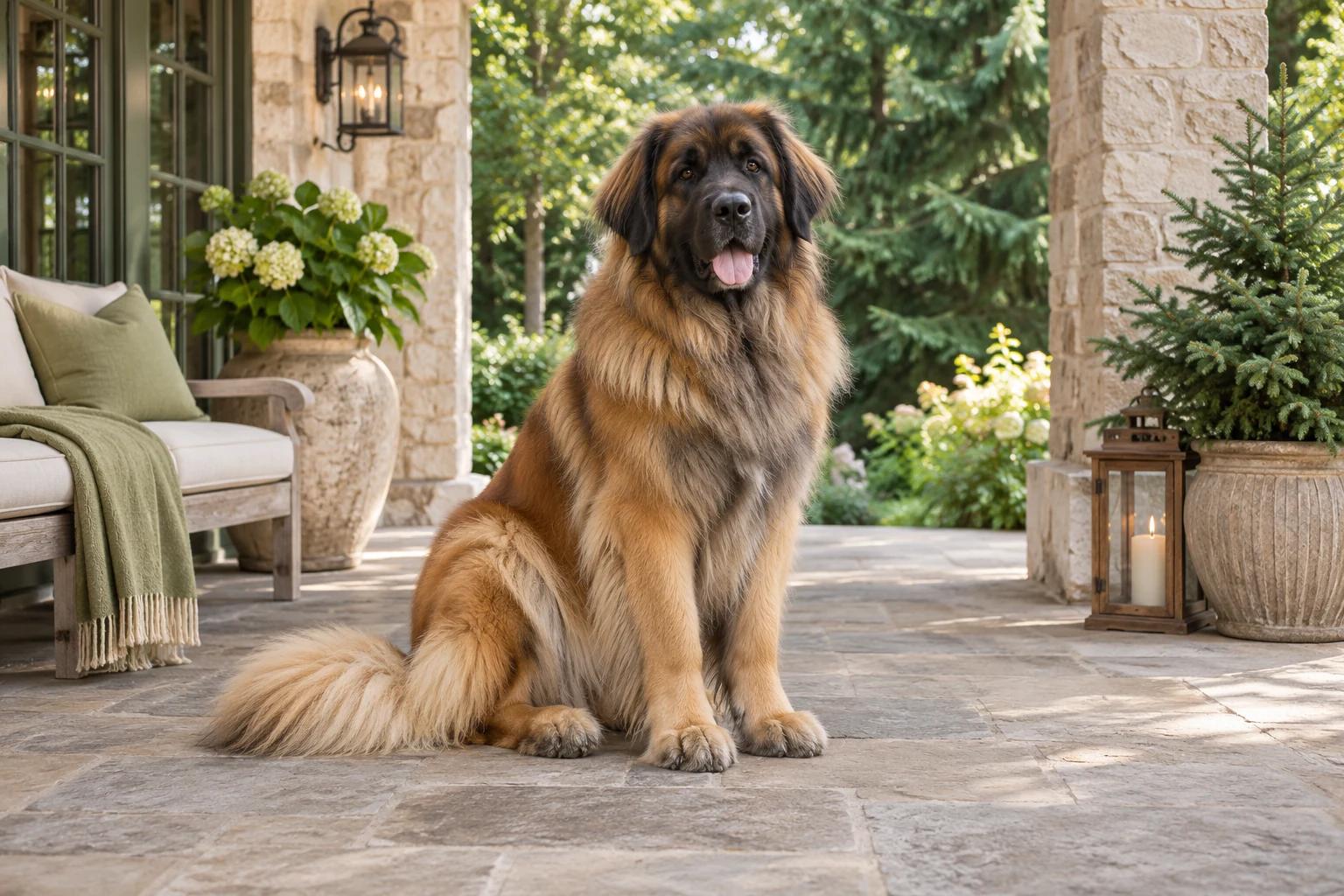
Leonberger size is a practical commitment long before it becomes an impressive number. An adult needs usable room to rest, turn, travel and move around the people sharing the house. The breed's coat can make its outline look even larger, so planning from a photograph is unreliable. Start with the adult reference ranges, then look at the actual dog and the spaces it will use.
Leonberger size: the adult reference ranges
The AKC standard gives leonberger height at the withers as 28–31.5 inches for adult males and 25.5–29.5 inches for adult females. It describes weight in relation to the dog's size and structure rather than prescribing one target number. AKC Leonberger standard.
For a broader ownership reference, the My Breed Atlas Leonberger profile lists male adult weight at 110–170 pounds and female adult weight at 90–140 pounds. Treat those as ranges for understanding the scale of the commitment, not numbers that a puppy must reach. A veterinarian should assess an individual dog's growth and body condition.
The answer to how big do leonbergers get therefore has two parts: a giant adult reference and an individual outcome that is not settled by the label alone. Ask about the puppy's parents and adult relatives, but do not treat their measurements as a guarantee. If you are considering an adult, use that dog's current measurements rather than choosing equipment from the broadest breed range.
Height is not the top of the head
Shoulder height and overall standing height answer different questions. Breed measurements use the withers, not the ears or the highest point of a raised head. A carrier opening, car roof or low shelf needs to be assessed against the dog's actual posture, not only the height stated in a breed profile.
When you need a reliable measurement, ask a breeder, groomer or veterinary team to demonstrate the method. Use a level surface and avoid trying to hold a restless dog in an awkward pose. Record what was measured and the date so that a future comparison means something.
For equipment, follow the manufacturer's measuring instructions rather than substituting shoulder height for every dimension. A harness, resting mat and travel enclosure require different measurements. Keep those measurements in one place, with the dog's current weight and the equipment's stated limits, so that shopping does not become a series of guesses.
Test the resting space with the room still in use
A bed that fits an empty corner may not fit the life around it. Open the nearby cupboard, pull out the dining chair and walk the normal route to the door. Check whether the resting dog would have to move every time someone enters the room.
You can mark a proposed bed's dimensions on the floor before buying it. Leave the outline in place while you complete ordinary tasks. This simple rehearsal reveals conflicts that a tape measure alone can miss, such as a door swinging across the sleeping area or a work chair rolling into it.
Think about more than one resting location. You may want the dog near you during the day but away from kitchen traffic during cooking. The AKC describes the Leonberger as a giant companion that enjoys family company, which makes placement within the household worth considering rather than assigning the only large empty space regardless of where people spend time. AKC Leonberger overview.
Measure the vehicle opening and the space beyond it
Vehicle capacity is not just the size of the rear opening. Consider the loading route, usable floor area, roof clearance and space taken by an appropriate restraint or enclosure. Keep luggage in the calculation. A setup that works for a short solo trip may be impractical when several people and their bags travel together.
If you are selecting a ramp or other aid, verify its specifications and suitability for your vehicle with the supplier. Check where it would be stored during travel and whether you have room to deploy it at your usual parking spot. Do not discover after purchase that a narrow garage prevents you from using it.
Introduce travel arrangements through a suitable training plan rather than physically forcing a large dog into position. Ask for professional help if the dog is reluctant or if handling is difficult. Discuss mobility concerns with your veterinarian instead of choosing equipment to work around an unexplained change.
Weight affects logistics, not just the scale
Leonberger weight matters when you arrange care away from home. Ask a grooming business whether its space and equipment accommodate your dog. Check any stated limits for boarding, transport or hired accommodation before booking. A description such as dog friendly does not necessarily explain what happens with a giant adult.
Make an emergency transport plan with the people who could actually help. Know which vehicle is available and how you would contact the veterinary practice. This is not a lifting tutorial; it is a reason to discuss practical assistance before a stressful situation arises.
Recurring costs deserve direct quotes too. Ask providers what information they need about size, coat and service requirements. Do not assume that every expense increases in the same proportion as body weight, or that a price quoted for a smaller dog applies unchanged.
A growing puppy needs adjustable plans
Buy for the dog you have while planning for the adult it may become. Check fit regularly rather than relying on a fixed calendar. Equipment that was comfortable recently may no longer sit as intended, while purchasing the largest available item can create a poor fit in the meantime.
Keep dated growth records for your veterinarian without turning them into a competition. Avoid trying to accelerate growth to reach the upper end of a published range. Feeding, body condition and suitable activity are individual questions for veterinary guidance, not decisions to make from an online size chart.
Use the breed quiz to consider whether giant-dog logistics fit your wider routine. For a separate guide to reading existing records, see what a Leonberger neurological DNA report covers.
FAQ
How tall is an adult Leonberger?
The AKC standard lists males at 28–31.5 inches and females at 25.5–29.5 inches at the withers. These are adult reference ranges, not a prediction for every puppy.
Is the heaviest Leonberger the best choice?
Weight alone is not a useful selection goal. Consider the individual dog's structure, body condition and suitability for your household, and discuss growth or weight concerns with your veterinarian.
Can I buy a crate using breed height alone?
No. Follow the product's measuring instructions and assess the actual dog's posture and dimensions. Shoulder height alone does not establish adequate head clearance, length or turning space.
When will a puppy reach its final size?
Do not rely on a single breed-wide deadline. Ask the breeder about the family background and discuss the puppy's development with your veterinarian. Recheck equipment fit as the dog grows rather than waiting for a predicted maturity date.
Sources behind this article
Article source checked: November 15, 2026. Source checked 2026-11-15
Keep reading

Airedale Terrier Temperament: What Everyday Life Can Feel Like
Read article →