Large Munsterlander vs Small Munsterlander: Daily Life
Compare Large and Small Munsterlanders by working style, coat, handling needs and everyday routines before choosing your hunting companion.
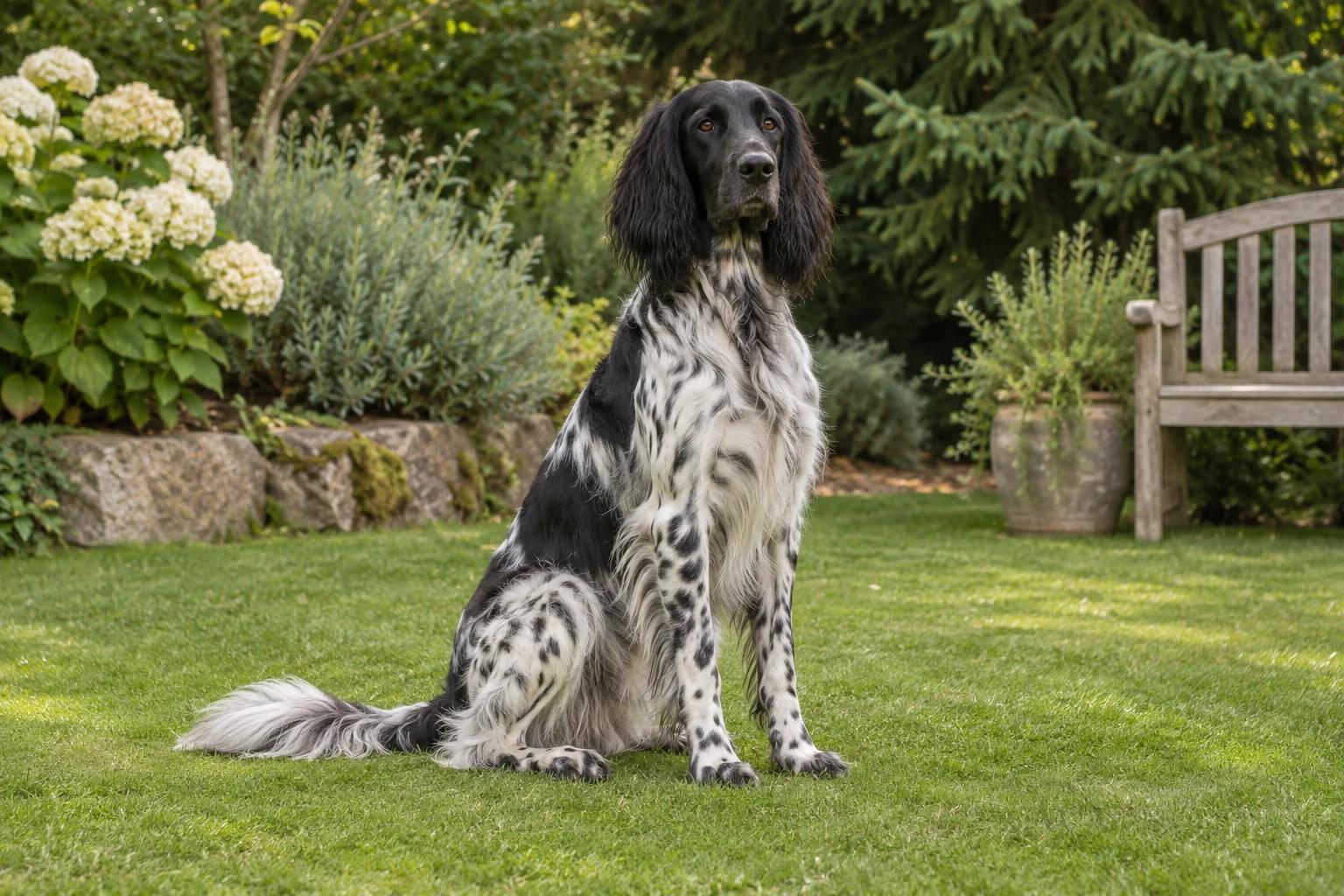
The large munsterlander vs small munsterlander decision is not simply a choice between two sizes of the same dog. These are distinct German pointing breeds. Both deserve a household that looks beyond an attractive feathered coat and asks what life with a working dog will actually involve. Start with the activities you want to share, the adult dogs you can meet and the support available to help you learn together.
Large Munsterlander vs Small Munsterlander: the essentials
The Large Munsterlander has a black-and-white coat, with dense, flat body hair and feathering. Its standard emphasizes a lively, intelligent working gundog. The Small Munsterlander has brown-and-white or brown-roan coloring and a dense coat that may be straight or slightly wavy. Its standard describes a willing learner and pointing dog. These descriptions identify broad breed characteristics, not a ranking of individual dogs. UKC Large Munsterlander standard, UKC Small Munsterlander standard.
The difference between large munsterlander and small munsterlander matters most when you translate the comparison into real decisions. Which breeder understands your intended activities? Which adult dog can relax in surroundings resembling your home? Which training group will welcome you? A color preference is easy to express; an achievable weekly routine takes more thought.
Start with the work, not the photograph
The Large Munsterlander Association of America describes a versatile dog used for pointing, retrieving and tracking on land and water. Its breeding program places substantial emphasis on demonstrated hunting performance. Ask a prospective breeder how that emphasis shapes their placement expectations. Large Munsterlander Association of America.
For a hunting household, bring specific questions about the terrain, game and training you intend to pursue. Describe your own experience honestly. A first-time handler who has joined a suitable training group presents a different plan from someone hoping that instinct will replace teaching. Ask to watch an experienced dog working with its usual handler rather than drawing conclusions from a short promotional clip.
For a non-hunting household, discuss your plans before joining a waiting list. Do not assume that a garden, a running habit or occasional fetch will automatically match a particular litter's needs. Explain your proposed activities, access to suitable places and willingness to work with an instructor. The breeder may suggest a different dog or decide that their program is not a match.
Compare bodies in the places you will use them
When weighing small munsterlander vs large munsterlander, the smaller name can sound like an automatic convenience. Instead, meet adults and assess the practical difference yourself. Look at turning space beside the kitchen table, the usable floor area in your car and the route from your front door to the nearest walking area.
Bring measurements rather than guessing from height alone. A travel setup needs room for the individual dog's posture and movement, not merely enough space to squeeze through its door. Check equipment sizing against the dog that will use it. For a puppy, ask what can sensibly be adjusted as the dog grows and what will probably need replacing.
Handling also includes the human side. Can the usual walker manage the lead while opening a gate, carrying a bag or moving past another dog? Arrange an appropriate supervised walk with an adult if the owner offers one. You are evaluating a partnership, not testing how much pulling you can withstand.
Put both coats through the same practical questions
Feathering deserves a plan even when the rest of the coat looks straightforward. After an outdoor visit, ask the owner to show you where debris tends to collect on their dog and how they work through routine maintenance. Watch the actual process instead of relying on a description such as easy care.
Think about your own routes. A paved neighborhood circuit produces a different cleanup job from wet grass and brambles. Put towels and appropriate grooming tools where you return home, with a washable surface underneath. Choose a place where you can check the coat without blocking the doorway or asking an excited dog to balance on slippery flooring.
Neither choice should be based on a promise of a hair-free house. Compare how much cleaning you are willing to do, where the dog will rest and whether your furniture covers can be washed. Coat color may change how visible loose hair appears against a sofa; it does not remove the cleaning task.
Meet the dog between exciting moments
A demonstration of a retrieve tells you something different from an ordinary afternoon indoors. Ask to see both, if possible. Notice what happens when the activity ends, when equipment is put away and when the owner talks to you instead of the dog.
Useful questions include:
- What does this dog do while you prepare dinner?
- How does the dog respond when a planned outing is shortened?
- What training is still a work in progress?
- How have you introduced visitors and unfamiliar places?
- What help would you offer a new owner whose routine is not working?
Avoid declaring one breed calmer, friendlier or easier from a single meeting. The age, experience and immediate circumstances of the dogs may explain much of what you see. Ask for examples over time rather than treating one afternoon as a complete temperament assessment.
Decide with a workable week
If you are still choosing a large munsterlander or small munsterlander, write down an ordinary working week. Include travel to activities, coat cleanup, quiet time and the people who will take responsibility when your schedule changes. Leave space for lessons rather than filling every available hour with exercise.
Then take the same plan to people experienced with each breed. Ask what they would change and why. A useful answer points to a specific mismatch, such as unavailable training support or long periods without company. It does not merely insist that their preferred breed is best.
Compare the Large Munsterlander profile with the Small Munsterlander profile, and use the breed quiz to organize your priorities. For the separate history of the larger breed, read the Large Munsterlander foundation-list article.
FAQ
Is the Small Munsterlander a miniature Large Munsterlander?
No. The Small Munsterlander and Large Munsterlander are distinct breeds with their own standards. Compare their working background and the individual dogs available, not just the names.
Which Munsterlander is easier to train?
There is no reliable winner for every household. Both standards describe dogs receptive to learning. Your experience, consistency, training support and the particular dog's background matter when choosing a companion.
Can appearance decide between the two breeds?
Appearance can help distinguish them, especially black-and-white versus brown-based coloring, but it cannot tell you whether a particular dog fits your routine. Meet adults and discuss the breeder's expectations before deciding.
What should a non-hunter ask a breeder?
Explain the activities you will actually provide and ask whether the breeder places dogs in comparable homes. Discuss access to training, ordinary workdays and support after placement rather than assuming that occasional outdoor recreation is enough.
Sources behind this article
- United Kennel Club: Large Munsterlander ↗
- United Kennel Club: Small Munsterlander ↗
- Large Munsterlander Association of America ↗
Article source checked: November 15, 2026. Source checked 2026-11-15
Keep reading

Affenpinscher vs Brussels Griffon: Everyday Differences
Read article →