Lakeland Terrier Temperament: Life With a Bold Terrier
Understand Lakeland Terrier temperament through everyday situations, introductions, household routines, and questions to ask before choosing a dog.
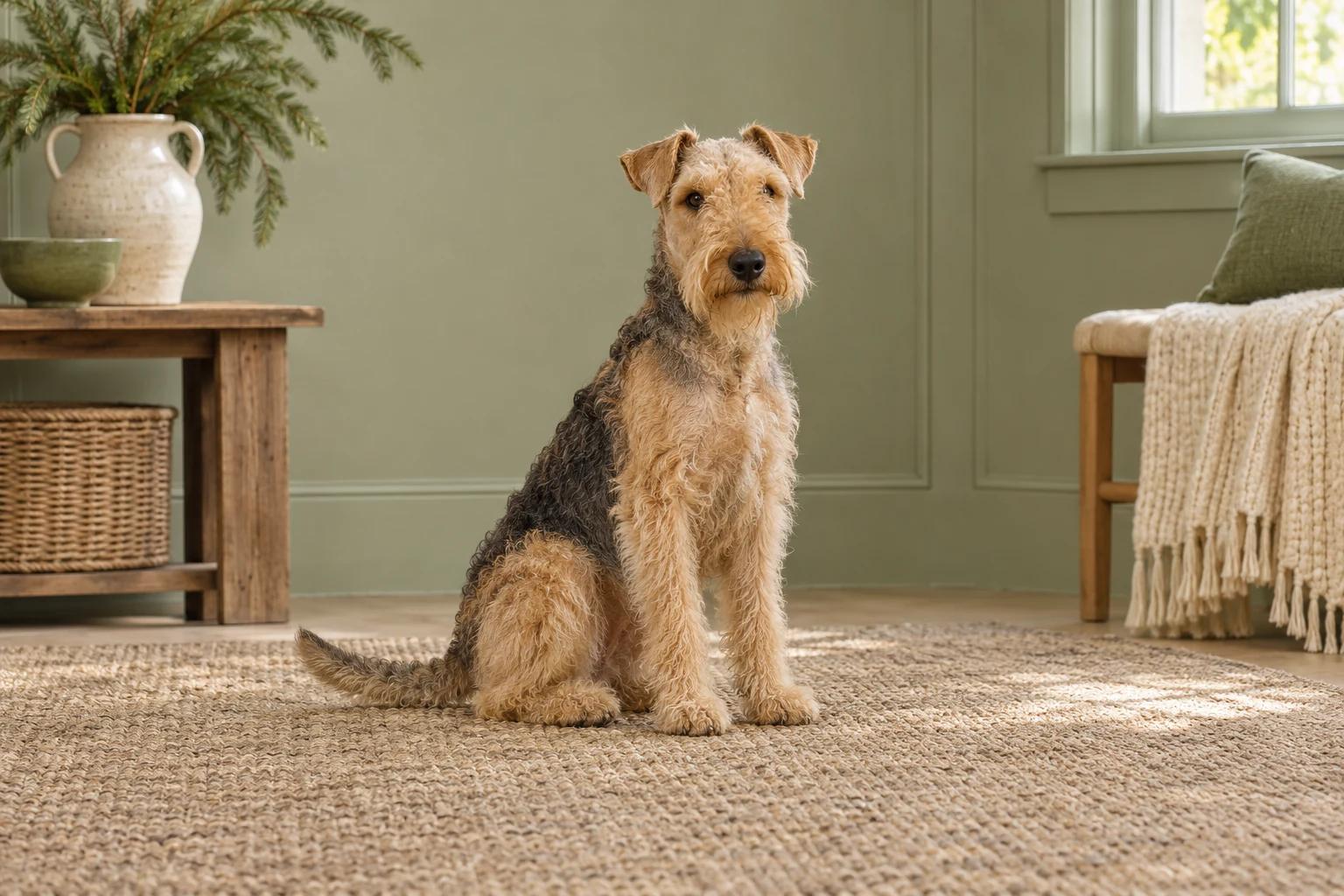
Lakeland Terrier temperament makes more sense when you picture an inquisitive working terrier rather than a decorative small dog. The appeal is an engaged companion with opinions: a dog you can do things with, not simply fit around an otherwise unchanged routine. Before choosing one, think about how you feel when a walk becomes an investigation, a new sound deserves attention, or yesterday's easy training game suddenly has competition from the garden.
Lakeland Terrier temperament beyond the adjectives
The United Kennel Club standard describes confidence, friendliness, alertness, and determination. It also recognizes a playful side. Those qualities can coexist: an entertaining dog may still be intensely interested in something you would rather walk past. The AKC breed introduction places that bold character in the context of the breed's English working history.
Translate each adjective into a question rather than a promise. What does confidence look like when a delivery arrives? Does friendliness mean seeking contact immediately, or greeting after a pause? How does the dog respond when an enjoyable activity ends? The answers tell you more about living together than a list of attractive personality words.
The broader Lakeland Terrier profile provides the starting reference. For a prospective owner, the next useful step is seeing ordinary behavior rather than collecting more superlatives.
Watch the transitions, not only the play
A lively greeting can dominate a first meeting. Ask to see what happens afterward. Sit down and let the conversation continue. Does the dog explore, bring something over, watch the room, or settle? Ask the caregiver whether this is typical and what usually precedes a quiet period.
Transitions reveal practical information. Going from a walk to indoor time, from play to a visitor arriving, or from company to a separate resting space are parts of a real day. A dog who needs help with these changes may still suit you, but that help needs a place in your schedule.
Keep your observations specific. “He watched the gate for several minutes after the visitor left” is useful. “He is difficult” is not. Specific descriptions let you ask about context and identify what you would need to change at home.
Give curiosity a place in the household
A Lakeland Terrier personality need not be suppressed to make a workable home. Instead, decide where investigation is welcome. Perhaps the dog can search for a toy in one room but cannot enter the utility cupboard. Perhaps the garden includes a supervised activity area while newly planted beds remain inaccessible.
Walk through the home before arrival. Look at accessible bins, low shelves, loose bags, and the gap beneath the side gate. The point is not to assume every Lakeland will test every boundary. It is to avoid relying on a verbal instruction where a physical arrangement would be clearer.
Agree on a few shared rules. If one person invites the dog onto a chair and another objects, the household is creating an unnecessary puzzle. Write down the desired behavior and the alternative you will offer. “Rest on this bed while we eat” is a more usable plan than “stop being annoying.”
New people and other dogs: ask for the actual history
Do not use a breed's friendly description as permission to arrange crowded greetings. Ask how the particular dog has met visitors, walked near unfamiliar dogs, and shared space with familiar ones. Find out whether the caregiver distinguishes passing another dog from playing with one.
For an initial visit, choose a setting with room to move away. Avoid making the doorway the entire introduction. There is little to learn from an encounter in which everyone is crowded together and the dog has no opportunity to pause.
If you already have another animal, describe that animal's routines and living space honestly. Ask about the Lakeland's relevant experience rather than accepting “used to pets.” A dog who has seen another species through a barrier has a different history from one who has lived alongside it. Seek individual professional guidance before making assumptions about shared access.
Barking and attention in your particular home
Consider the soundtrack of your address. A window facing a busy footpath, a communal corridor, and a quiet rural entrance present different daily events. Write down which sounds are frequent, which cannot be avoided, and where the dog could rest away from them.
For Lakeland Terrier behavior, this environmental detail is often more useful than debating whether the breed is generally noisy. Ask a caregiver what starts their dog's vocalizing and what helps it finish. A short alert and an extended episode need different planning.
Give yourself an alternative to shouting across the room. You might keep the resting area away from the front window, meet deliveries before the dog reaches the hall, or practice moving together into another room. If barking is persistent or accompanied by distress, seek qualified help rather than treating it as a personality quirk you must simply tolerate.
Affection without a fixed script
When assessing Lakeland Terrier characteristics, include how the dog likes to share space. Some moments of companionship involve play; others involve being nearby without contact. Ask permission before handling an unfamiliar dog and give it room to choose whether to approach.
Think about your own expectations too. If your ideal evening requires uninterrupted lap time, say so during your search. If you enjoy short games between household tasks, explain that instead. Matching the everyday relationship matters more than selecting the most outgoing dog at a first meeting.
Appearance is a separate subject. Our article about the liver-coated Lakeland's nose color explains that visual detail without using it to predict personality. The breed quiz can help organize your wider priorities before meeting dogs.
Questions worth taking to a breeder or rescue
Ask for an example of an ordinary weekday, including the inconvenient parts. Who provides company? What happens when plans change? Which situations are still being practiced? What does the dog do when a person is occupied but present?
For a puppy, ask what experiences have already been introduced and how responses were recorded. For an adult, request the current routine and any known management needs. A detailed account gives you something to prepare for; a cheerful label alone does not.
FAQ
Is a Lakeland Terrier always outgoing?
No. The breed standard describes an ideal, not every individual's response to strangers. Ask about the particular dog's greeting history and observe it without pressure to interact immediately.
Does a small Lakeland Terrier need much household planning?
Yes. Space management, outdoor access, shared rules, and time together still matter. Small size does not tell you how a dog will handle visitors, changing routines, or interesting things within reach.
What should I observe at a first meeting?
Watch both activity and transitions. Ask to see what happens after the greeting or play ends, and compare your observations with the caregiver's account of a typical day.
Sources behind this article
Article source checked: November 15, 2026. Source checked 2026-11-15
Keep reading

Airedale Terrier Temperament: What Everyday Life Can Feel Like
Read article →