Lakeland Terrier Exercise Needs: A Varied Daily Plan
Plan Lakeland Terrier exercise needs with walks, investigation, play, and rest. Learn how to adjust outings without chasing a universal minute count.
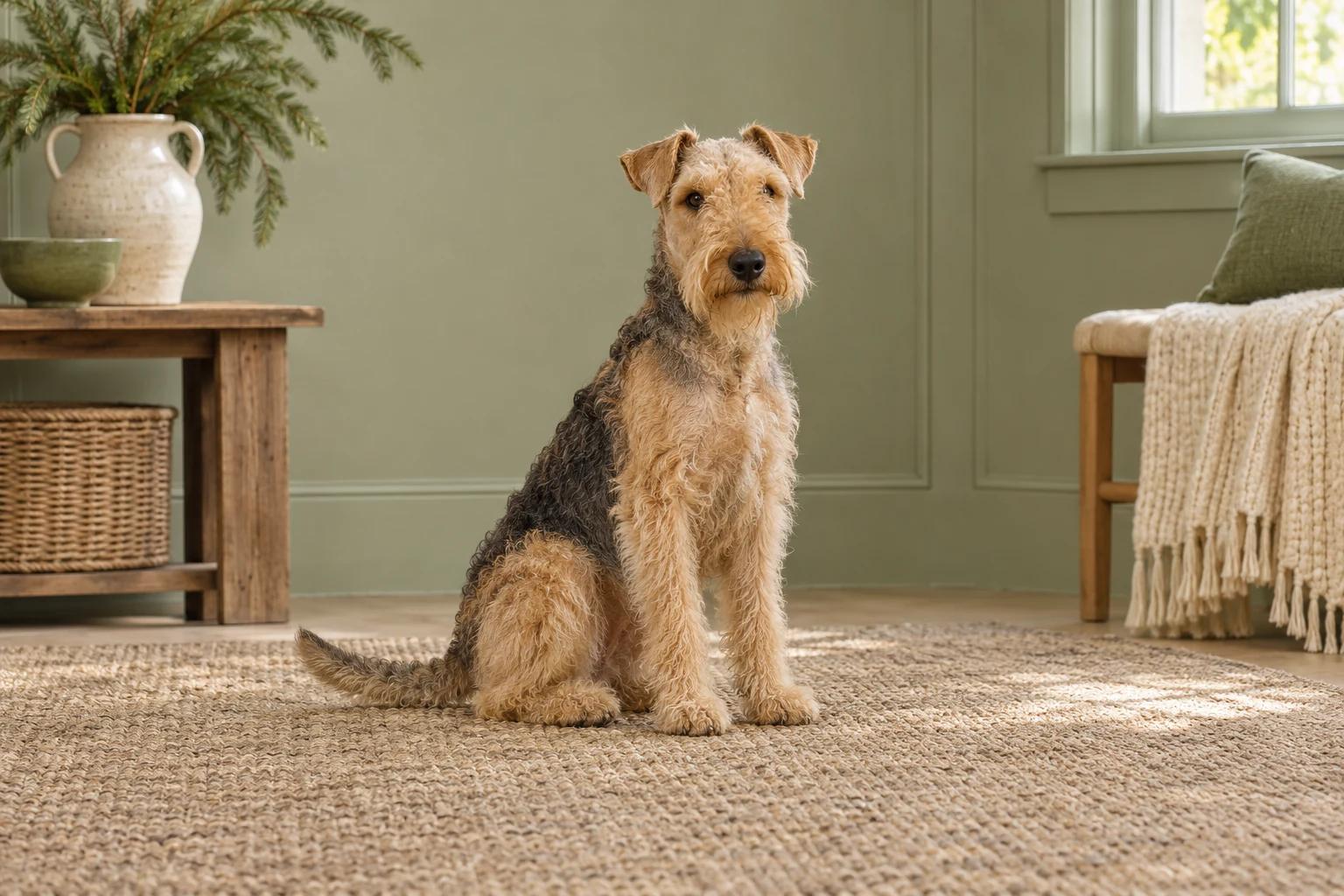
Lakeland Terrier exercise needs are best approached as a daily mix, not a competition to record the longest walk. Make room for movement, investigation, shared play, and a clear end to activity. The useful question is whether your routine gives this particular terrier a satisfying day that you can repeat, including on ordinary workdays.
A small footprint in the car does not make the Lakeland a dog you can plan for solely with brief toilet trips. Equally, enthusiasm at the door is not a demand to increase every outing indefinitely.
Lakeland Terrier exercise needs in working-terrier context
The UKC standard describes a compact working terrier developed in the Lake District's rugged terrain, with an alert and ready-for-action character. VCA's Lakeland overview emphasizes engaging activity, outdoor walks, and controlled access rather than repetitive drills. These are useful reasons to vary the day, not a prescription for a fixed distance.
Start with the routine the dog already knows. Ask the breeder, rescue, or previous caregiver what kinds of outings have been normal and how the dog behaves afterward. For a puppy, older dog, or dog with health considerations, ask your veterinarian what activity is appropriate before adding demanding exercise.
The Lakeland Terrier profile puts activity alongside the other ownership commitments. Exercise is one part of that picture, not a substitute for training, company, or care.
Build a walk with more than one purpose
A Lakeland Terrier daily walk can have distinct sections. Begin with time to attend to immediate outdoor needs. Include an exploratory stretch where you are not constantly hurrying the dog onward. Use a quieter stretch for a little cooperative walking, then return without making the final minutes another high-energy game.
You do not need a different destination every day. Take a familiar route in the opposite direction, pause at a different open space, or change which section allows unhurried investigation. Choose variations that you can supervise and that fit local access rules.
Before heading out, identify the places where you need the dog's attention: narrow paths, driveways, entrances, or a corner with limited visibility. Plan to shorten the lead arrangement before reaching them rather than improvising when something appears.
Record the route's character as well as its duration. A busy pavement walk and a quiet exploratory loop can take the same time but make very different demands on both dog and handler.
Give the nose a task without making a complicated project
For an indoor change of pace, choose a simple search for a familiar toy. Begin with the object in an obvious, accessible position. Let the dog locate it, then make the next placement only slightly less obvious. Use a room you have checked for objects the dog should not pick up.
Keep the game cooperative. If the dog walks away, simplify or finish rather than endlessly hiding the object in harder places. You are offering an activity, not testing whether the terrier can pass an intelligence exam.
An easy outdoor version is to explore a small permitted area at the dog's pace while maintaining lead control. Decide the boundary in advance. This gives you a practical alternative on days when the usual route is crowded, although it need not replace all other movement.
Play with an ending
Choose a game both participants can understand. You might alternate a short toy interaction with a pause while the dog returns toward you. Keep the playing area clear, avoid slippery floors, and select equipment appropriate to the individual dog.
Put away the toy when the game is finished and shift to a quieter part of the routine. That ending matters for the owner too: it prevents an evening becoming an indefinite series of requests for one more round.
Do not make exhaustion the success measure. Instead, ask whether the activity was manageable, whether the dog could participate comfortably, and whether the household could move on afterward. If a favorite game repeatedly leaves everyone frustrated, change the format rather than simply playing longer.
How much exercise does a Lakeland Terrier need?
There is no single minute count that settles the question for every age, condition, and routine. For planning, write down the activity you can reliably provide before work, during the day, and in the evening. Then compare that offer with the needs of the dog you are considering.
Be honest about the weakest day of the week. A generous weekend outing does not arrange Tuesday's outdoor break. If your schedule depends on someone else, agree on what they will do, how they will manage the lead, and what changes they should report.
To understand Lakeland Terrier activity level in your home, keep a brief diary for a normal week. Note the type of outing, the environment, the dog's participation, and the rest of the day. Avoid assuming that a restless evening always means too little mileage; the pattern deserves a closer look.
Weather and disrupted plans
Prepare a reduced-outing plan before you need it. Identify a sheltered toilet route, a clear indoor practice space, and a couple of quiet activities that do not require running through the furniture. Check conditions before leaving rather than committing to a long route because it is written on the calendar.
A shorter outing can still have a clear purpose. You might focus on a calm departure, a comfortable loop, and an uncomplicated return. On a difficult day, preserving a workable routine is more important than achieving an arbitrary target.
If the dog shows an unexplained change in willingness or comfort during activity, consult your veterinarian. Do not respond by pushing through or assuming the dog has become lazy.
Assess the whole ownership plan
Exercise arrangements should leave time for the rest of life with the dog. Include coat care, travel arrangements, and the people who can cover unexpected absences. The existing article on Lakeland nose color explores a visual feature; it does not indicate exercise capacity. Use the breed quiz to compare your practical preferences, then discuss the individual dog's established routine in detail.
FAQ
Is a garden enough exercise for a Lakeland Terrier?
A garden can provide a supervised activity space, but owning one does not tell you how the dog spends time there. Plan shared outings and purposeful activities rather than assuming outdoor access automatically provides a complete day.
Should I keep adding distance if my Lakeland is lively?
Not automatically. Review the mix of activity, the surroundings, opportunities to rest, and the dog's established routine. Ask your veterinarian about unexplained changes or concerns before escalating physical demands.
What should I do when the usual walk is unavailable?
Use a manageable alternative route and adapt the day's activities to the conditions. A simple indoor search or brief training practice can add variety, while necessary outdoor breaks and appropriate movement still need planning.
Sources behind this article
Article source checked: November 15, 2026. Source checked 2026-11-15
Keep reading

Afghan Hound Exercise Needs: Build a Workable Active Day
Read article →