Kuvasz Temperament: Living With a Guardian
Understand Kuvasz temperament through household routines, visitors, independent decisions, and the practical responsibilities of a guardian breed.
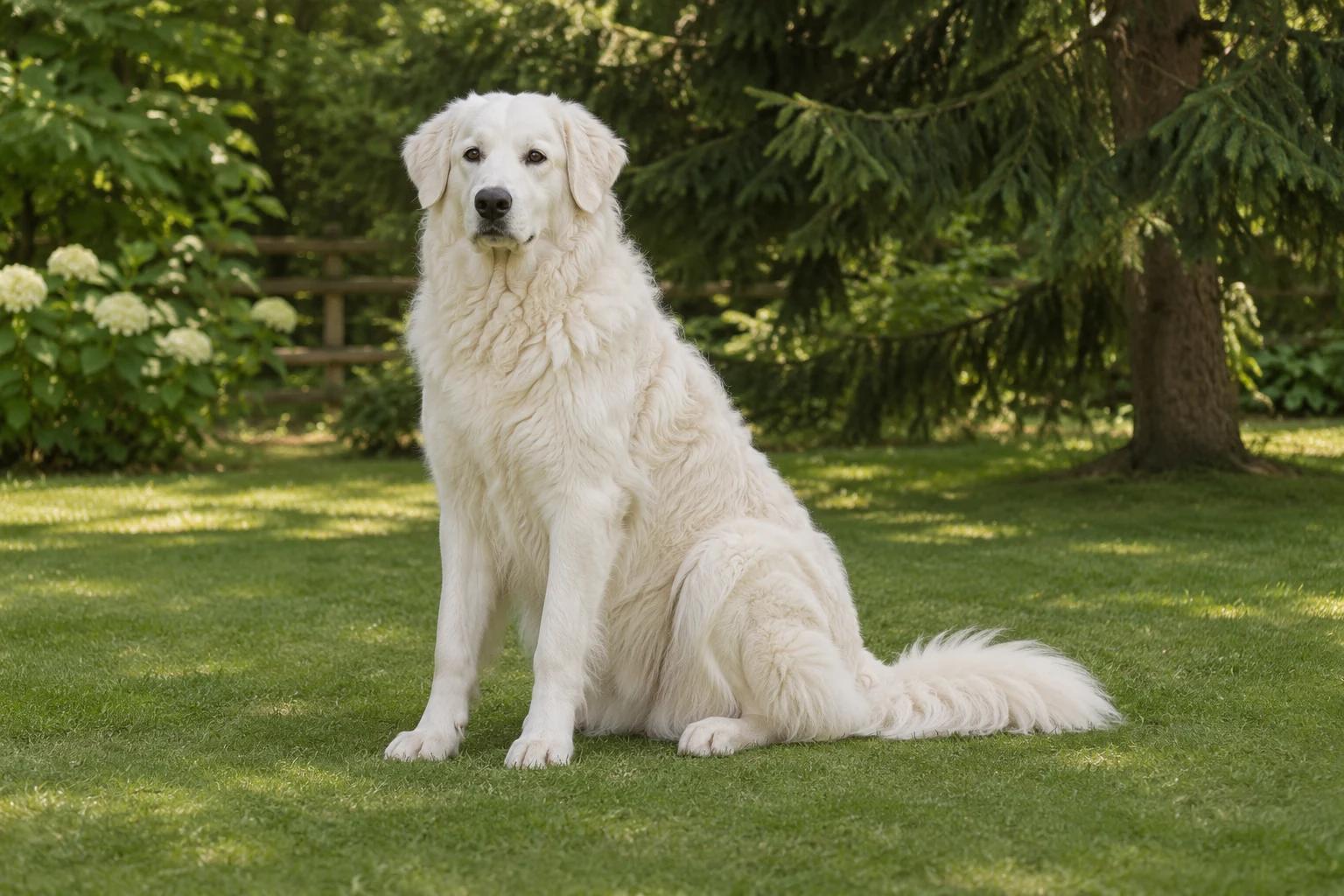
Kuvasz temperament makes more sense when you begin with the breed's guardian background rather than its white coat. The AKC overview describes a large Hungarian working dog with intelligence, independence, and loyalty. For an owner, that combination calls for more than admiration. It means planning how the dog will share space, meet people, move through public places, and receive clear guidance when something unexpected happens.
Kuvasz temperament and independent decisions
The UKC standard describes initiative and sensitivity alongside intelligence. Those qualities can coexist: a dog may make its own assessment of a situation while also responding strongly to the way people interact with it. Independence is not a reason to abandon training, and sensitivity is not a reason to replace clear expectations with uncertainty.
A useful ownership question is who will make the practical arrangements around the dog. If visitors arrive, does someone manage the entrance before opening it? If a contractor needs access to the garden, is there a prepared separate area? If the usual walker is unavailable, does the replacement understand the routine?
Those arrangements should not depend on your Kuvasz correctly interpreting every unfamiliar person's intentions. A guardian background is not a guarantee of accurate judgment or an invitation to stage threatening encounters. Your job is to organize ordinary life so the dog is not left to improvise every response.
Begin with the entrance to your home
The front door is a useful place to test your plan on paper. Imagine a parcel arriving while you are cooking and another household member is coming downstairs. Decide who responds, where the dog will be, and how the entrance stays controlled. Do that thinking before the event, not while everyone is reaching for the handle.
For planned guests, explain the arrangement in advance. A visitor can wait while you settle the dog rather than entering immediately because they know you well. Familiarity to the owner does not automatically establish familiarity to the dog.
Have an option that does not require a greeting. A comfortable separate space may be the right arrangement for a particular visit. If you want help preparing introductions, work with a qualified reward-based professional who can assess your dog and home. Avoid using friends as volunteers in an experiment with behavior you do not understand.
Ask what companionship looks like indoors
Kuvasz personality is not fully described by the word guardian. Ask breeders and current keepers about everyday family life: where the dog rests, which activities it joins, and how it responds when household members come and go. These details help you picture an actual relationship rather than an abstract job description.
Think about where you want shared time to happen. A large dog resting beside a desk needs a different arrangement from a dog moving freely through a crowded kitchen. Choose resting areas that allow company without placing the dog in the middle of constant foot traffic.
Make room for quiet periods as well as activity. A household can be busy without offering useful engagement. Television noise, repeated door openings, and people walking past a bed are not the same thing as a purposeful outing or a manageable learning session.
Public outings need practical choices
Review the routes you would use regularly. A narrow path with no place to step aside gives you fewer options than a wider route. A busy entrance to a building may be manageable at one time and crowded at another. Knowing alternatives makes daily care less dependent on perfect conditions.
Ask about the individual dog's experience with traffic, unfamiliar dogs, and people approaching. Request examples instead of accepting a general statement that the dog has been socialized. What did the situation involve, and what support did the handler provide?
If something goes wrong, record the circumstances and seek appropriate advice. Do not turn a single difficult encounter into a permanent label, but do not dismiss it because the breed is described as loyal. The useful response is to understand what happened and change the plan where needed.
Consider every person who will provide care
One committed owner is not the whole support system. A partner, relative, sitter, or walker may need to handle the dog when you are unavailable. Discuss whether those people are willing and prepared before relying on them.
Write a concise care handover with the dog's established cues, walking arrangements, visitor procedure, and relevant contacts. Show the routine in person where possible. A note saying that the dog is protective is far less useful than explaining which door to use and how to manage an expected delivery.
If a proposed sitter cannot follow the arrangement, find another option rather than assuming affection will compensate for the mismatch. This is part of ownership planning, just as transport and equipment are. The Kuvasz breed profile provides a broader reference for the commitments involved.
Look beyond a striking first impression
When meeting Kuvaszok, ask about normal weeks, not only memorable successes. How does the household organize appointments? What happens when guests stay overnight? Which routines took the most teaching? Answers with practical detail are more informative than a claim that the breed always knows what to do.
Kuvasz characteristics should guide those questions without substituting for individual assessment. If you mainly want a dog that can accompany you spontaneously into every social setting, be honest about that preference. Use the breed quiz to organize what you want, then discuss whether a specific dog and your lifestyle are compatible.
The white coat also brings its own care commitment. Our existing guide to Kuvasz grooming behind the ears covers that topic separately. Appearance, temperament, and maintenance all belong in the decision, but none should be allowed to stand in for the others.
FAQ
Does a Kuvasz automatically know which strangers are welcome?
No owner should rely on that assumption. Plan arrivals and introductions yourself, and seek professional help if you are unsure how to manage them. A guardian background does not guarantee correct decisions in every situation.
Does independence mean a Kuvasz cannot learn?
No. Independence describes part of the breed's working outlook, not an inability to learn. Clear expectations, suitable rewards, and consistent household routines remain important. Ask for help if a particular situation is becoming difficult.
What should I ask about Kuvasz behavior before choosing one?
Ask for examples involving visitors, walks, handling, and changes to the daily routine. Find out what support the current keeper provides in those situations. Specific descriptions are more useful than broad labels such as easy, protective, or confident.
Sources behind this article
Article source checked: November 15, 2026. Source checked 2026-11-15
Keep reading
Kuvasz Size: Planning Space for a Large Adult
Read article →