Komondor vs Puli: More Than a Difference in Size
Compare Komondor vs Puli beyond their corded coats: guardian and herding backgrounds, adult size, home routines and ownership decisions.
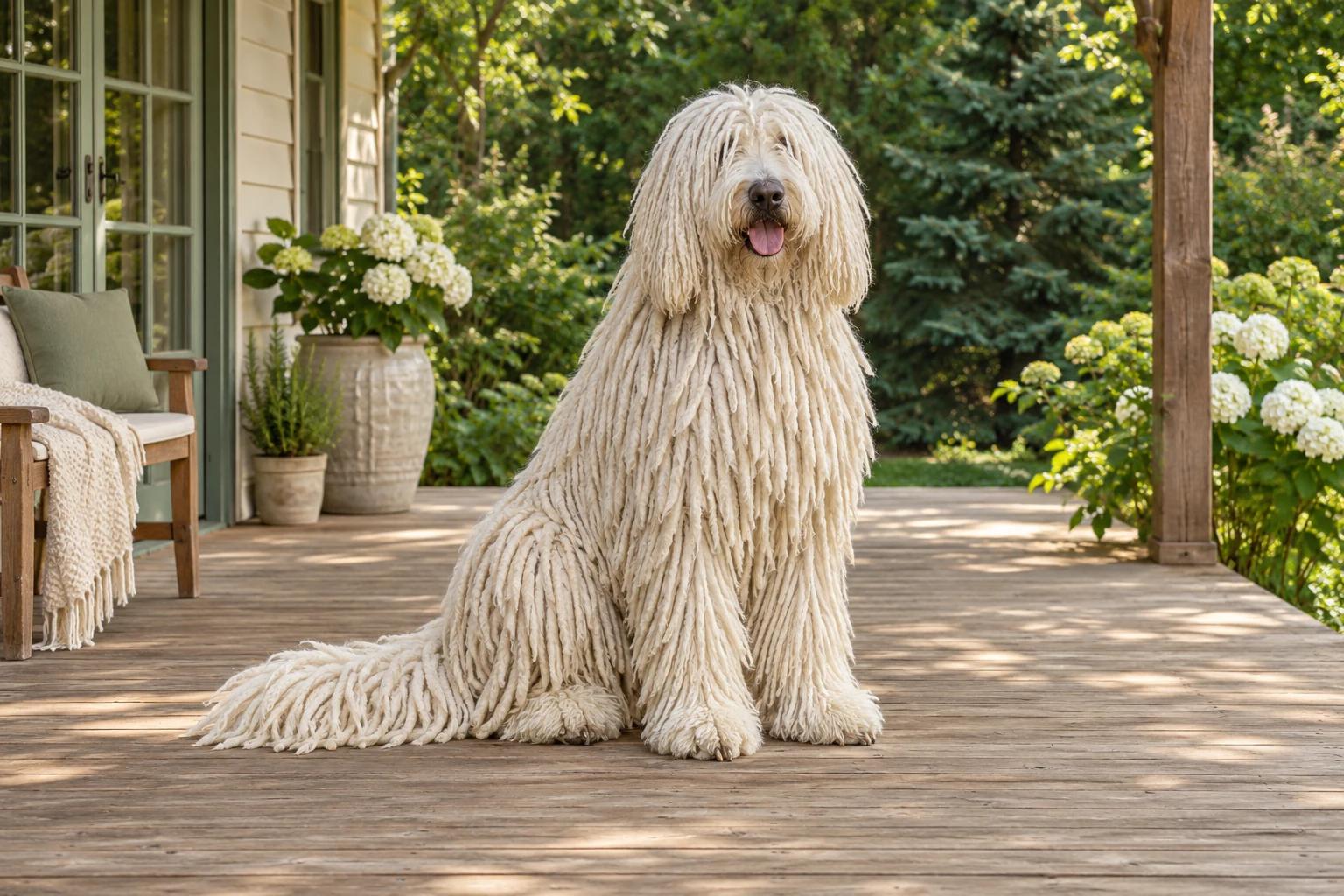
Komondor vs Puli is not simply a choice between a large corded dog and a smaller one. The coat creates an obvious visual connection, but the breeds have different working backgrounds and place different practical demands on a home. If a photograph started your interest, make the next step a conversation about daily life. Read the Komondor profile and Puli profile with your own rooms, routes and routines in mind.
Komondor vs Puli: guardian and herding backgrounds
The UKC Komondor standard describes a large, muscular flock guardian with a naturally cautious response to strangers. The UKC Puli standard describes a smaller, compact herding dog, active and alert. Both are Hungarian breeds, but guarding livestock and moving livestock are different jobs. A corded coat does not make their working roles interchangeable.
For a companion home, the important consequence is the kind of management you are willing to undertake. With a Komondor, carefully consider how people enter your property and how you will handle a substantial adult dog. With a Puli, consider how you will include learning and activity without treating smaller size as a promise of an undemanding companion.
Neither background tells you everything about an individual. It gives you a more useful set of questions than asking which breed is the better-looking version of the other.
Start the comparison at your front door
Stand inside your entrance and imagine arriving with shopping while someone else opens the door. Where could the dog wait? Is there enough space for you to move without stepping over it? Can you separate the entrance from the main living area when visitors arrive?
The difference between Komondor and Puli becomes concrete here. A large dog changes the clearance needed for people, doors and equipment. A smaller dog still needs an organised arrival routine, but the physical logistics are not identical. Measure the actual space rather than relying on the impression created by a large room elsewhere in the house.
Next consider the garden gate. Who uses it, and do they know a dog may be present? If tradespeople, neighbours or delivery workers enter casually, that arrangement needs review before acquiring a guardian breed. A sign alone is not a complete management plan. Decide how access will be controlled and where the dog will be during a visit.
Ask owners to describe their own entrance routine. A useful explanation covers the uneventful parts: closing a barrier, putting on a lead and telling a guest where to wait. Those details are more valuable than a dramatic story about guarding.
Compare the adult dog, not two appealing puppies
A puppy's small body and willingness to play can conceal the scale of future care. Meet adult dogs where possible and ask about changes as they grew. Do not use a puppy meeting to conclude that all later handling or introductions will be straightforward.
For the Komondor, consider transport in particular. Is your vehicle suitable for the adult dog and necessary equipment? How would you arrange assistance if your usual handler were unavailable? For the Puli, do not let more convenient transport obscure the need for training, coat care and reliable daily attention.
Walk through an ordinary appointment in your imagination: leaving the house, entering the car, waiting, being handled and returning home. Identify the steps you would need to teach. Bring those questions to a caregiver who can show how their adult dog manages them.
Training expectations should match the relationship
The Puli standard describes an intelligent, home-loving companion as well as an active herding dog. That is not a guarantee of effortless obedience. Ask what activities the particular dog enjoys and how it responds when a session ends. A learner that enjoys working with you still needs clear practice.
With a Komondor, discuss the skills that allow everyday management around its surroundings: following the handler away from an entrance, waiting in a secure area and accepting necessary care. Ask for concrete examples rather than an assurance that the dog will recognise good intentions.
A Komondor or Puli should not be selected as a shortcut to a perfectly managed property. Decide whether you enjoy teaching, whether everyone in the home can use the same cues and how you will obtain help when a problem is beyond your experience. If those answers are uncertain, that matters more than enthusiasm for the coat.
Two corded appearances, two individual care plans
Both breeds can have corded coats, but you should learn the routine for the actual dog and its current coat stage. Do not transfer a generic brushing schedule to a mature corded Komondor. The UKC standard describes its naturally cording double coat, not an ordinary combed finish.
The existing Komondor coat-care article explains why observing an ordinary maintenance session is useful. Keep that visit separate from a quick breed introduction so that there is time to see the work rather than only the finished result.
When comparing budgets, include hands-on care, suitable space and any professional help you will need. A smaller body does not automatically make the Puli's coat a minor task. Ask who maintains the coat when the owner travels, and what instructions a substitute caregiver receives. If only one person knows the routine, ask how you would build a backup arrangement of your own.
Write a decision you could live with
Try completing two sentences. “The part of Komondor ownership I am prepared to organise carefully is…” and “The part of Puli ownership I would enjoy practising regularly is…”. Avoid answering with appearance. Think about entrances, learning, daily outings, handling and coat maintenance.
Then write the part you are least enthusiastic about. Perhaps it is finding a suitable caregiver for travel, setting boundaries around visitors or maintaining the coat after outdoor time. Acknowledging that difficulty does not make you an unsuitable owner; ignoring it makes planning less useful.
A Puli vs Komondor choice may end with one breed, a specific adult dog, or a decision to wait. Use the breed quiz to organise your lifestyle preferences, then discuss the practical gaps with knowledgeable owners. Choose the life you can consistently provide, not just the dog you would like to photograph.
FAQ
Is a Puli a small Komondor?
No. The Puli and Komondor are distinct breeds. Their corded coats create a visual resemblance, but the Puli has a herding background while the Komondor is a livestock guardian. Size is only one part of the comparison.
Which breed is easier to keep in a busy home?
Assess the individual dog and your actual visitor routine. A busy entrance, frequent unfamiliar people and limited separation space need careful consideration, particularly for a guardian breed. Smaller size alone does not make a Puli effortless to manage.
Should I choose between them mainly by coat care?
Coat care is important, but it is not the entire commitment. Compare adult handling, transport, visitor management, activity and training as well. Seeing a normal care session with each breed can make those demands much clearer.
Sources behind this article
Article source checked: November 15, 2026. Source checked 2026-11-15
Keep reading

Affenpinscher vs Brussels Griffon: Everyday Differences
Read article →