Komondor Temperament: Understanding the Guardian
Understand Komondor temperament through adult behaviour, visitor management, household routines and questions to ask before committing.
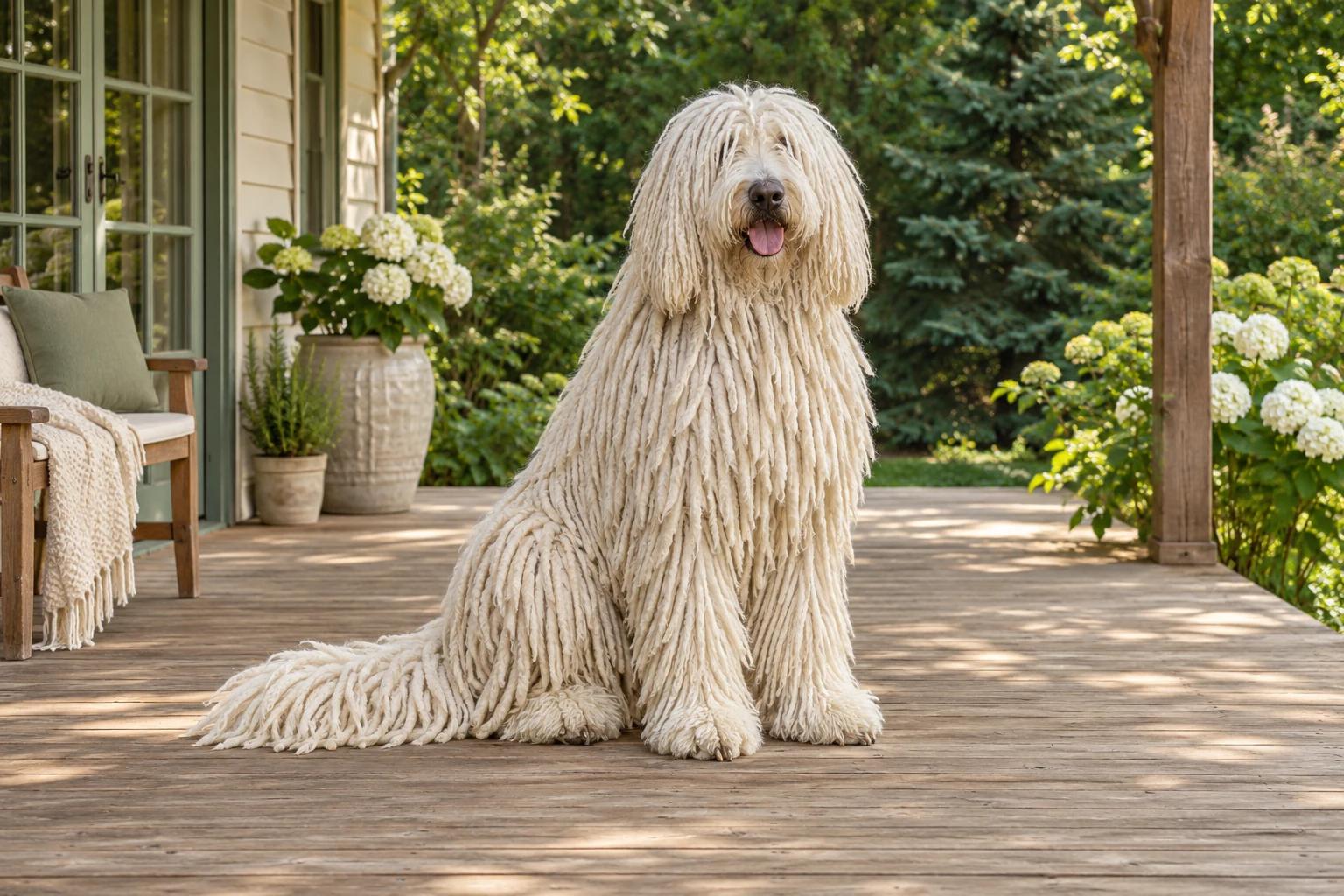
Komondor temperament deserves attention before the cords do. A large dog that watches its surroundings can be appealing, but the everyday responsibility belongs to the owner: managing access, arranging introductions and teaching the skills needed for ordinary care. This is not a breed to choose because you hope the dog will make all the decisions about your property. Begin with the Komondor profile, then look carefully at the home and routine you would provide.
Komondor temperament is shaped by a guardian background
The UKC standard identifies the adult Komondor as a flock guardian and describes natural wariness toward strangers. That background is important context, not permission to encourage suspicion or assume the dog can judge a person's intentions.
A useful ownership question is not “Will this dog protect me?” It is “Can I reliably manage this dog when something unfamiliar happens?” Consider a courier entering the drive, a neighbour retrieving a ball or a repair worker appearing at a side gate. Your plan should make those situations predictable without relying on the dog to interpret them as you would.
Komondor personality also varies between individuals. Ask what the actual dog has experienced and how its caregiver responds to uncertainty. Clear examples of management are more useful than reassuring claims that the dog knows who belongs.
Meet adulthood before committing to puppyhood
The Komondor Club of America FAQ strongly recommends meeting adult dogs in their homes. It notes that an appealing, playful puppy does not show the full experience of living with the adult. That visit should be an opportunity to understand routines, not a challenge designed to see what the dog will tolerate.
Ask your host how to arrive and follow their instructions. Observe how the dog is managed while you enter. If it remains in a separate area, ask about that arrangement rather than insisting on a greeting. You can learn a great deal without touching the dog.
During the visit, ask about a recent ordinary week. Who handled walks? Did visitors come? Was there an appointment or a change of schedule? What required preparation? An account of a minor inconvenience can tell you more than a description of the owner's favourite day.
Afterward, write down the work you noticed. Perhaps the owner checked a gate before opening another door, moved the dog before a delivery or set aside time for handling. Decide whether those actions could become normal habits in your own home.
Design a visitor routine that does not depend on luck
The club FAQ emphasises control when strangers are introduced. Translate that into a sequence everyone in your household understands. Choose where the dog will be before the door opens, who will manage it and where guests will wait.
For example, a repair appointment may work best with the dog settled in an appropriate secure area before the worker arrives and remaining separate while the work continues. There is no requirement for every visitor to meet the dog. The worker needs to do a job, and the dog does not need to supervise it.
Think beyond the first greeting. People stand up, carry equipment, move between rooms and leave unexpectedly. Your arrangement should still work after the initial excitement has passed. If you cannot supervise the entire interaction, planned separation is more reliable than an informal request that everyone be careful.
Give visitors concise instructions. Explain which door to use and ask them to wait for you rather than entering a garden or reaching over a gate. Do not present the dog as an attraction to be approached without permission. Calm, ordinary management is the goal.
Watchfulness changes how you use space
Look at the places where your Komondor would spend time. Does the main resting spot face a path used by strangers all day? Is the only outdoor area beside a shared fence where people frequently stop? Can the dog have a quieter place away from that traffic?
A calm-looking dog in one setting may behave differently when the environment changes. The club FAQ discusses barking as an alerting behaviour and notes that repeated perceived disturbances can make it a household issue. Do not choose the breed on an assumption of silence.
Review the setup before trying to solve every interruption with another cue. Moving a resting area, controlling access or changing the timing of an outing may reduce unnecessary encounters. If the dog is struggling, a qualified reward-based trainer can help assess the situation and plan appropriate practice.
Keep records in practical terms. Note what the dog noticed, where it was, what it did and what happened afterward. “Barked at a person approaching the side gate while outside” provides a clearer starting point than “was being dominant” or “was doing its job.”
A large companion needs cooperative everyday care
Komondor characteristics should not become excuses for postponing basic handling. Think about attaching a lead, moving through a narrow space, entering transport and allowing an examination. Those tasks are easier to plan before a rushed appointment makes them urgent.
Ask a prospective breeder or caregiver what the dog already knows and which routines need work. Request a demonstration where appropriate. Look for a calm, understandable process rather than a person physically wrestling a large dog into position.
Coat care adds another reason to value cooperation, but it is not this breed's only handling requirement. The Komondor cord-care article covers the maintenance commitment. In a temperament discussion, focus on how the dog participates, how sessions are introduced and who can help if the usual caregiver is away.
Arrange professional support early if handling becomes difficult. Sudden changes in tolerance or ordinary Komondor behavior should also be discussed with your veterinarian. A guardian background does not explain every change or remove the need to investigate discomfort.
Decide whether the household can share responsibility
Before bringing a Komondor home, hold a practical household discussion. Who checks gates? Who can manage the dog during an unexpected visitor's arrival? What happens if the primary handler is ill or travelling? Which professional would you contact for training support?
Write the answers down and test the arrangement without the dog. If moving between rooms requires someone to leave a door open, solve that now. If only one person can explain the arrival routine, practise explaining it to the others.
The breed quiz can help you identify broad preferences, but this decision needs a concrete management plan. Admiring a watchful dog is easy. Choosing to organise daily life thoughtfully around a substantial guardian is the meaningful commitment.
FAQ
Does a Komondor need training if guarding comes naturally?
Yes. A guardian background does not teach household rules, lead skills or comfortable handling. Owners still need to provide training and manage access, especially when unfamiliar people arrive.
Should every visitor greet a Komondor?
No. A visitor can complete a visit without interacting with the dog. Plan suitable separation when needed, and arrange any introductions under the owner's control with attention to the individual dog's experience.
What should I observe when meeting an adult Komondor?
Observe the arrival arrangement, ordinary movement around the home and how the caregiver manages transitions. Ask about care, visitors and changes of routine. Respect the owner's setup rather than trying to test the dog yourself.
Sources behind this article
Article source checked: November 15, 2026. Source checked 2026-11-15
Keep reading

Airedale Terrier Temperament: What Everyday Life Can Feel Like
Read article →