Khao Manee vs Turkish Angora: size, shape and daily life
Compare Khao Manee vs Turkish Angora using current adult weights, coat and body differences, eye colors and the Angora’s interest in learning.
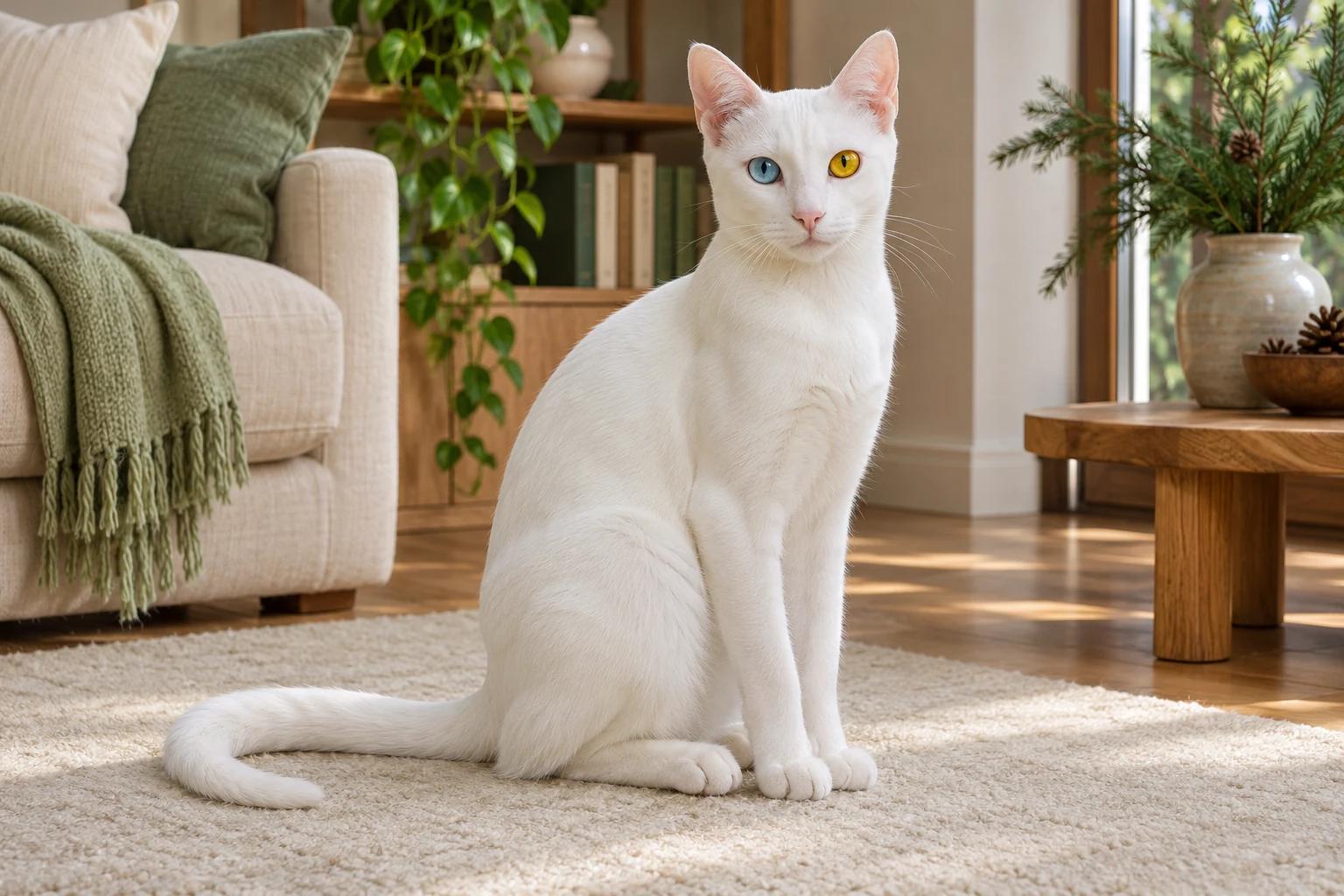
A Khao Manee vs Turkish Angora comparison should start with the cats rather than a favorite photograph. Compare adult females with adult females, males with males, and the whole animal rather than a single striking feature. The weight ranges overlap substantially, so neither breed name tells you which of two individual cats will weigh more.
Khao Manee vs Turkish Angora: compare the adult ranges first
The current Khao Manee profile lists adult females at 6–8 pounds and males at 8–11 pounds. The current Turkish Angora profile lists adult females at 5–8 pounds and males at 7–10 pounds.
For females, both references include the entire 6–8-pound interval. The Angora range begins one pound lower, but the two female upper limits are identical. A seven-pound female could fit either description, so calling every Khao Manee larger would turn an overlapping range into a false rule.
For males, the overlap is 8–10 pounds. The Khao Manee reference extends one pound above the Angora's, while the Angora reference begins one pound below it. These endpoints describe the published ranges, not a promise about the adult size of a kitten.
When considering a Khao Manee or Turkish Angora, ask which sex and age the quoted figure describes. Comparing an eleven-pound adult male Khao Manee with a five-pound adult female Angora exaggerates the contrast by choosing opposite ends of two differently qualified references. A like-for-like comparison is more informative.
The Khao Manee is not defined by mismatched eyes alone
The KMCC proposed standard hosted by GCCF describes a white cat with balanced, moderate proportions and developed muscle. It allows matching eyes as well as differently colored eyes, with blue, yellow, amber and green among the listed possibilities.
That matters when looking beyond the familiar odd-eyed portrait. A Khao Manee with matching eyes is not missing the breed's identity. Nor does a picture of two different eye colors describe the cat's whole structure: the outline, limbs and body proportions remain separate features to consider.
The document also describes high cheekbones and ears that are broad at the base with rounded tips. Its coat description is medium-short, smooth and slightly open. Look at the relationship between the face, ears and body rather than treating eye color as a complete identification checklist.
This is a proposed standard within a breed-application document, not a guarantee about every pet or a statement of present registration rules. Its useful contribution here is the broader physical picture: a cat whose appearance involves proportion and several facial features, not just the most dramatic eye combination in a photograph.
The Angora's longer outline includes more than its hair
The CFA Turkish Angora description identifies a long body, long legs and a full tail plume. The underlying frame is finely boned but muscular; the silky coat is not the only reason the outline looks extended. Large erect ears and a wedge-shaped head add to that impression.
For a Turkish Angora vs Khao Manee comparison, distinguish the length of the body from the length of the hair around it. A tail plume creates a different visual finish from the torso itself. A side view can help you notice those separate elements without turning coat volume into an estimate of weight.
CFA also makes clear that Turkish Angoras come in many colors and patterns. White is familiar, but choosing this breed does not require choosing a white cat. If white fur first drew your attention to both breeds, the Angora gives you additional appearance options within the same breed.
The long, fine coat includes a fuller ruff and tail, and longer hair on the hind legs. Those are specific areas of the outline to notice, rather than assuming that the coat has the same length everywhere.
An Angora may want a lesson, not just an audience
VCA's Turkish Angora account describes curiosity, athleticism and an interest in learning commands and tricks. It also notes a fondness for surveying activity from high places.
For a prospective owner, this suggests looking at how the individual engages with a task. Does the cat investigate something new, follow a familiar cue or return for another attempt? Watching a simple activity can be more informative than asking whether the breed is “clever.” That word alone does not show what living together will involve.
A preference for an elevated viewpoint is another concrete behavior to notice. It concerns where the cat chooses to observe the room, not a requirement to ride on a person's shoulders or climb a particular piece of furniture. The examples in a breed account are descriptions, not activities every owner must reproduce.
These observations do not establish that the Angora learns faster than the Khao Manee. A difference between Khao Manee and Turkish Angora ownership should be based on the animals and activities you can actually compare, not an intelligence contest inferred from separate breed descriptions.
For a broader match with your preferences, use the cat breed quiz. The separate Khao Manee shade and sun protection article covers a different ownership topic.
Frequently asked questions
Which adult female range is listed for each breed?
Adult female Khao Manees are listed at 6–8 pounds; adult female Turkish Angoras are listed at 5–8 pounds on the current profiles.
Do male Khao Manee and Turkish Angora weights overlap?
Yes. The current male Khao Manee range is 8–11 pounds and the male Turkish Angora range is 7–10 pounds, overlapping from 8 to 10 pounds.
Is the heaviest listed male a target for every kitten?
No. The Khao Manee and Turkish Angora adult ranges are references, not individual growth targets. Ask your veterinarian about the weight of a particular cat.
Sources behind this article
Article source checked: November 16, 2026. Source checked 2026-11-16
Keep reading

Abyssinian vs Somali: Coat, Size and Everyday Company
Read article →