Japanese Terrier vs Rat Terrier: A Practical Comparison
Compare Japanese Terrier and Rat Terrier size, coat and daily activity, with questions that help you assess the individual dog.
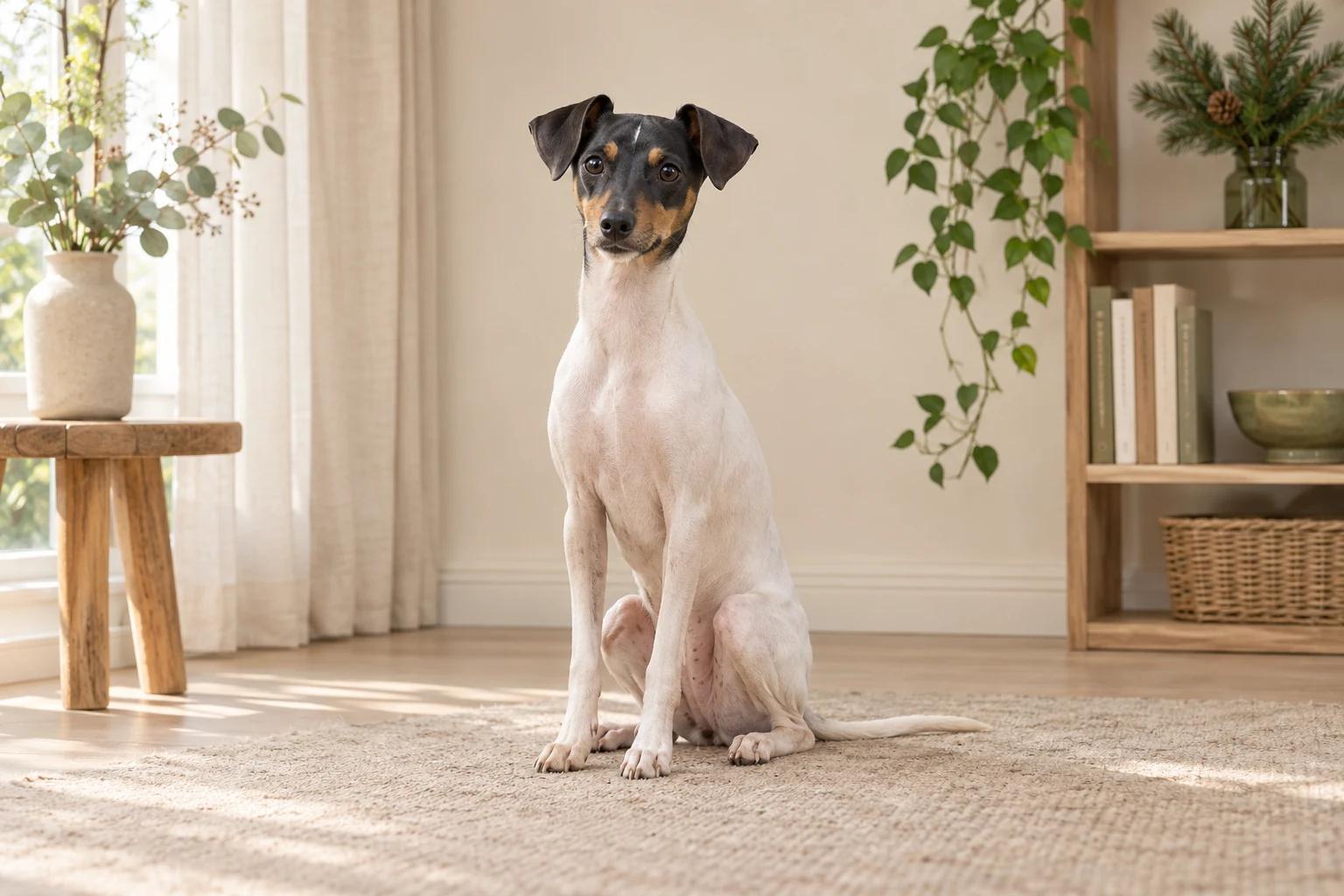
Japanese Terrier vs Rat Terrier is a comparison worth making carefully because both names can suggest more than they explain. These are distinct breeds, and the Rat Terrier's two size divisions alone can change the comparison substantially. Start with the adult dog you are considering, then look at the daily commitments behind the compact appearance.
The most useful differences concern size, build and how much activity you are prepared to organize. A short coat is convenient in some ways, but it does not tell you whether the dog will suit your home, other animals or working hours.
Japanese Terrier vs Rat Terrier: first clarify which size
The Japanese Terrier profile lists a reference weight of 10–12 pounds. The Rat Terrier profile lists miniature and standard heights separately, with an overall weight range of 10–25 pounds. A comparison that treats every Rat Terrier as one size misses an important distinction. Clarifying the relevant size division is a practical way to understand the difference between Japanese Terrier and Rat Terrier ownership.
The AKC Rat Terrier standard defines miniature height as 10–13 inches and standard height as over 13 up to 18 inches. Ask which division is relevant and what the individual dog measures. “Small terrier” is not a sufficiently precise description when choosing transport equipment or planning handling.
If you are meeting a puppy, ask about the parents' measured adult sizes rather than assuming the puppy's current weight resolves the question. For an adult, obtain current measurements before buying a harness or carrier. Do not let a compact headshot substitute for seeing the full dog standing naturally.
Think through the practical consequences of the larger end of the Rat Terrier range. Would you still be comfortable with the equipment, transport and space arrangement you pictured for a Japanese Terrier? If your plans depend on carrying the dog frequently, that deserves an honest discussion before you choose.
The coat and outline are not identical
The FCI Japanese Terrier standard describes a square outline and a very short, smooth coat. The Rat Terrier standard describes a body slightly longer than tall and a short, close-lying coat. Both can look neat without the fuller furnishings of many other small breeds, but they are not interchangeable outlines.
Use those distinctions to ask better questions, not to identify an unfamiliar dog from a single photograph. Lighting, pose and camera angle can conceal proportions. If a listing is unclear, request information about the dog's background rather than trying to establish identity from coat pattern alone.
A practical grooming conversation should cover the whole dog. Ask what tools are currently used, how the dog responds to handling and who manages nails, ears and teeth. The coat may be straightforward to look at, but the owner still needs a repeatable care routine.
If you already have a grooming kit from another breed, bring it to a professional before using it. A tool suited to long undercoat may not belong in a routine for these short coats. Buying fewer appropriate items is more useful than assuming a large kit means you are prepared.
Compare the activity you want to share
The live breed profiles place Japanese Terrier activity in the middle of the reference scale and Rat Terrier activity toward the higher end, with substantial mental engagement for the Rat Terrier. This makes daily activity a more useful comparison than simply asking which dog is smaller.
Write down what you would enjoy doing on a wet weekday after work. Would you still want to practise skills, organize play and provide an outing? Or does your imagined routine depend on good weather and a free weekend? A dog chosen for an active life still lives through the less convenient days.
The Rat Terrier standard describes an observant, energetic character. That supports asking about purposeful activities, but it does not tell you which sport the individual will enjoy. Ask the caregiver what holds the dog's interest, what it has already learned and how it spends time between activities.
When choosing Japanese Terrier or Rat Terrier, do not make the Japanese Terrier the automatic “inactive option.” Arrange suitable movement and engagement for either dog. The comparison should help you plan differences in emphasis, not remove an entire category of care.
Ask about other animals directly
Do not assume two terrier labels predict identical responses to wildlife or household pets. Explain your actual situation: resident dogs, cats, small animals, garden access and the routes you normally walk. Ask for concrete observations rather than accepting a broad statement that the dog is friendly.
For example, has the dog lived with another animal, or only seen one through a barrier? Were the interactions supervised? What happened when the other animal moved quickly? These are different kinds of experience, and none should be exaggerated into a guarantee.
Look at the physical arrangements too. Can animals spend time separately without a complicated reshuffling of the entire house? Who will supervise introductions? Is the garden boundary checked rather than assumed secure? You are planning for the individual dog, not testing whether it lives up to a breed reputation.
Make the caregiver interview a comparison you can use
Ask both caregivers the same four questions: describe yesterday's routine, name the hardest recurring task, explain how the dog settles, and tell me what a new owner tends to underestimate. Record the answers in ordinary language.
Then compare what support comes with the placement. Can you ask follow-up questions about training or coat care? What written routine will accompany the dog? If a difficulty appears, who is your first point of contact? Support does not replace preparation, but it helps you avoid trying to interpret everything alone.
A Rat Terrier vs Japanese Terrier decision is ready when the practical differences feel clear enough to live with. If your notes still consist mainly of appearance preferences, arrange another conversation. The breed quiz can help broaden the shortlist, while the Japanese Terrier background article covers a separate historical topic rather than deciding the ownership comparison for you.
FAQ
Are Japanese Terrier and Rat Terrier the same breed?
No. They are distinct breeds with different standards. Their short coats and compact appearance can invite comparison, but documentation and the dog's background matter more than resemblance in a photograph.
Is a Rat Terrier always larger than a Japanese Terrier?
Do not assume one fixed size relationship. Rat Terriers have miniature and standard divisions, and their overall reference weight range is broader than the Japanese Terrier’s. Compare the actual dogs’ measurements before choosing equipment or making handling plans.
Which breed needs more activity planning?
The My Breed Atlas profiles give Rat Terriers the higher activity and mental-engagement tendencies. Both still need suitable daily opportunities for movement, learning and company. Use the individual dog's current routine to make the final plan.
Sources behind this article
Article source checked: November 15, 2026. Source checked 2026-11-15
Keep reading

Affenpinscher vs Brussels Griffon: Everyday Differences
Read article →