Japanese Terrier Shedding: Short-Coat Care at Home
Manage Japanese Terrier shedding with gentle grooming, practical household cleanup and a clear distinction between loose hair and coat changes.
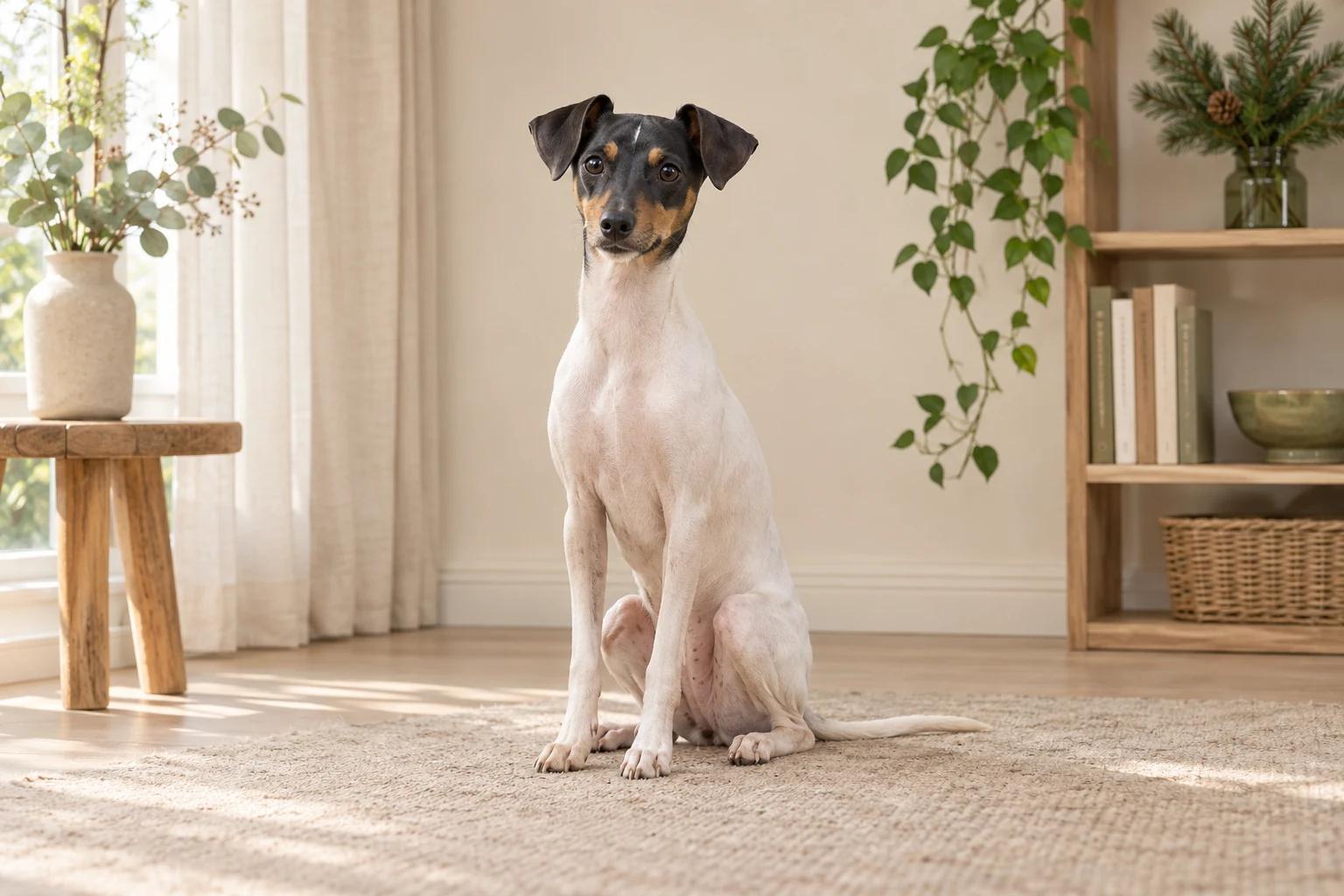
Japanese Terrier shedding can surprise an owner who expected a very short coat to leave no hair behind. The hairs are short, but they still become loose and turn up on clothing, bedding and upholstery. A realistic plan combines gentle coat care with a few convenient cleaning habits rather than trying to make the dog shed-free.
Begin by learning what is usual for your own dog. The amount you notice on a dark jacket may look different from the amount visible on a pale blanket. Household surfaces affect what catches your eye, so a single conspicuous patch of hair is not a complete account of the coat.
Japanese Terrier shedding: short does not mean absent
The FCI Japanese Terrier standard describes a very short, smooth, dense coat. It is a close-fitting coat rather than the long feathering or abundant outer layers seen on some other small breeds. The My Breed Atlas profile records regular shedding as part of ownership.
The AKC shedding guide explains that shedding removes old or damaged hair and that grooming requirements vary with the coat and its shedding pattern. A shorter hair is still a hair that can end up somewhere you would rather not find it.
Separate two questions when choosing the breed. First, are you comfortable with ordinary loose hair in your home? Second, are you willing to maintain routine coat and skin checks? A convenient coat does not remove either question. If a perfectly hair-free sofa is essential, do not make your decision on a promise that grooming will eliminate the issue.
Follow the hair through your actual day
Instead of starting with a shopping list, identify where loose hair becomes inconvenient. A Japanese Terrier that rests on your lap may leave hair on work clothes; one that travels frequently may make a carrier liner the main cleaning job. The solution depends on the routine, not only the breed.
Try a simple household walk-through. Check the resting area, the seat used during travel and the place where you put on outdoor clothing. Decide which surfaces can be covered, which can be cleaned easily and which you would rather keep separate from the dog's usual resting spots.
For clothing, keep the cleaning tool where you get dressed rather than buried with bathroom supplies. For a bed or sofa cover, choose something you can remove and wash without dismantling the entire area. A spare cover makes the arrangement usable while the first is in the laundry.
For transport, check that a liner or cover does not interfere with the equipment's intended use. Secure transport comes first; an improvised layer should not obstruct closures or alter a fitted restraint. Use the manufacturer's guidance when adapting any carrier or seat arrangement.
Keep the grooming kit proportionate to the coat
Japanese Terrier coat care should suit the dog's short hair rather than equipment intended for a heavily furnished breed. The AKC guide identifies natural-bristle brushes and grooming gloves as options for short coats. Ask a groomer which tool and pressure are appropriate for your individual dog before buying an aggressive shedding tool.
The ASPCA grooming guide explains that regular brushing can remove loose hair but cannot stop normal shedding. It also recommends choosing tools according to coat type. Your aim is a gentle, useful session, not collecting the largest possible pile of hair.
When learning how to groom a Japanese Terrier, ask for a demonstration you can repeat. Show the groomer the brush you own and explain what you are unsure about. “Am I pressing too firmly?” is a more useful question than “Is this an expensive enough brush?”
Keep the routine short enough that you remain attentive. Clean the tool afterward so you can see what it collects next time. If another person shares care, explain the demonstrated technique rather than assuming that any brushing is equivalent.
Make inspection separate from cosmetic perfection
A short coat makes it tempting to judge everything at a glance. Instead, take a moment to notice whether the dog's skin and hair look familiar and whether ordinary handling is comfortable. You are learning the individual's baseline, not trying to diagnose a condition.
Choose a well-lit place and look at the same general areas during routine care. If you notice a change, write down when it appeared and where it is located. A clear photograph can help you describe it to your veterinarian, especially if the appearance varies between days.
The ASPCA advises veterinary consultation for problems such as thinning or bald areas, irritation and persistent scratching. Do not label these automatically as ordinary shedding. More brushing is not an answer to every coat change, and an online photograph cannot establish the cause.
Keep new products out of the routine until you have a reason to use them. If seeking professional advice, bring the names of shampoos and other coat products already used. A simple list prevents uncertainty about what “the usual wash” actually means.
Plan baths around the dog, not the lint roller
Bathing should not become a reflex each time you see loose hair. Discuss a suitable routine with your groomer or veterinarian, taking the dog's activities and skin into account. ASPCA recommends pet-formulated shampoo and avoiding water directed into the eyes, ears and nose.
Prepare towels and a stable working area before starting. Make sure you have enough time to finish without rushing. If the practical setup is awkward, an occasional professional appointment may be easier than repeatedly improvising in an unsuitable space.
At the appointment, explain your actual concern. Are you noticing more hair on clothing, struggling with handling or seeing a change in the skin? Those are different questions and may need different help. Be cautious of a service presented as a permanent end to shedding.
If you are deciding whether this coat fits your household, include cleanup in your ownership plan alongside walks and company. The breed quiz can help organize those preferences. For a separate background topic, see the Japanese Terrier history article; the breed's historical role does not determine how much hair your individual dog leaves on a blanket.
FAQ
Do Japanese Terriers shed despite their short coat?
Yes. Japanese Terriers have a very short coat, but loose hair is still part of living with them. Plan routine grooming and household cleanup rather than expecting a shed-free dog.
What brush should I use for a Japanese Terrier?
Ask a groomer about a gentle tool suitable for the individual dog's short coat. Natural-bristle brushes or grooming gloves are options to discuss. Technique and pressure matter more than choosing the most forceful shedding tool.
Can bathing stop Japanese Terrier shedding?
No. Bathing is not a permanent solution to normal shedding. Choose a bath routine for the dog's actual care needs and seek professional guidance rather than increasing baths whenever hair appears on furniture.
When is loose hair a veterinary question?
Consult your veterinarian if you see bald or thinning areas, irritated skin, persistent scratching or a marked change from the dog's usual coat. Record what changed and avoid guessing at the cause or starting treatment yourself.
Sources behind this article
Article source checked: November 15, 2026. Source checked 2026-11-15
Keep reading

Affenpinscher Grooming: A Practical Coat-Care Routine
Read article →