Japanese Spitz Exercise Needs: Build a Balanced Day
Plan Japanese Spitz exercise with walks, sniffing and shared activities, plus realistic routines for weekdays, weekends and changing weather.
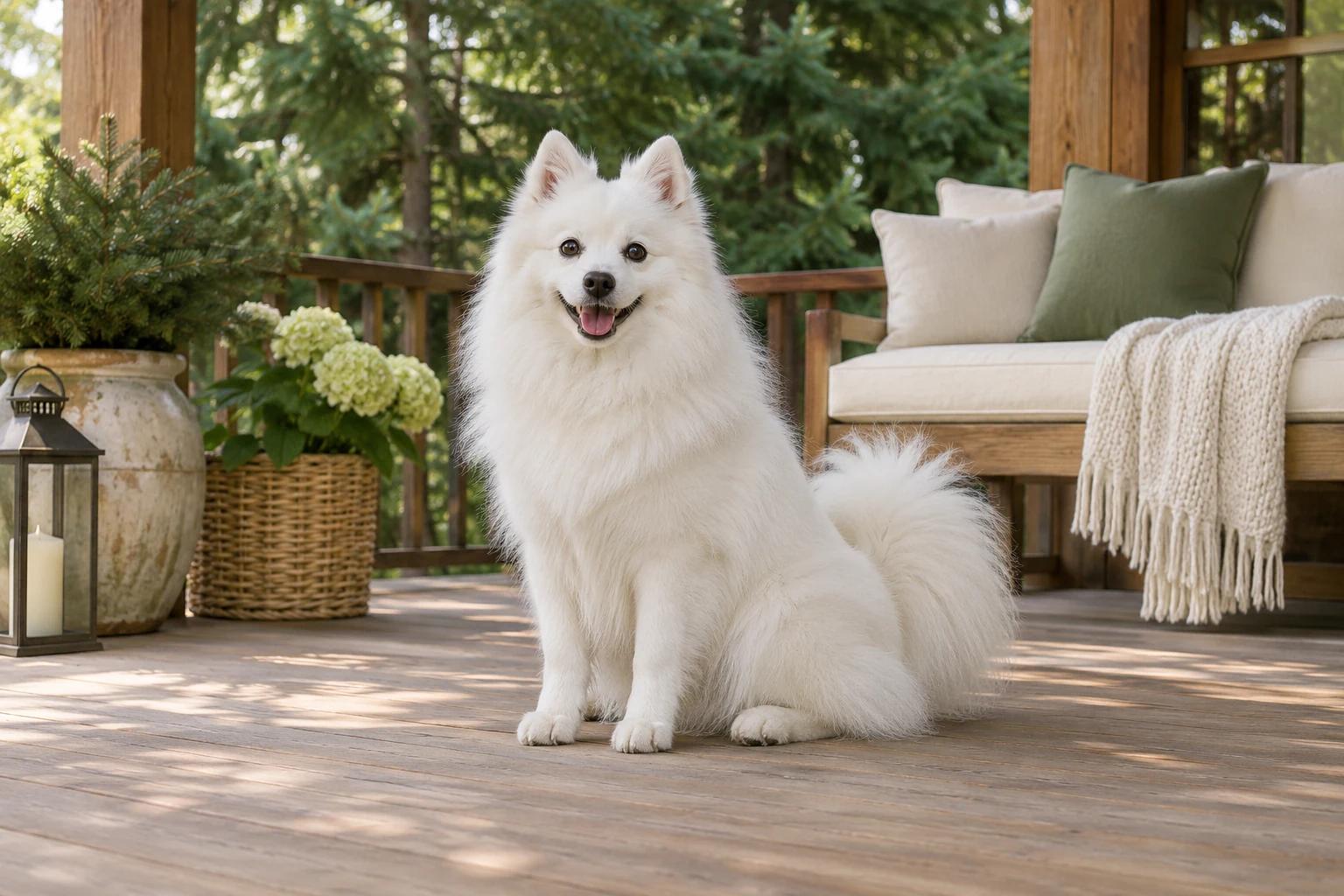
Japanese Spitz exercise needs are best met with a repeatable mix of walking, exploration and shared activity, not an occasional ambitious outing. The breed's size makes it easy to underestimate the planning involved: a dog that fits neatly beside the sofa still needs a day containing more than trips to the toilet.
A useful routine gives both of you something to expect. Think in terms of opportunities across the day, then adjust the amount and type with your veterinarian when age, condition or health calls for an individual plan. There is no need to turn every walk into a fitness test.
Japanese Spitz exercise needs: plan the day, not a single number
The Japanese Spitz profile describes a middle-range activity tendency and a mix of outings, play and mental engagement. Its example day includes about an hour of active time. Treat that as a planning reference, not a compulsory dose for every dog or a requirement to walk continuously for an hour.
The AKC exercise guide emphasizes that age, breed and health affect a dog's requirements. It also distinguishes the shorter activity opportunities appropriate for puppies from adult routines. Ask your veterinarian about your individual dog's starting point rather than applying an adult timetable to a young puppy.
If you are asking “how much exercise does a Japanese Spitz need?”, first define what you are counting. Waiting outside a shop is not the same as moving through a park. A toilet outing has a useful purpose, but it may offer little exploration. A training game is worthwhile without being equivalent to a sustained walk.
Make three columns for a typical weekday: movement, exploration and interaction. Add your existing activities beneath them. Empty columns reveal more than a total number of minutes because they show what kind of experience may be missing.
Design a walk that has somewhere to pause
A Japanese Spitz daily walk does not need a new destination every time. It does need enough flexibility that you can respond to the dog rather than marching through a route chosen only for your convenience.
The AKC sniff-walk guide describes scent exploration as enrichment and suggests judging these outings by engagement rather than distance. A sniff-focused walk can complement physical activity; it is not a universal substitute for the rest of the day's exercise.
Look at your usual route and identify two places where you can pause without obstructing pedestrians or approaching traffic. A suitable verge or quiet path may work better than the crowded entrance to the park. Check the area for hazards and follow local lead rules.
Give the walk a simple shape: leave the busy stretch, spend time in the quieter area, then return by a route you can shorten if needed. This is easier to adapt than a large loop with no convenient way home. Carry what you need before leaving, rather than assuming water or another resource will be available at the destination.
If several people walk the dog, compare routes. One person may assume the other provides the exploratory outing, while both are actually taking the same brief toilet circuit. A shared description of each outing prevents that gap without requiring constant tracking.
Make companion time active in small ways
The AKC breed overview describes Japanese Spitz as intelligent companions that enjoy joining their people in activities. Use that as an invitation to involve your dog, not an assumption that every outing or sport will suit every individual.
Build a small menu of activities you can offer at home. One option could be practising a familiar cue in a different room; another might involve finding a favorite toy that remains easy to locate. Choose equipment appropriate to the dog and supervise play. Stop before an ordinary game turns into frantic repetition.
Write down which activities your Spitz actually chooses. If the dog repeatedly brings the same toy, that tells you more than a purchase marketed for clever breeds. If a new puzzle goes untouched, simplify the task or set it aside instead of assuming you need a more elaborate device.
Leave room for doing nothing together too. A schedule that alternates stimulation with more stimulation gives you little opportunity to observe how the dog settles. A quiet period after an outing is part of arranging a livable day, not a failure to entertain.
Match weekend ambitions to weekday reality
A Japanese Spitz activity level cannot be understood from a single exciting afternoon. Consider what the dog has been doing consistently before planning a much longer walk or a demanding new activity. Discuss meaningful increases or a new sport with your veterinarian and a suitable instructor.
For an unfamiliar route, research the surface, access rules, shade and places to turn back. Start with an option that lets you leave easily. A remote destination with a fixed return distance is a poor setting for discovering that the plan was too ambitious.
Make weather alternatives before you need them. Identify a shorter local outing for unsuitable conditions and an indoor activity your dog already understands. Do not compensate for a changed walk by inventing an intense session of repeated jumping in the living room.
If your schedule changes, solve the care arrangement rather than simply adding extra activity at the weekend. Another trusted walker may be part of the answer, but explain the dog's usual route, equipment and cues. “Take him out” leaves too much for the other person to guess.
Review what the routine produces
Keep a brief record for several ordinary days: outing type, conditions and how the dog behaved afterward. This is not a competition for mileage. It gives you useful examples if you need to discuss activity with a veterinarian or trainer.
A sudden reluctance to move, unusual exhaustion or signs of discomfort should not be treated as a training challenge. Seek veterinary advice. When the issue is simply that the routine is hard to maintain, change the logistics first: prepare equipment, clarify who walks when and choose routes close enough to use consistently.
For background rather than activity planning, read the Japanese Spitz development story. If you are comparing ownership commitments, the breed quiz can help put daily activity alongside grooming, company and your available time.
FAQ
Does a Japanese Spitz need one long walk every day?
Not necessarily. Plan a mix of suitable outings and activities across the day rather than assuming one uninterrupted walk is the only option. Age, health, conditions and the individual dog's response affect the arrangement.
Can a garden replace Japanese Spitz walks?
Garden access is useful, but it does not automatically provide the exploration and shared activity of planned outings. Consider what the dog actually does there and which parts of the day still need attention.
Are sniffing walks worthwhile for Japanese Spitz?
Yes. Opportunities to investigate scents can add mental engagement to a walk. Choose a suitable location, maintain control and allow time to explore without treating sniffing as a replacement for every other kind of activity.
Sources behind this article
Article source checked: November 15, 2026. Source checked 2026-11-15
Keep reading

Afghan Hound Exercise Needs: Build a Workable Active Day
Read article →