Japanese Chin vs Pekingese: Choosing Your Companion
Compare Japanese Chin and Pekingese coat care, build and everyday routines, with practical questions to help choose your companion.
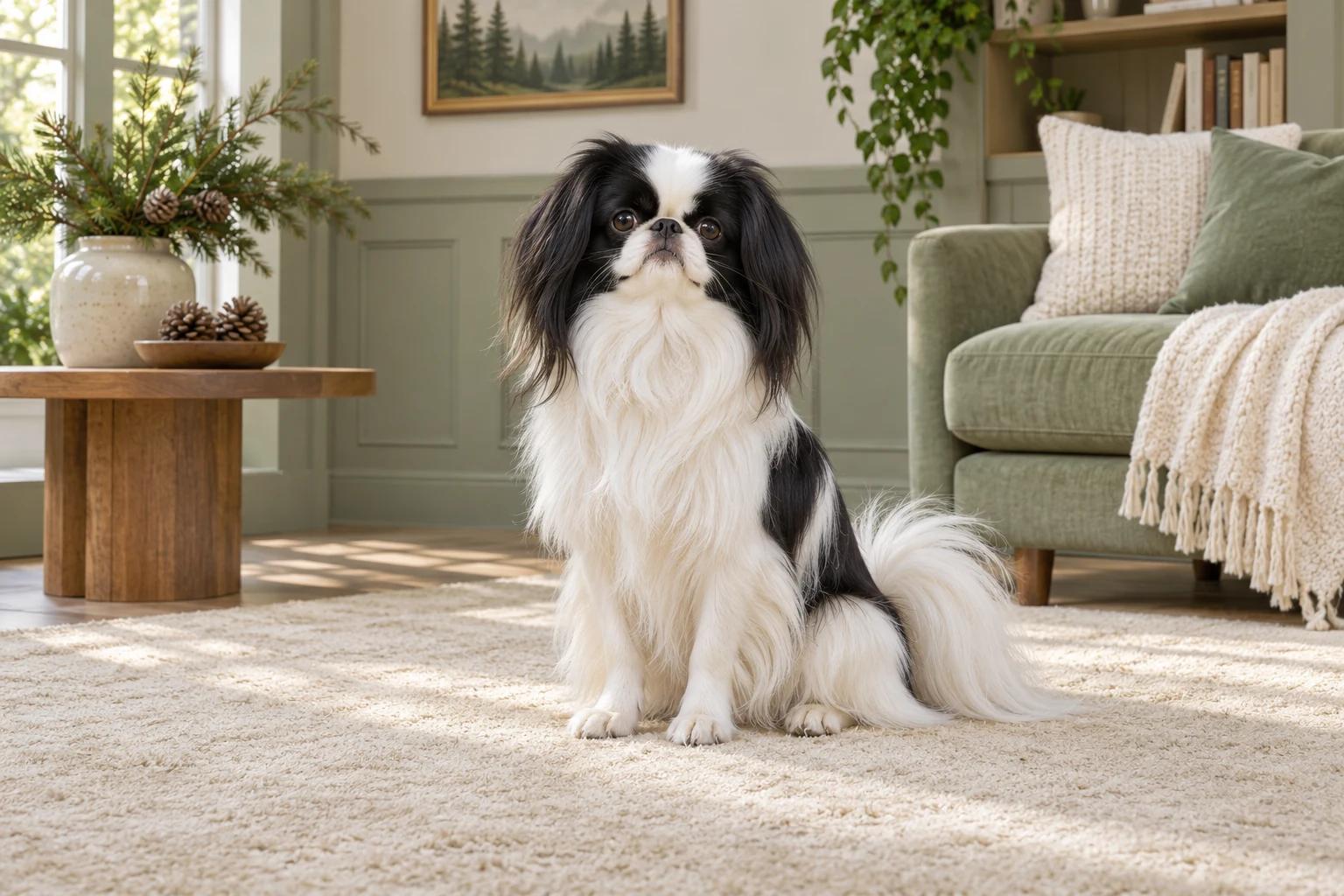
Japanese Chin vs Pekingese is a choice between two small companion breeds, not two versions of the same dog. The most useful distinction starts with what your hands and calendar will encounter: a Chin's silky coat and lighter-looking outline, or a Pekingese's substantial build and layered coat. Before choosing, picture an ordinary morning with each dog rather than comparing only portraits.
Both deserve a daily routine that includes outings, attention, grooming and learning. Neither becomes an effortless housemate simply by fitting into a small home. Your best match depends on which care tasks you can repeat comfortably and what you learn about the particular dog.
Japanese Chin vs Pekingese: the differences you can see
The AKC Japanese Chin standard describes a square outline, silky single coat and light, lively movement. The Pekingese standard describes a low, substantial body, heavier forequarters and a double coat with a coarser outer layer. These are useful distinctions when the two breeds look similarly fluffy in cropped photographs.
Look at a full-body view from the side and watch the dog move on level ground. A headshot conceals body proportions, while a photograph taken from above can make leg length difficult to judge. Ask for an ordinary standing photograph, not only a carefully posed portrait surrounded by coat.
For household planning, the Japanese Chin profile lists an adult reference range of 8–11 inches and 7–11 pounds. The Pekingese profile lists 6–9 inches and 7–12 pounds. Those ranges overlap in practical ways: a shorter dog is not automatically the lighter dog. Measure the actual adult before choosing a carrier, and check the equipment's dimensions as well as its weight limit.
Start with the grooming appointment you would actually keep
The coat is an important difference between Japanese Chin and Pekingese ownership. A Chin's feathering calls for attention to individual sections; a Pekingese's layered coat asks you to think beneath the visible surface too. Neither coat should be assessed simply by how tidy the back looks after a few brush strokes.
When meeting either breed, ask the caregiver to show you their normal grooming kit. A useful demonstration answers questions a shopping list cannot: how do they hold the coat aside, where do they begin, and which areas take longest? Ask what happens after a muddy outing and how they know a session is finished.
Now put the demonstration into your own evening. Would you do the task after dinner, or would it continually be postponed until the weekend? Where would the dog stand or lie? Can you reach both sides comfortably without balancing the dog on an unsuitable surface? A specific plan is more revealing than deciding you “don't mind brushing.”
If professional grooming is part of that plan, ask about the service for this dog's current coat rather than ordering a haircut from a photograph. Explain whether you want help maintaining the existing outline, a practical hygiene appointment, or tuition in brushing. Get a description of what you will still do between visits.
Compare companionship without turning descriptions into promises
The AKC Chin overview characterizes the breed as an engaging, generally quiet companion. The Pekingese standard emphasizes an independent character. That contrast can inform questions, but it cannot tell you how either individual will behave during your workday.
When weighing Japanese Chin or Pekingese, ask for examples. What does this dog do when its familiar person sits down to work? Does it settle nearby, bring a toy, or repeatedly seek contact? What happens when visitors arrive, and how long does it take before the household feels ordinary again?
Try to observe a quiet interval as well as the excited greeting. A dog enjoying attention during a visit may behave differently once everyone stops interacting. Avoid manufacturing a difficult test or asking the caregiver to provoke a reaction. Their account of several ordinary days is more informative than one staged challenge.
For a home with other animals, discuss the actual residents and proposed introductions. A broad breed description cannot resolve whether a particular pair will share space comfortably. Write down who will manage introductions and where each animal can spend time separately.
Walk through your home before making a decision
Take a notebook from the entrance to the main living area. Where will the lead hang? Where will wet paws be dealt with? Is there room to open a carrier without blocking the front door? These small arrangements matter when a companion dog accompanies much of your daily routine.
Then consider the journey outdoors. A ground-floor door, a busy lift and several flights of stairs create different practical jobs. Ask the current caregiver how the dog manages the kind of route you have. If carrying may be necessary, practise handling an appropriately weighted bag yourself, not an unfamiliar dog, to judge your own comfort.
Do the same exercise for a trip away. Confirm who could care for the dog and whether that person is comfortable with its coat routine. A sitter who can provide company but cannot maintain the coat may require additional grooming support. This belongs in the ordinary budget, alongside equipment, training and veterinary care.
A useful way to make the final comparison
Instead of awarding points for “cuter,” “calmer” or “easier,” make two short descriptions of a normal weekday. Include the morning outing, time with you, time apart, coat checks and an evening activity. Mark anything you cannot yet answer and take those questions back to the breeder or rescue.
A Pekingese vs Japanese Chin decision should become clearer as unknowns disappear. You might discover that you enjoy the Pekingese grooming demonstration but cannot arrange weekday company, or that the Chin you met fits your routine better than your initial preference suggested. Choose from those concrete findings, not a presumed winner for every household.
For a wider shortlist, use the breed quiz. For a separate look at appearance terminology, the existing Japanese Chin markings article discusses facial markings without making them a measure of companionship.
FAQ
Which breed is smaller, Japanese Chin or Pekingese?
Japanese Chin are generally taller in the listed reference ranges, while Pekingese can be heavier despite their lower outline. Use the individual dog's measurements for carriers and other equipment rather than assuming height predicts weight.
Is the Japanese Chin coat the same as a Pekingese coat?
No. The Chin standard describes a silky single coat; the Pekingese standard describes a coarser outer coat over soft undercoat. Ask for a grooming demonstration for the actual dog before committing to either routine.
Which breed is easier for a first-time owner?
There is no universal answer. Compare the dog's established routine, grooming requirements, response to everyday situations and available support. A first-time owner benefits more from clear preparation and realistic assistance than from a blanket “easy breed” label.
Sources behind this article
Article source checked: November 15, 2026. Source checked 2026-11-15
Keep reading

Affenpinscher vs Brussels Griffon: Everyday Differences
Read article →