Japanese Chin Grooming: A Practical Coat-Care Routine
Learn Japanese Chin grooming basics, from feathering checks and tool demonstrations to shedding cleanup and a manageable bath-day plan.
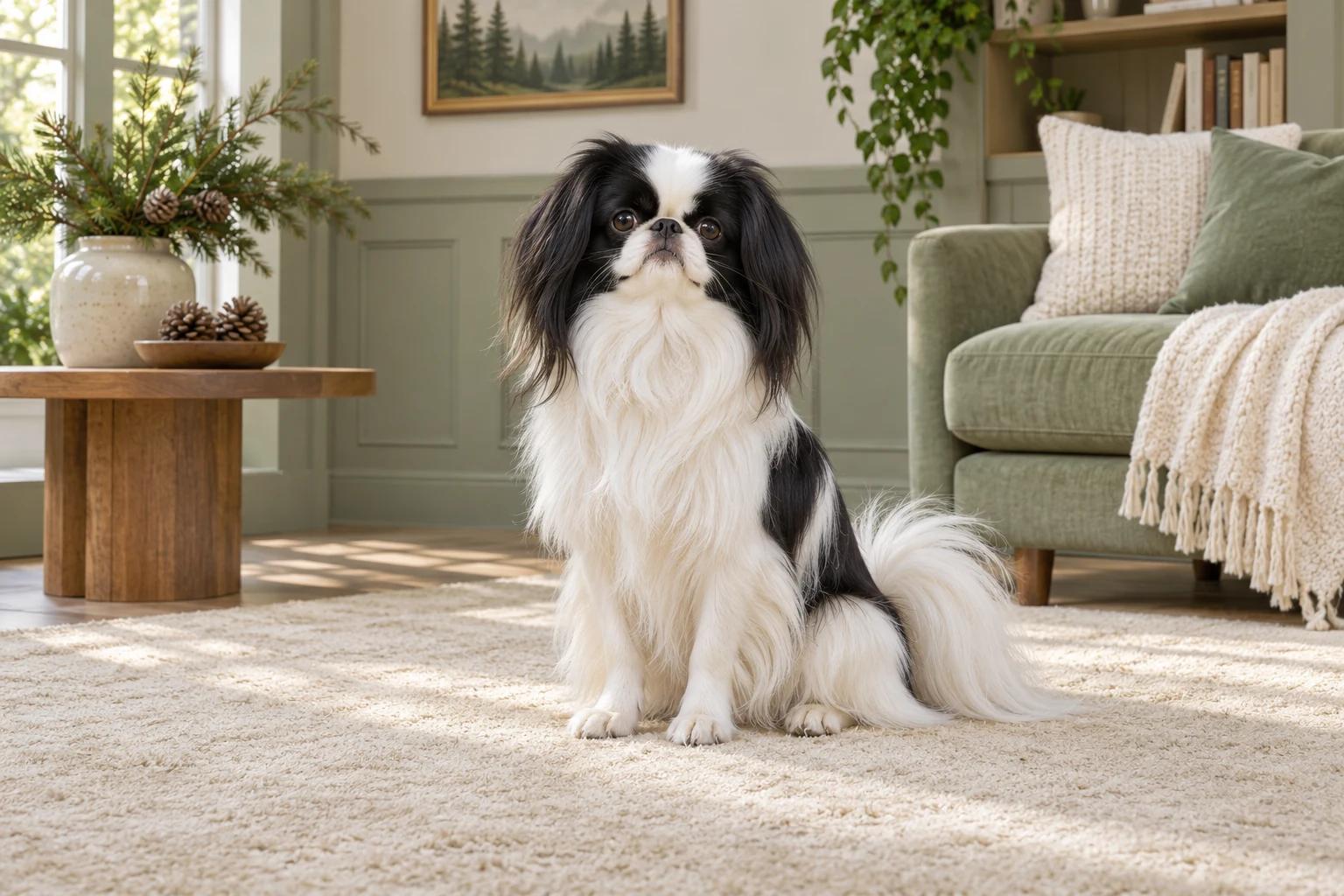
Japanese Chin grooming is less about creating a dramatic hairstyle than keeping a silky, feathered coat manageable. The long hair around the ears, legs and tail makes a quick sweep over the back an incomplete check. A useful routine tells you which sections you have examined, what needs attention and when to ask for help.
You do not need a bathroom full of products to start. You need a suitable place, tools demonstrated on your dog and enough time to work without rushing. Build the routine around the coat in front of you rather than a photograph of a different Chin.
Japanese Chin grooming: understand the coat before the tools
The AKC Japanese Chin standard describes a straight, silky single coat, with feathering on the ears and legs, a plumed tail and fuller hair around the hindquarters. Those different sections explain why a Chin can look tidy from above while still needing attention elsewhere.
Japanese Chin coat care should follow the whole dog, not only the most visible surface. Make a simple coat map on paper: left side, right side, ears, chest, leg furnishings, hindquarters and tail. You can use it when learning, especially if sessions are divided between two people.
Do not turn the map into a demand to complete everything in one sitting. Its purpose is to prevent omissions. If you finish one side before the dog needs a break, record where you stopped. That is more useful than trying to remember whether the other ear was checked yesterday.
Ask for a demonstration, not just a shopping list
Bring your current brush and comb to a groomer familiar with silky toy-dog coats. Ask them to demonstrate one small section while explaining their hand position and pressure. Then ask whether you can repeat the movement under their supervision. Seeing someone work is helpful; checking your own technique is better.
The VCA coat-care guide stresses gentle brushing, appropriate tools and professional help for extensive mats. It also warns against cutting mats with scissors. A stubborn knot is not a reason to pull harder or improvise a close cut.
A focused appointment can answer several Chin-specific questions. Which tool reaches through this dog's ear feathering without snagging? How should you support the hair you are working on? Which sections are currently easiest to miss? What would make the groomer stop and recommend a veterinary check instead?
Write the answers beside photographs of your own tools. Several brushes can look almost identical online, while a product name alone may be hard to recall months later. A simple labelled picture also helps a sitter use the equipment you intended.
Give the routine a place in your home
Choose a stable, nonslip working area with good light. Think about your own posture as well as access to the dog. If you cannot comfortably see the underside of the coat, ask for a different handling arrangement rather than relying on awkward reaching.
Keep the kit in one container and prepare it before bringing the Chin over. Add a small laundry bag for used towels and a separate place for clean ones. These unglamorous details remove the repeated interruptions that make an otherwise short job feel complicated.
Divide the routine into inspection and work. You might check the coat after an outing, then reserve a quieter part of the day for brushing. This lets you notice a leaf caught in the feathering without automatically launching an entire grooming session beside the front door.
For a shared household, name one person who checks that the routine actually happened. “Everyone helps” can easily become “everyone assumed someone else did it.” A note saying “ears checked; tail still to do” is enough. There is no need to maintain an elaborate beauty diary.
Plan for loose hair without chasing a spotless house
Japanese Chin shedding belongs in ordinary household planning. The breed's My Breed Atlas profile records regular shedding; a silky appearance does not mean hair will stay permanently on the dog.
Identify the two places where hair creates the most work. That might be the sofa throw and the fabric inside a carrier. Choose washable covers that are easy to remove, and keep a spare so laundry does not leave the resting area unusable. Deal with those priority surfaces before inventing a complicated whole-house cleaning schedule.
A household change can make loose hair more noticeable without telling you why the dog is shedding. Dark new trousers, a different sofa cover or more time spent in a carrier can change what you see. Note the context before drawing conclusions from one conspicuous patch of hair.
If coat loss changes abruptly, leaves bare areas or comes with irritated skin, consult your veterinarian. Do not respond by adding supplements, changing treatments or brushing repeatedly in an attempt to solve a medical question yourself.
Make bath day a planned job
Before a bath, decide where the towels, dog-formulated shampoo and drying space will be. Read the product directions ahead of time rather than while holding a wet dog. Ask your groomer to demonstrate a bath-and-dry process appropriate to your Chin and your equipment.
VCA advises dealing with tangles before bathing and rinsing shampoo thoroughly. For difficult matting or an uncomfortable dog, seek professional help instead of hoping the bath will solve the problem.
Avoid booking a first home bath immediately before you must leave for an appointment. A quiet block of time gives you room to stop, reorganize or request help. If using a professional, explain what you can realistically maintain between visits and ask for the next appointment to reflect that discussion.
For questions about the facial pattern rather than care, see the separate Japanese Chin markings guide. If grooming time is part of a wider breed decision, include it when using the breed quiz, alongside company, outings and your work schedule.
FAQ
How do I learn how to groom a Japanese Chin?
Ask an experienced groomer to demonstrate tools and handling on your dog, then practise a small section with supervision. Keep notes on the feathered areas you need to check and build a repeatable routine around those instructions.
Does a Japanese Chin need a complicated haircut?
A complicated haircut is not the starting point for maintaining a Chin's silky coat. Discuss brushing, tangles and any practical trimming needs with the groomer before choosing a style from a photograph.
Can I remove a tight mat myself with scissors?
Do not cut a tight mat with scissors. It can be difficult to see where skin lies beneath the hair. Ask a groomer for help, or a veterinarian if the skin is irritated or the dog appears uncomfortable.
Does grooming stop Japanese Chin shedding?
No. Grooming and household cleaning can help manage loose hair, but they do not make the dog shed-free. An abrupt change in coat or skin deserves veterinary advice rather than simply more brushing.
Sources behind this article
Article source checked: November 15, 2026. Source checked 2026-11-15
Keep reading

Affenpinscher Grooming: A Practical Coat-Care Routine
Read article →