Japanese Bobtail vs American Bobtail: a practical comparison
Compare Japanese Bobtail and American Bobtail cats through current adult weights, body proportions, tail shapes and practical activity choices.
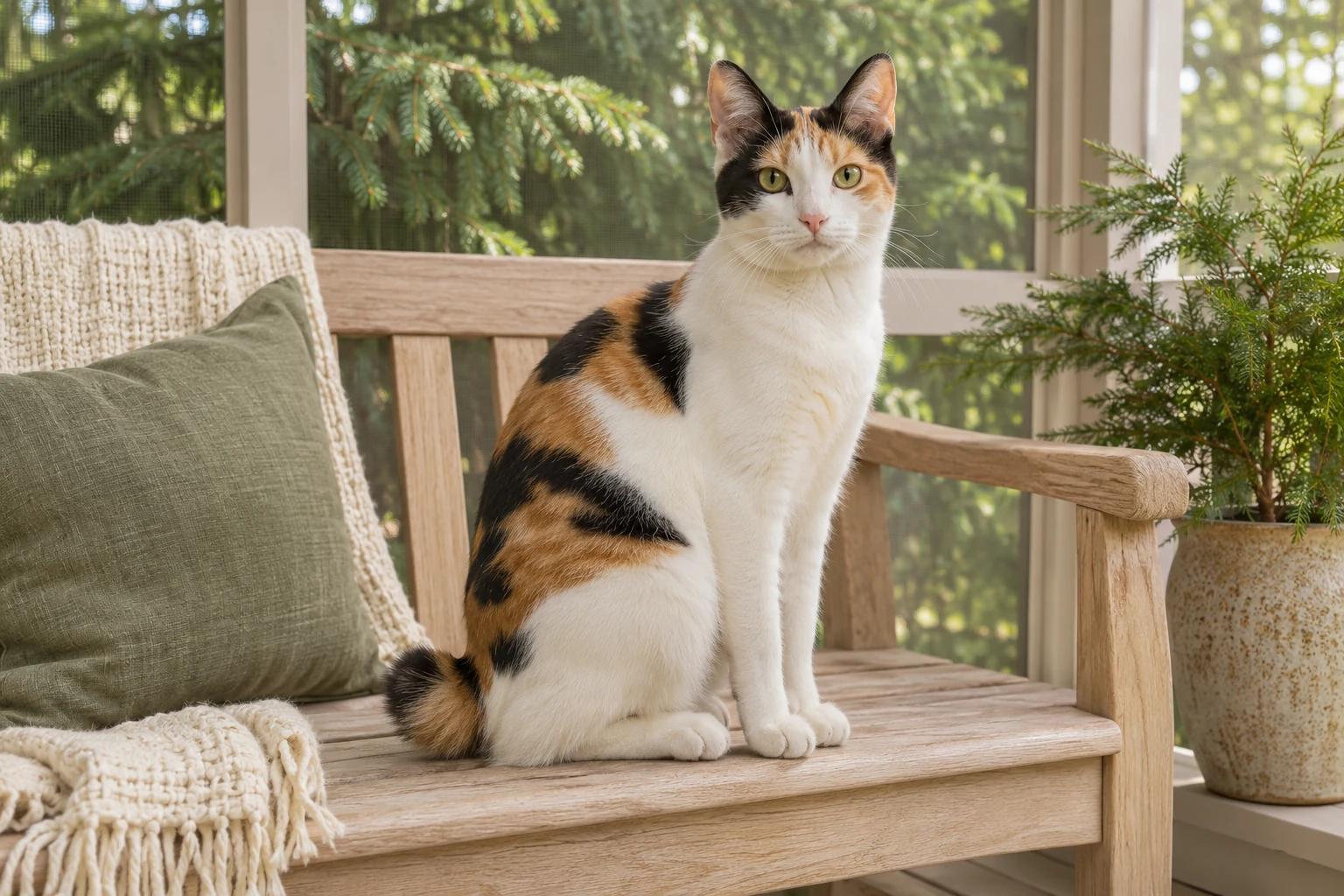
A Japanese Bobtail vs American Bobtail comparison should start with the complete cat, not just the shared word in the names. The difference between Japanese Bobtail and American Bobtail deserves more than a name-based assumption. Adult weight, body proportions and individual interests answer different ownership questions. Comparing them separately is more useful than deciding that two similarly named breeds must be interchangeable.
Japanese Bobtail vs American Bobtail: compare adult weights by sex
The current Japanese Bobtail profile lists adult females at 5–7 pounds and males at 8–10 pounds. The American Bobtail profile lists adult females at 7–11 pounds and males at 12–16 pounds.
In an American Bobtail vs Japanese Bobtail comparison, this means the listed female ranges overlap at 7 pounds. The listed male ranges do not overlap. That distinction is more precise than saying every American Bobtail will outweigh every Japanese Bobtail: an American female and a Japanese male can fall within the same weight band.
For example, a nine-pound adult could fit the American female range or the Japanese male range. Its weight alone would not identify its breed. Nor does the upper end of either range predict where an individual kitten will eventually finish.
Keep the adult and sex labels attached when discussing a particular animal. A combined range is convenient for a quick overview, but loses the information that makes a direct comparison useful. These figures are references, not a reason to prefer the heaviest individual or to treat a kitten's future size as settled.
The Japanese Bobtail's outline is long and slender
CFA's Japanese Bobtail description and standard describe a muscular but slender torso rather than a massive frame. The legs are long; the hind legs are longer than the front ones but bend deeply enough that the relaxed torso remains nearly level. The head forms an almost equilateral triangle, with large upright ears and oval eyes.
That combination matters more than a single shorthand label such as “small.” It describes the relationship between the body and its supporting limbs. The cat's muscularity and its slender outline are compatible, not contradictory descriptions.
The tail adds a different feature. Its hair fans outward into a pom-pom, concealing an underlying combination of curves, angles or kinks. CFA notes that individual tails vary and should be handled carefully. Do not pull or straighten a tail to compare it with another cat's.
For the Japanese Bobtail, the tail belongs within a larger combination of features. A close view of that pom-pom cannot show the relationship between the torso and the legs. It cannot replace looking at the animal's complete outline.
The American Bobtail has a substantial rectangular frame
CFA's American Bobtail account describes a moderately long, muscular body, a broad chest and a rectangular stance. The head is a broad modified wedge. A fleshy brow accentuates almost almond-shaped eyes and helps create the breed's characteristic expression.
Its tail is broad at the base and flexible, with variation in its particular shape. Both shorthaired and longhaired cats belong to the breed. CFA describes weekly brushing or combing as part of maintaining either coat length.
For a prospective owner, this puts several concrete features beside the weight figures: chest width, torso shape, head outline and the coat you will maintain. Do not mistake an expression created by brow and eye shape for evidence that the cat has a more formidable personality. Appearance and behavior are separate questions.
The coat-length choice also deserves a direct answer. “American Bobtail” does not by itself tell you whether the individual has the shorter coat or the longer one. Identify the actual coat before discussing its ordinary care, rather than assuming every cat with the breed name will present the same grooming task.
American Bobtail activity includes something to work out
TICA's American Bobtail account describes interest in fetch, learning tricks and puzzle toys that release a reward when manipulated. Those are different ways to engage with an activity: pursuing and returning an object, responding to a learned cue, or investigating how an object works.
If you are choosing a Japanese Bobtail or American Bobtail, make the American's available activities concrete rather than translating a broad personality adjective into a daily timetable. Ask which of these games the particular cat actually enjoys. A reputation for learning is not a guarantee that it already knows the game you have in mind.
A puzzle also creates a different kind of participation from a game involving you directly. That distinction is useful when imagining your ordinary day. It does not mean substituting a puzzle for all companionship or assuming one type of activity will suit every individual.
TICA also describes chirps, clicks and trills among the American Bobtail's sounds. Listen to the particular cat rather than using a breed description to promise silence. A quieter description still leaves room for communication and for individual differences in how that communication sounds.
For broader preferences, try the cat breed quiz. The separate Japanese Bobtail carrier-at-home guide covers familiarity with travel equipment rather than these breed differences.
Frequently asked questions
What adult female weights are listed for these two Bobtails?
Japanese Bobtail females are listed at 5–7 pounds; American Bobtail females at 7–11 pounds. Their listed ranges overlap at 7 pounds.
What adult male weights are listed for these two Bobtails?
Japanese Bobtail males are listed at 8–10 pounds; American Bobtail males at 12–16 pounds. The listed male ranges do not overlap.
Can a nine-pound adult's weight distinguish these breeds?
No. Nine pounds fits the listed Japanese Bobtail male range and American Bobtail female range. Weight alone cannot establish which breed an adult belongs to.
Sources behind this article
- CFA Japanese Bobtail ↗
- CFA American Bobtail ↗
- TICA American Bobtail ↗
- TICA adult reference — adult-weight reference ↗
Article source checked: November 16, 2026. Source checked 2026-11-16Article source checked: November 18, 2026. Source checked 2026-11-18
Keep reading

Abyssinian vs Somali: Coat, Size and Everyday Company
Read article →