Jagdterrier vs Parson Russell Terrier: Everyday Fit
Compare Jagdterrier and Parson Russell Terrier backgrounds, coats, household planning, and training questions beyond their compact size.
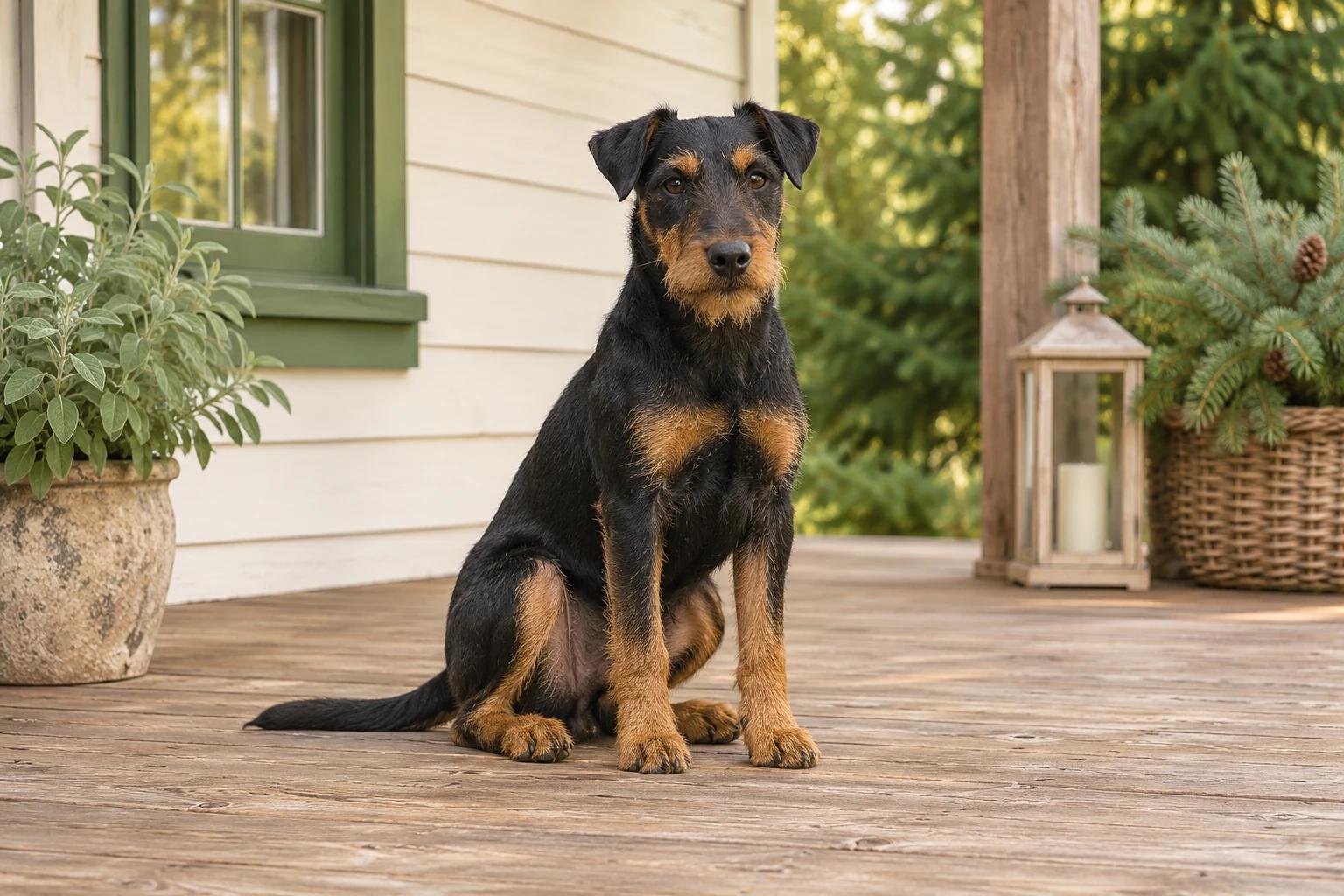
Jagdterrier vs Parson Russell Terrier is a comparison between two working terriers, not a contest between a serious dog and an easy alternative. Their looks differ, but choosing well means looking past a dark coat or a mostly white one. Ask what you want to do with your dog, what your ordinary week permits, and how much you enjoy teaching everyday skills.
The Jagdterrier profile and Parson Russell Terrier profile provide a starting point. Meeting adult dogs gives those descriptions a more useful setting.
Jagdterrier vs Parson Russell Terrier: the working connection
The UKC Jagdterrier standard emphasizes a German hunting terrier with persistent interest in quarry. The UKC Parson Russell Terrier standard describes an active hunting terrier associated with work underground. Neither background should disappear from the conversation because the dog fits neatly beside a sofa.
For a prospective owner, the useful question is not whether you can supply a particular job title. It is whether you have a realistic plan for interesting activity, containment, training, and rest. Tell breeders or caregivers exactly what your weekdays look like. Ask whether the dog they know fits that plan, rather than asking them to confirm that your preferred breed is suitable.
A household wanting an uncomplicated companion for occasional outings should examine both choices carefully. A household that already enjoys working with terriers may have more relevant experience, but still needs to assess the individual.
The appearance difference is easy; the care discussion takes longer
A Jagdterrier commonly presents a dark coat with tan markings, while the Parson Russell Terrier is predominantly white. Both breed standards describe smooth and harsher coat presentations. Photographs therefore tell only part of the grooming story.
When visiting a dog, ask to see the actual brush or comb used and how the caregiver manages the coat between appointments. A wirier-looking terrier does not necessarily follow the same grooming routine as a smooth-coated one. Discuss maintenance rather than choosing tools from a photograph.
Keep the comparison practical. Where will a muddy dog wait after an outing? Where can you inspect paws and remove ordinary loose debris? Can the caregiver demonstrate handling without turning it into a struggle? Those details affect daily life more directly than preferring a particular color.
For the separate issue of fitting walking equipment, read why Jagdterrier breed proportions cannot replace measurements. Buy for the dog you have, not for a breed-sized silhouette.
Compare walks by what happens along the way
Imagine the same route for both dogs: a narrow pavement, a grassy verge, a gate into a field, and another dog coming toward you. Which parts are likely to require teaching or extra space? Ask each caregiver to describe those moments from actual experience.
A useful comparison records what the handler does. Perhaps one dog readily follows a turn away from an interesting smell while another needs an earlier cue and more distance. That observation tells you more than calling one breed stubborn and the other clever.
The Parson's activity-oriented background does not establish an exercise quota for every individual. Nor does the Jagdterrier's hunting history mean that every walk must become an endurance event. Plan suitable outings with room for exploration and short learning opportunities, and ask your veterinarian about activity appropriate to the particular dog.
Do not make off-lead freedom the deciding benefit of either breed. Use secure places and suitable walking equipment. A reliable response in a quiet room is not evidence that a dog will turn away from every outdoor distraction.
Small animals deserve a separate decision
The Continental Kennel Club's German Hunt Terrier overview highlights prey interest and the value of working-terrier experience. If you keep small animals, raise that fact at the beginning of the discussion, not after reserving a puppy.
For either terrier, ask about the individual dog's experience and the household layout required. A casual introduction is not an appropriate experiment for establishing compatibility. Think through doors, barriers, visitors, and who is responsible when routines change.
The same care applies to a resident dog. Arrange guidance and suitable introductions rather than relying on breed descriptions as a prediction of friendship. A dog that enjoys one familiar companion may respond differently to an unfamiliar visitor.
Write down the management you are genuinely willing to maintain. If the arrangement depends on everyone remembering a complicated sequence of open and closed doors, reconsider whether that is a sustainable home setup.
Which learning process would you enjoy?
In a Parson Russell Terrier vs Jagdterrier decision, compare the humans as well as the dogs. Do you enjoy practising a small skill repeatedly in different places? Can you prepare rewards before leaving home? Are you comfortable changing a plan when an environment proves too distracting?
Ask to watch a familiar cue, a pause between activities, and a simple change of direction. Notice how the caregiver communicates, not just whether the dog produces a polished performance. Request the words already used for coming back, waiting, releasing a toy, and finishing a game.
If you bring a dog home, preserve familiar cues initially. Changing every word, reward, and rule at once makes it harder to learn what the dog already understands. A shared household cue list can prevent unnecessary confusion.
Make the final comparison concrete
The difference between Jagdterrier and Parson Russell Terrier becomes most useful when attached to an actual choice. Compare two written daily routines, two grooming demonstrations, and two accounts of how the dogs respond outside familiar surroundings.
Before deciding on a Jagdterrier or Parson Russell Terrier, use the breed match quiz to check your broader priorities. Then revisit anything the result makes you question: time alone, other animals, training interest, or access to suitable outings. Appearance can start your shortlist; evidence from daily life should narrow it.
FAQ
Is a Parson Russell Terrier an easy alternative to a Jagdterrier?
A Parson Russell Terrier is a working terrier with its own activity and learning needs. Choose by the individual dog's routine and your ability to meet it, rather than treating the breed as an easier substitute.
Do Jagdterriers and Parson Russell Terriers have the same coat?
Jagdterriers and Parson Russell Terriers both have smooth and harsher coat presentations, but their colors and individual grooming requirements differ. Ask for a demonstration of care for the actual dog before buying tools or arranging appointments.
Can either breed be chosen mainly because it is compact?
A Jagdterrier's or Parson Russell Terrier's compact size does not settle questions about training, containment, other animals, or activity. Assess those commitments separately and meet adult dogs before making a choice.
Sources behind this article
- UKC: Jagdterrier standard ↗
- UKC: Parson Russell Terrier standard ↗
- Continental Kennel Club: German Hunt Terrier ↗
Article source checked: November 16, 2026. Source checked 2026-11-16
Keep reading

Affenpinscher vs Brussels Griffon: Everyday Differences
Read article →