Jagdterrier Temperament: Understanding a Working Terrier
Explore Jagdterrier temperament through everyday observations, purposeful activities, household boundaries, and questions for caregivers.
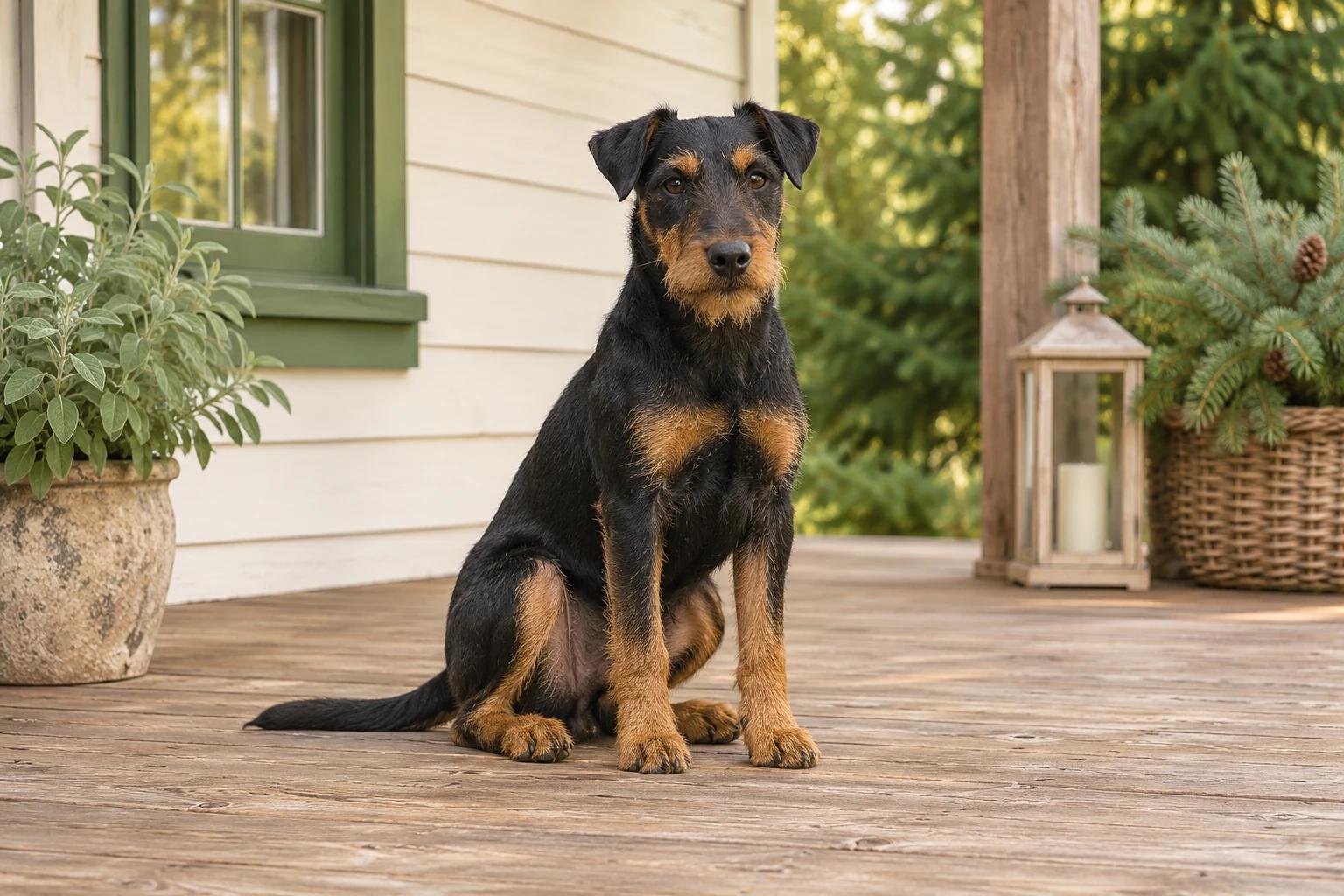
Jagdterrier temperament makes more sense when you picture a dog concentrating on something interesting than when you picture a compact pet waiting to be entertained. The breed's working background deserves attention, but useful ownership decisions come from observing how a particular dog moves between activity, interaction, and rest.
Start with the Jagdterrier breed profile, then investigate the situations that matter in your own home. A short meeting can be appealing without revealing the whole daily routine.
Jagdterrier temperament begins with purpose
The UKC breed standard describes an intelligent hunting terrier with determination. Those qualities help explain why a distracting smell or movement may compete strongly with a person's plans.
Rather than asking whether the dog is obedient in the abstract, ask what happens when an activity ends. Can the caregiver guide it away from an interesting patch of ground? What cue signals that play is finished? What setup helps it settle afterward?
These are not tests to spring on an unfamiliar dog. They are conversations and demonstrations to request from someone who knows it. An experienced caregiver can explain which skills are established, which are still developing, and which situations are managed rather than attempted.
A dog that needs help changing activities is giving you useful information about the routine ahead. Decide whether you enjoy that kind of hands-on teaching before committing.
Read behavior in its setting
The phrase Jagdterrier personality can hide several different questions. You may mean affection at home, reactions to visitors, interest in toys, or focus outside. Keep those subjects separate when gathering information.
For example, a dog may choose to lie near its caregiver indoors but become intensely interested in the verge on a walk. That is not a contradiction requiring a single label. It is a reason to ask how the caregiver manages transitions between familiar and distracting places.
Request examples with context: where the dog was, who was present, what happened immediately beforehand, and how the encounter ended. “He is lively” is less informative than a description of the first few minutes after coming home from an outing.
Avoid interpreting a brief performance as the permanent personality. A visit during a quiet afternoon may look different from a doorstep arrival or a trip to an unfamiliar location. Ask for ordinary examples across several days.
Provide interests without creating constant excitement
The Continental Kennel Club overview stresses physical, mental, and sensory opportunities alongside foundation boundaries. An ownership plan should therefore contain more than a distance target for walks.
Consider a simple household search game using an appropriate toy in a clear, supervised space. Start where the dog can succeed, give a clear finish, and put the materials away afterward. You are arranging an activity with a beginning and an end, not trying to keep the dog occupied every waking moment.
On an outing, leave room for investigating suitable areas as well as walking together. At home, arrange somewhere the dog can rest without people repeatedly inviting another game. Note whether your routine allows a transition or moves immediately from one exciting event to another.
If you are unsure what level or kind of physical activity suits the dog, ask your veterinarian. Personality descriptions cannot determine an individual exercise prescription.
Boundaries should be visible in the household plan
Jagdterrier characteristics associated with persistence make vague rules particularly unhelpful. Decide what the dog should do when the garden gate opens, when food is being prepared, and when visitors arrive.
Write those decisions as actions rather than prohibitions. “Wait with a household member behind the closed internal door” is clearer than “do not rush outside.” “Rest in this separate area during delivery” is more workable than expecting calm because someone has said the word enough times.
Check the physical setup as well. A plan that depends entirely on remembering a cue leaves little margin when hands are full. Doors, secure enclosures, and organized handovers support training rather than replace it.
Include occasional caregivers in the discussion. Someone covering one walk should know which routes are familiar, how the dog responds to wildlife, and what to do if an unexpected situation appears. Familiarity with dogs generally is not the same as knowing this one.
Other animals are not a personality experiment
Prey interest needs a practical management conversation, especially where small animals already live. Do not use proximity to another animal as a way to see whether a Jagdterrier has “outgrown” its background.
Tell the breeder or rescue about every resident animal and the spaces they use. Ask for advice specific to the dog's history and your layout. If ongoing separation would be necessary, think honestly about whether the household can maintain it through visitors, holidays, and busy mornings.
For interactions with dogs, ask about known companions and unfamiliar encounters separately. A pleasant relationship with one dog does not establish compatibility with all others. Arrange introductions with appropriate guidance and enough room to end the meeting without crowding either animal.
The aim is not to assign a flattering or alarming label. It is to identify what you know, what remains unknown, and what arrangement the people involved can sustain.
Notice what changes, not only what repeats
Keep a short record if Jagdterrier behavior becomes difficult to interpret. “Pulled near the same hedge on three evening walks” gives you something concrete to discuss. “Always impossible” does not.
Record the setting and what helped you move on. A quieter route, an earlier turn, or a shorter session may reveal that the original task was too difficult in that moment. Avoid escalating confrontation because a terrier is described as determined.
Sudden or unexplained changes deserve discussion with a veterinarian. For persistent training problems, seek a qualified reward-based professional who can observe the situation rather than issuing a breed-wide verdict from a distance.
Decide whether this companionship suits you
A useful question is whether you want to participate in the dog's interests while teaching workable household habits. If you mainly want a small dog whose needs fit around an unpredictable schedule, examine that mismatch carefully.
The breed match quiz can help organize your preferences. For a separate equipment topic, see Jagdterrier measurements and harness fit. Before choosing, spend more time learning the dog's ordinary routine than collecting adjectives about the breed.
FAQ
Does a determined Jagdterrier need harsh handling?
A Jagdterrier's determination is not a reason for harsh handling. Clear tasks, appropriate rewards, manageable environments, and consistent household routines provide a more useful foundation for teaching. Get qualified help when a situation is difficult.
What should I ask about a Jagdterrier's personality?
Ask about a Jagdterrier's personality through examples of settling, ending play, visitors, distractions, and time apart from its caregiver. Specific descriptions reveal more than a general label such as lively or affectionate.
Can a Jagdterrier's behavior be predicted from breed alone?
Jagdterrier breed background suggests questions about working interests and boundaries, not a complete prediction of individual behavior. It does not replace the individual dog's history, learned skills, or responses in the situations your household will actually encounter.
Sources behind this article
Article source checked: November 16, 2026. Source checked 2026-11-16
Keep reading

Airedale Terrier Temperament: What Everyday Life Can Feel Like
Read article →