Italian Greyhound vs Dachshund: Two Different Small Dogs
Compare Italian Greyhound and Dachshund build, coat options, daily routines, learning, and household fit before choosing an individual dog.
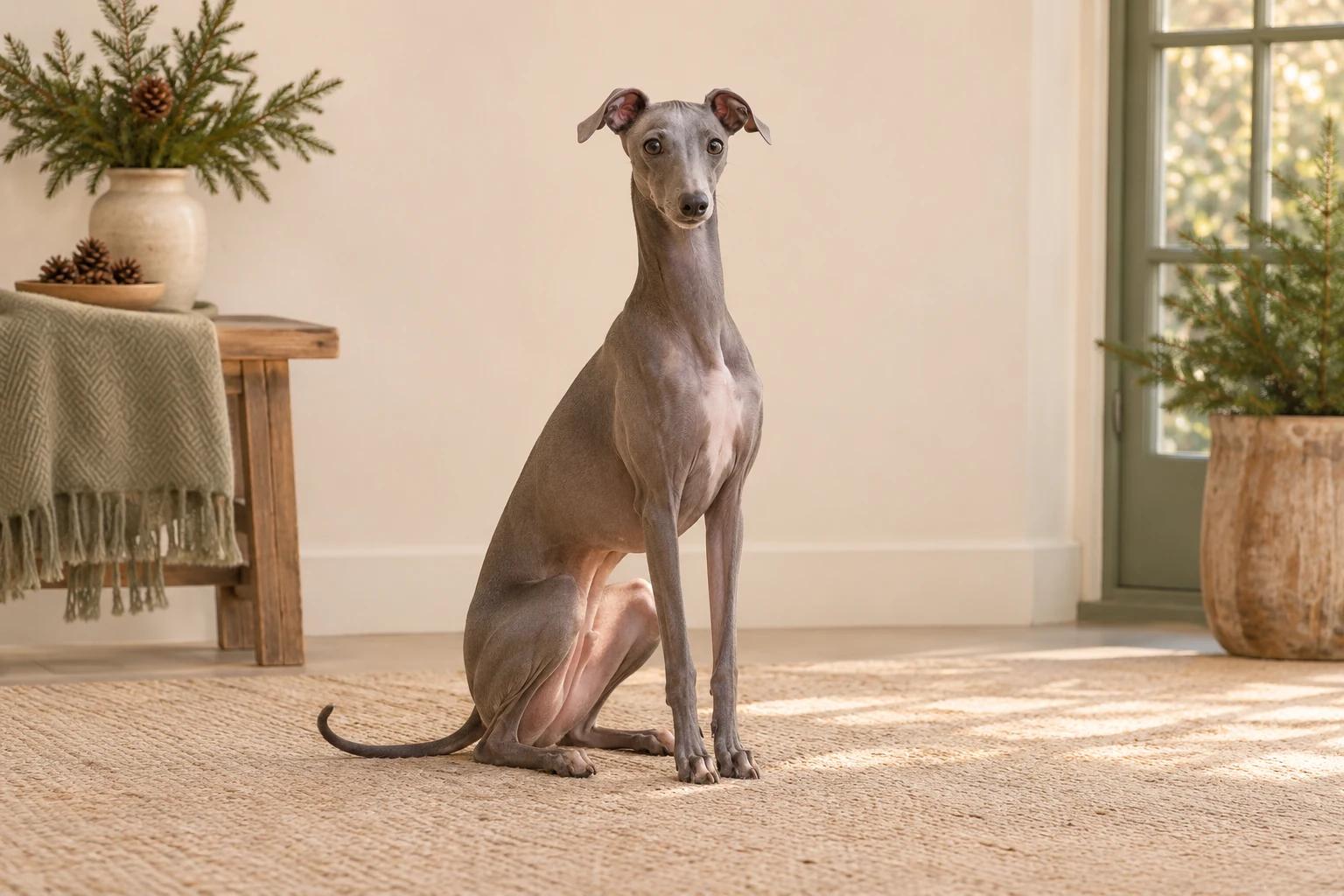
Italian Greyhound vs Dachshund is not simply a choice between long legs and short ones. Their proportions make a striking first impression, but the more useful comparison is what each dog asks of your home, schedule, and interest in training. Small size does not make either breed a ready-made fit for every small household.
Explore the Italian Greyhound profile and Dachshund profile, then compare actual adults and the routines they know.
Italian Greyhound vs Dachshund: start with the outline
The UKC Italian Greyhound standard describes a slender, small sighthound. The Dachshund standard describes a low, long-bodied dog with a muscular build. A shared description such as “small dog” conceals a major difference in shape.
That matters when choosing fitted equipment. Measure the individual dog's chest, body, and other relevant dimensions rather than ordering the same size for both breeds. Ask for help assessing the fit of walking and travel equipment, particularly where a generic small-dog product does not suit the proportions.
Dachshunds also come in standard and miniature sizes. Specify which you are considering instead of comparing an Italian Greyhound with an imaginary average Dachshund. Visit adults of the relevant variety and ask about the likely practical setup for a puppy.
Look around your home from the dog's level. Check doorways, gaps, resting areas, and routes between rooms. Neither a slender frame nor a low one should be treated as a reason to improvise handling or assume that every furnishing is convenient.
A smooth coat is only one Dachshund option
The Italian Greyhound has a short, fine coat. Dachshunds have smooth, longhaired, and wirehaired varieties. Comparing two smooth-coated photographs therefore does not cover every possible Dachshund care routine.
Ask the caregiver to show you the normal grooming equipment and explain what happens between professional visits. For a longhaired or wirehaired Dachshund, have that conversation about the actual coat, not advice intended for the smooth variety.
For either dog, a less elaborate coat still leaves handling, nails, ears, and other routine care to organize with appropriate professional guidance. If you want a low-fuss companion, ask about the entire care routine rather than judging only by hair length.
VCA's Italian Greyhound overview notes limited protection from cold. Consider local conditions when planning outings, and discuss suitable clothing and fit if needed. Weather is a practical consideration, not a basis for assuming one breed will happily accept any walk.
Different backgrounds suggest different questions
The Italian Greyhound is a sighthound; the Dachshund's history includes tracking and working underground. Those backgrounds can suggest interests to explore without dictating what every companion will enjoy.
Ask what catches the particular dog's attention outside. Does the caregiver need extra space around wildlife? Does the dog become absorbed in investigating a patch of ground? What helps it reconnect with the handler?
Do not turn those questions into stereotypes about which breed is “obedient.” Both dogs need learned cues and sensible management. A dog absorbed in an interesting stimulus may need a simpler setup, more distance, or more practice rather than a harsher response.
Consider whether you enjoy that teaching process. A daily walk can include opportunities to investigate while also practising turning, waiting, and moving together. You are choosing a companion to work with, not a collection of traits that removes the need for training.
Compare companionship with your real working day
VCA describes the Italian Greyhound as strongly attached to its people. If close companionship is part of the appeal, include the times you cannot provide it in the decision. Who helps on long workdays, and what experience does the dog already have of being apart from its caregiver?
Ask the same practical questions about a Dachshund. Do not choose it as the supposedly independent alternative without checking the individual dog's history. A confident appearance does not reveal how it behaves when the home becomes quiet.
For either candidate, request an ordinary-day account from waking to bedtime. Look for the details between the highlights: where the dog rests, how outings fit around work, and what happens during departures.
An adult with a well-understood routine may provide clearer information than a puppy, though moving home still changes the situation. Compare what you can support, not what you hope the dog will eventually tolerate.
Visitors, neighbors, and other animals
A Dachshund vs Italian Greyhound decision should include your building and social routine. Ask about reactions to door sounds, people passing, and unfamiliar visitors. These details are more useful than choosing from a broad label such as sociable or alert.
During a visit, let the caregiver manage introductions. You do not need to provoke barking or crowd the dog to learn something. Ask what usually happens and what training or management already helps.
If you have other animals, explain the arrangement before committing. Ask about direct experience with the relevant species and discuss appropriate introductions. An affectionate relationship with people does not establish compatibility with every animal.
Make sure the household can provide separate resting areas and supervise interactions as needed. If you cannot accommodate those arrangements, say so early rather than hoping a breed reputation will solve the limitation.
Choose from the whole ownership plan
The most important difference between Italian Greyhound and Dachshund ownership may be the individual dog's established needs. Write down care, outings, workday support, equipment, and training priorities for each real candidate.
Include questions you have not answered. For example, have you met the relevant Dachshund coat variety? Do you know how the Italian Greyhound handles your kind of daily environment? Have you checked that a backup caregiver understands the chosen dog?
The Italian Greyhound wet-weather toilet-plan article addresses a separate routine question worth researching. The breed quiz can help organize broader preferences.
Choose an Italian Greyhound or Dachshund because the individual and the care arrangement fit your life, not because either looks portable enough to fit anywhere.
FAQ
Is an Italian Greyhound smaller than every Dachshund?
No single comparison covers all individuals and Dachshund varieties. Standard and miniature Dachshunds differ in size, and body proportions differ substantially from the Italian Greyhound. Use actual measurements when planning equipment and travel.
Are all Dachshunds smooth-coated?
No. Dachshunds have smooth, longhaired, and wirehaired varieties. Ask about the care of the particular coat you are considering rather than using a smooth-coated photograph as the model for every Dachshund.
Which breed is easier for an apartment?
Apartment suitability for an Italian Greyhound or Dachshund depends on access, neighboring noise, time alone, routines, and the individual dog. Small body size answers only one part of that question. Compare the actual care plans and building conditions before deciding.
Sources behind this article
Article source checked: November 16, 2026. Source checked 2026-11-16
Keep reading

Affenpinscher vs Brussels Griffon: Everyday Differences
Read article →