Italian Greyhound Temperament: Living Closely Together
Understand Italian Greyhound temperament through companionship, learning, visitors, play, and practical questions about an individual dog’s routine.
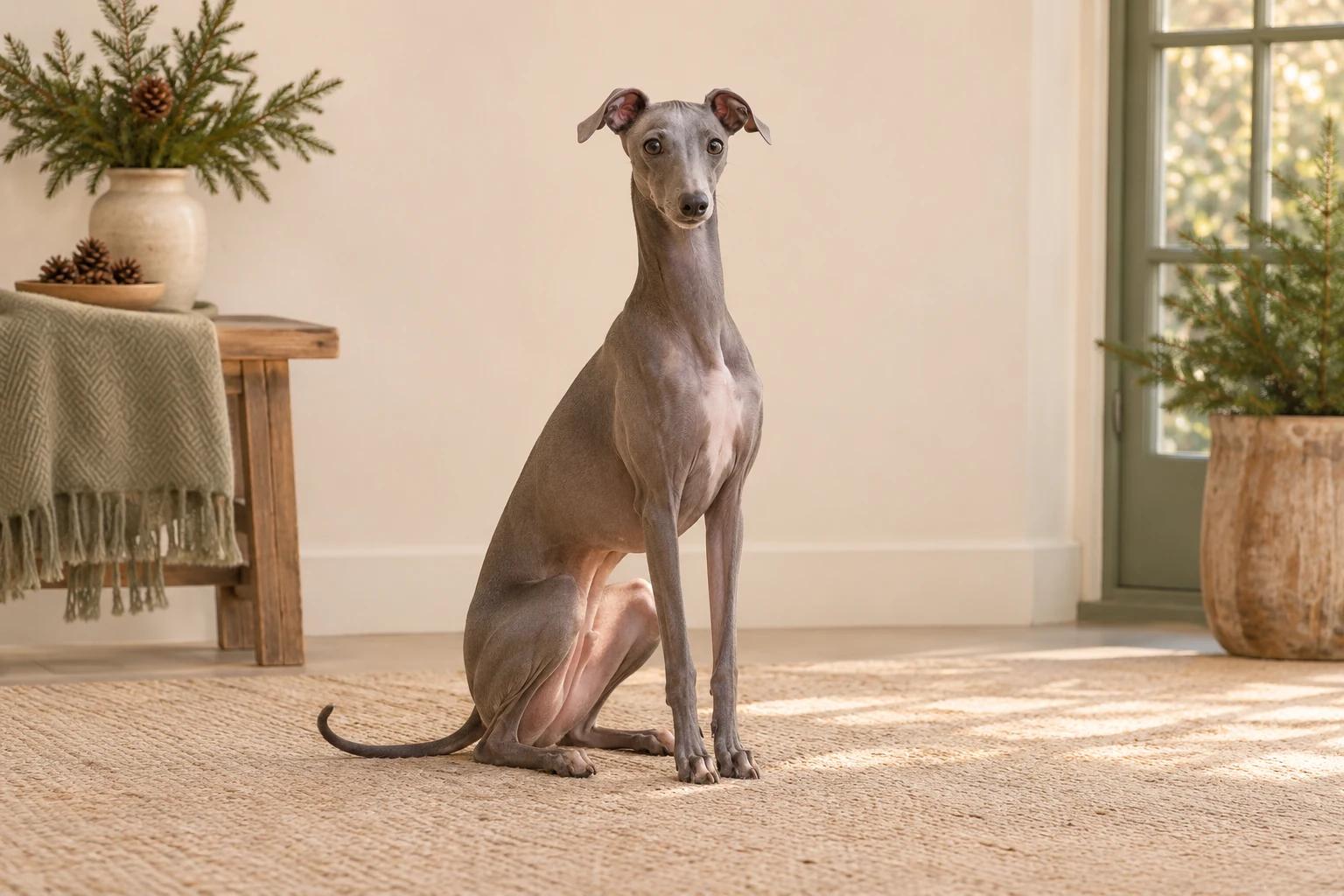
Italian Greyhound temperament is often described through affection and sensitivity, but those words become useful only when connected to everyday life. Think about the dog beside your desk, the arrival of a visitor, a change in the household schedule, and a lesson that does not go as planned. Those moments reveal more than a photograph of a dog curled under a blanket.
The Italian Greyhound profile gives the broader introduction. To understand a particular companion, ask how it responds in familiar situations and what support helps when the situation changes.
Italian Greyhound temperament: closeness is part of the appeal
The UKC standard describes intelligence, affection, and sensitivity. VCA's breed overview also emphasizes attachment to people. That can make shared quiet time a large part of the attraction.
Before choosing the breed, consider what companionship means in your home. Do you enjoy a dog spending time near you while you work or relax? Where could it rest comfortably without constantly needing to move out of the way?
Closeness does not mean every moment must involve petting or a game. You can share a room while doing separate things. Set up a resting place near ordinary household activity and allow the dog to use it without repeated interruption.
Ask the current caregiver where the dog chooses to settle. Does it move between several familiar places? What happens when someone stands up or leaves the room? Specific observations make a more useful handover than a single label such as cuddly.
Make departures a question, not an assumption
A desire for company should prompt a practical conversation about time apart. Ask what the individual dog has experienced, how departures have been introduced, and whether any difficulties have been observed.
Do not assume a small dog can simply come everywhere. Workplaces, transport, appointments, and accommodation may not allow it. Make a realistic care plan for those occasions before deciding that portability solves the problem.
Likewise, do not assume that adding another animal will automatically answer a difficulty with being alone. The dog's relationship with a person and its relationship with another animal are separate matters.
If you already have an Italian Greyhound and departures are difficult, describe the actual behavior to your veterinarian or a qualified behavior professional. Record what happens and when, without deliberately extending a distressing situation to test a limit. An individual plan is more useful than a breed-wide number of hours.
Sensitivity changes how you teach, not whether you teach
Italian Greyhound personality should not be used as a reason to abandon clear household rules. VCA supports gentle, reward-based training. Make the desired behavior understandable and give the dog a reason to repeat it.
For example, if you want the dog to wait while you open a door, first practise a brief pause in a quiet setting. Do not begin with the front door open, visitors arriving, and everyone calling different instructions.
Break an unsuccessful lesson into smaller parts. Perhaps the dog understands approaching you but not standing still while equipment is attached. Teach the missing step instead of repeating the whole sequence more insistently.
Keep your response predictable. A behavior that receives attention from one person and scolding from another is harder to interpret. Agree on a few cues and routines, and explain them to anyone who helps with care.
If the dog suddenly becomes uncomfortable with a familiar task, consult your veterinarian rather than treating the change as a personality flaw.
Let greetings reveal the individual
Descriptions of Italian Greyhound characteristics do not tell you how every dog will greet every stranger. Ask about visitors at home, people encountered on walks, and handling by unfamiliar professionals as separate situations.
When meeting a dog, follow the caregiver's guidance. Give it room rather than reaching over it or insisting on contact because you want to see an affectionate response. A useful visit allows ordinary behavior to emerge.
At home, plan what happens when the door opens. You might have one person manage the entrance while the dog remains in a comfortable area, then introduce the visitor once the room is settled. The aim is an understandable routine, not a dramatic greeting.
Explain the plan to guests beforehand. If someone expects immediate cuddling while you are trying to give the dog time, the human disagreement creates avoidable pressure. A calm visit can be successful even without prolonged interaction.
Playfulness needs suitable opportunities
A playful dog benefits from activities you can enjoy together. Choose toys and games that suit the individual and the space, and supervise their use. You do not need to fill the home with equipment to make a brief game interesting.
Try a simple search for a familiar toy in an easy location, or practise approaching a hand target. Start with a task the dog can understand and finish clearly rather than continuing until attention disappears.
Observe preferences. One dog may enjoy carrying an object; another may prefer investigating or learning a small trick. Let those observations shape your choices instead of insisting on an activity because another Italian Greyhound looked impressive doing it online.
Leave room for quiet time afterward. Play is part of the relationship, not a strategy for keeping the dog occupied every waking moment.
Other animals require their own conversation
The Italian Greyhound is a sighthound, and VCA notes that chasing can be an interest. Affection toward people does not establish how an individual will behave around cats, small animals, or unfamiliar dogs.
Tell a breeder or rescue exactly which animals live with you. Ask about direct experience rather than accepting a general assurance that the dog likes company. Discuss introductions and whether your home can provide separate spaces when needed.
Do not create an uncontrolled encounter to see what happens. If you are unsure about compatibility, seek appropriate professional help and maintain management while you assess it.
For dog-to-dog interactions, consider the actual pair and their play styles. A familiar relationship in one home does not prove that every new companion will be suitable.
Describe behavior before attaching a label
Italian Greyhound behavior is easier to understand when you record what happened. “Would not approach the visitor carrying a large bag” is more useful than “shy.” “Rested near the desk after the walk” is clearer than “lazy.”
Ask what changed in the surroundings and what helped. These details give a trainer, veterinarian, breeder, or caregiver something practical to work with. They also prevent one unusual moment from becoming your entire picture of the dog.
For a separate routine question, read the Italian Greyhound toilet-plan article. If you are still choosing a companion, the breed quiz can help you consider whether close company and patient teaching fit the life you actually lead.
FAQ
Are all Italian Greyhounds constantly demanding attention?
Not every Italian Greyhound constantly demands attention. Strong attachment does not describe every moment of every dog's behavior. Ask how the individual rests, plays, and handles changes in company. Plan shared time and comfortable downtime rather than assuming one fixed pattern.
Does sensitivity mean an Italian Greyhound cannot learn rules?
An Italian Greyhound's sensitivity does not prevent learning household rules. Clear, manageable teaching remains important. Use consistent cues and rewards, and simplify a task when the dog struggles. Sensitivity is a reason to pay attention to the learning setup, not to avoid teaching.
Can breed temperament predict compatibility with a cat?
An Italian Greyhound temperament description cannot establish compatibility with a particular cat. Assess the individual dog's history and the specific household animals. Discuss careful introductions and separate spaces with the organization placing the dog or an appropriate professional. Affectionate behavior toward people is not proof of compatibility with another species.
Sources behind this article
Article source checked: November 16, 2026. Source checked 2026-11-16
Keep reading

Airedale Terrier Temperament: What Everyday Life Can Feel Like
Read article →