Italian Greyhound Exercise Needs: Small-Dog Outings
Build an Italian Greyhound exercise routine with suitable walks, carefully chosen play, secure spaces, and weather-aware planning without fixed quotas.
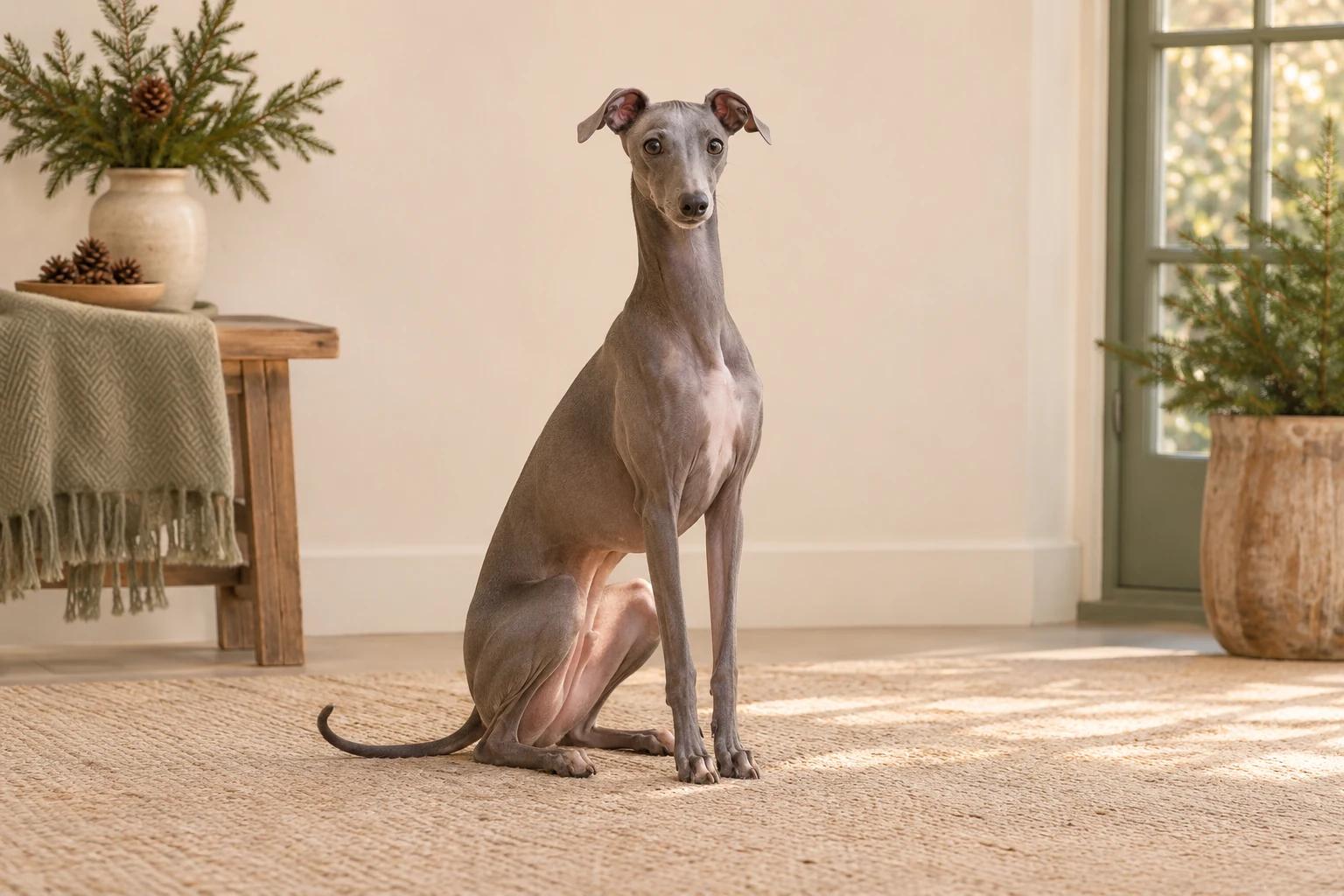
Italian Greyhound exercise needs deserve more thought than “small dog, short walk.” A manageable routine lets the dog move, explore, learn, and rest, with attention to the setting and the individual. You do not need to turn each outing into an athletic achievement, but carrying the dog everywhere is not an exercise plan either.
The Italian Greyhound profile gives an overview of the breed. Use its tendencies to begin your research, then ask the current caregiver and your veterinarian what is appropriate for the dog you are bringing home.
Italian Greyhound exercise needs: think beyond body size
The UKC standard describes a small, slender sighthound. VCA's exercise overview includes walks, play, and opportunities in fenced spaces. Together, those points suggest a varied routine rather than treating the dog as an ornament or assigning a single demanding sport.
Begin with the activities the dog already knows. If it has only experienced a quiet garden, a busy urban walk introduces new handling and environmental demands as well as movement. Allow time to learn the setting instead of measuring success solely by how far you travel.
Have an easy way to shorten the outing. A familiar loop close to home is useful while you learn how the dog responds, whereas a distant destination can make a simple change of plan unnecessarily difficult.
Design the daily walk at the dog's level
An Italian Greyhound daily walk should provide room to move without placing the dog in a constant stream of feet, wheels, or close approaches. Consider quieter routes and times where you can pay attention rather than continually negotiate a crowd.
Check walking equipment on the actual dog and ask for help if fit is uncertain. Practise putting it on calmly at home before combining that task with an exciting departure. The start of the walk should not depend on hurried handling in an open doorway.
Build small skills into the route: pausing before a crossing, turning toward you, and moving aside when someone passes. Reward them in easier places before expecting them near distractions.
Leave room for appropriate investigation. A short route with opportunities to explore can offer a different experience from the same route marched without pause. Think about what the dog is doing, not only the line on a map.
Choose playmates and settings deliberately
VCA advises supervision and careful choice of playmates. A shared dog park is not automatically the right activity just because everyone there has a dog. Watch the actual interaction and be prepared to leave rather than waiting for a mismatch to resolve itself.
A planned meeting with a familiar, compatible dog may be easier to manage than entering a busy group. Ask the other handler what their dog enjoys and how they interrupt play. Agree that either person can stop the interaction without needing to justify it.
There is no requirement that every Italian Greyhound exercise through dog-to-dog play. Walking with you, suitable solo activities, and quiet exploration may be more workable in a particular situation.
If you are uncertain about social interactions, arrange professional guidance rather than repeatedly trying crowded settings. Bring a precise description of what happened and what you need the dog to be able to do in everyday life.
Inspect an enclosed area before using it
For opportunities to move without a lead, examine the space rather than relying on the word fenced. Check gates, gaps, surfaces, and what lies immediately outside. Consider whether someone else can enter while the dog is moving freely.
Start with a manageable visit and remain involved. You do not need to manufacture repeated fast chases to make the space worthwhile. The dog may explore, practise returning to you, or enjoy a suitable game at its own level.
Avoid throwing objects toward obstacles or encouraging abrupt movement in cramped areas. If you want to explore an organized running activity, speak to the club about introductory sessions and ask your veterinarian about suitability first.
A recall lesson and an enclosure serve different purposes. Teach returning in straightforward situations while retaining the boundaries that make the activity manageable. Do not use an open area near traffic or wildlife to test whether training is complete.
Let conditions change the plan
The Italian Greyhound's fine coat offers little protection from cold, as VCA notes. Assess the conditions and discuss suitable clothing when appropriate, checking that anything worn fits and allows comfortable movement.
Do not assume a garment makes every outing suitable. Wind, wet surfaces, the route, and the dog's response still matter. Choose a simpler outing or a different time when conditions make your original plan unworkable.
Keep an indoor alternative ready: a supervised toy search on an accessible floor, a brief training game, or practice moving to a resting mat. Clear the area rather than turning furniture into an improvised jumping course.
The wet-weather toilet-plan guide covers toileting separately. An exercise adjustment and a toilet arrangement are different decisions; neither should be left to chance because the weather changed.
Match the routine to life stage and experience
“How much exercise does an Italian Greyhound need?” cannot be answered well without knowing the individual. Ask your veterinarian about a puppy's developing needs, an older dog's changing capacity, or any existing medical restrictions.
Build new activities gradually. A dog that manages a familiar pavement walk has not necessarily been prepared for a long outing on a different surface or a demanding sport. Treat each change as something to introduce thoughtfully.
Keep useful observations rather than a competition log. Note where the dog moved comfortably, what distracted it, and how the outing fitted into the rest of the day. The Italian Greyhound activity level you see in one exciting setting may not describe its ordinary routine.
If movement or tolerance changes suddenly, stop and seek veterinary advice. Do not label reluctance as stubbornness or assume the solution is to keep going until the dog adapts.
Plan for the person holding the lead
A sustainable routine needs a handler who understands the dog. If someone else helps, show them equipment, entrance routines, preferred routes, and situations to avoid. Explain how you finish an outing when it is not going well.
Choose backup plans that are genuinely available. A friend who loves dogs but cannot visit during your workday is not the same as arranged care. Include travel, illness, and schedule changes in your preparation.
Prospective owners can use the breed quiz to reflect on how much daily involvement they want. An Italian Greyhound's manageable size should make thoughtful outings easier to arrange, not make those outings disappear from the plan.
FAQ
Can an Italian Greyhound exercise entirely indoors?
Indoor activity can contribute to an Italian Greyhound's day without necessarily supplying every opportunity it needs. Plan suitable outdoor access, movement, exploration, and learning around the individual.
Is a dog park necessary?
Dog parks are optional, not a requirement for Italian Greyhound exercise. Choose activities and companions that suit the dog, supervise interactions, and leave if the environment is not working. Other walks and games can form the routine.
Should I aim for the same duration every day?
An Italian Greyhound's exercise routine can be predictable without imposing the same duration regardless of conditions. Use individual guidance and observation rather than forcing a fixed duration. Seek veterinary advice for changes in comfort or activity tolerance.
Sources behind this article
Article source checked: November 16, 2026. Source checked 2026-11-16
Keep reading

Afghan Hound Exercise Needs: Build a Workable Active Day
Read article →