Irish Wolfhound Grooming: A Manageable Coat Routine
Organize Irish Wolfhound grooming around the rough coat, comfortable positioning, brushing, beard care, and a practical plan for professional help.
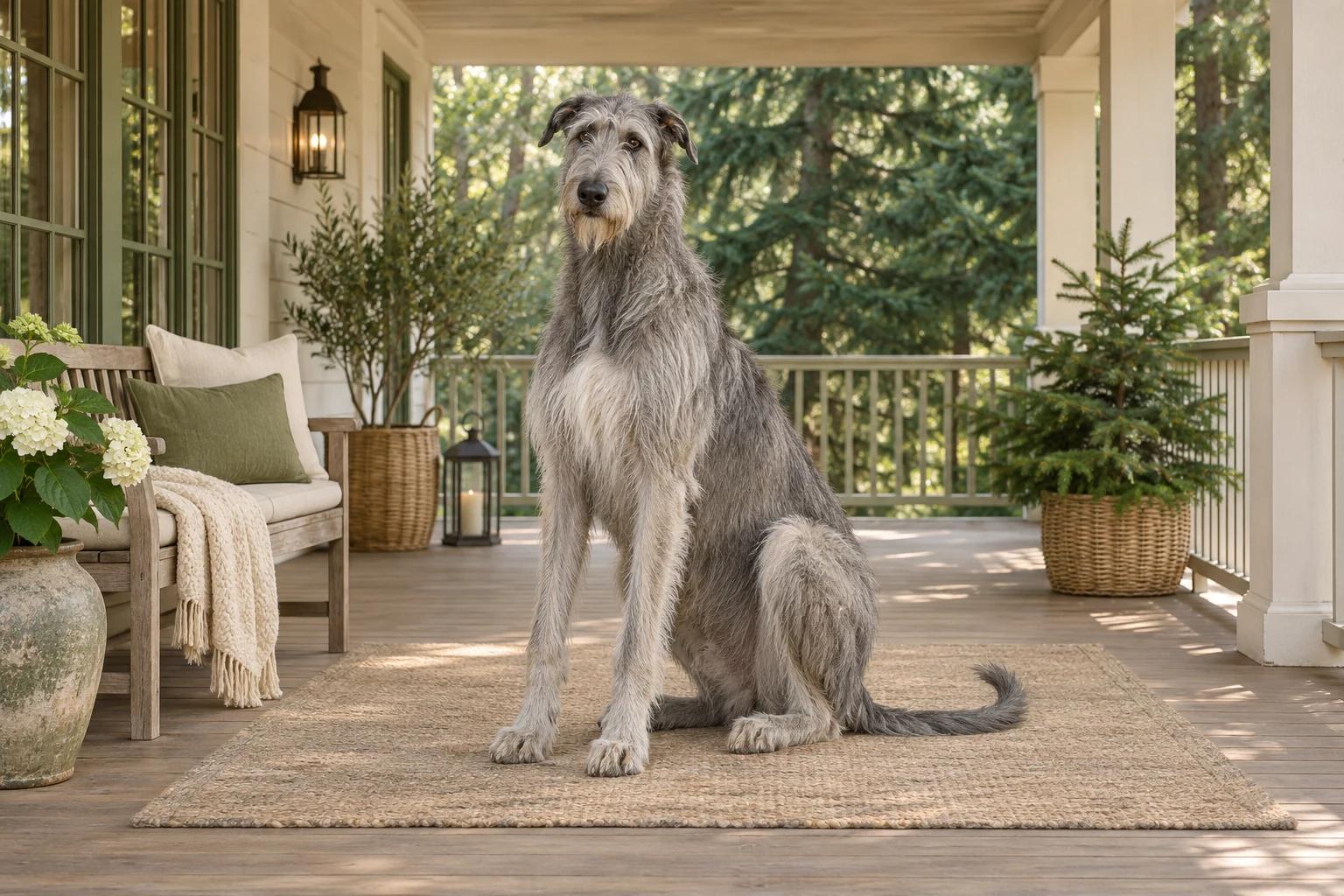
Irish Wolfhound grooming is partly coat care and partly logistics. A brush that suits the hair is useful only if you can comfortably reach the dog, the dog understands the routine, and you have time to check more than the easiest strip along its back. Build a process you can repeat without turning every session into a major event.
The Irish Wolfhound profile provides the wider ownership picture. Here, the focus is on maintaining a rough coat and making routine handling manageable for a very large companion.
Irish Wolfhound grooming starts with understanding the coat
The UKC standard describes rough, hard hair, with longer wiry hair around the eyes and underjaw. That uneven texture is part of the breed's appearance; a naturally rugged outline is not the same thing as a coat that has been left unchecked.
VCA's Wolfhound care guidance includes weekly brushing and occasional bathing. Use that as a reason to establish regular attention, then ask a groomer how to adapt it to your dog's coat and activities.
A dog that has just walked through vegetation may need a different check from one that spent the afternoon on a clean path. The schedule should help you notice what is there, not prevent you from responding between appointments.
Choose a workable grooming position
Before buying more tools, decide where care will happen. Look for a stable, nonslip area with enough room to move around the dog. Keep the route out clear so the session does not feel like being trapped between furniture.
Some tasks may be easier with the dog standing; others may be more comfortable in a relaxed lying position. Ask a professional to demonstrate appropriate handling. Do not assume you need to lift an adult Wolfhound onto a household table or improvise equipment that was designed for a much smaller dog.
Consider your own posture as well. If you must bend awkwardly for the whole session, you may rush or avoid the work. A practical setup lets you pause and reposition rather than reaching farther while losing control of the tool.
Have everything ready before beginning: the tools a groomer recommends, a place to put collected hair, and suitable rewards for calm cooperation. Searching for equipment midway through makes the task harder to follow.
Work through the coat methodically
Ask a breed-experienced groomer to show you the pressure, direction, and tool choice that suit the actual coat. A demonstration is more useful than selecting the stiffest brush because the dog looks rugged.
Use a repeatable route around the body so you do not repeatedly groom the easy areas and overlook the rest. You might finish one side before repositioning, then make a separate check of the legs and underside. Adapt the sequence to the dog's comfort and the handling you have been taught.
If you find a tangle that resists gentle attention, stop working at it and ask for help. Do not pull harder simply because the coat is coarse. Avoid cutting close to the skin with scissors when you cannot clearly see what you are doing.
Keep notes about recurring problem spots. A groomer can help you decide whether your technique, equipment, or timing needs to change. “This patch repeatedly tangles” is a more useful starting point than assuming the whole coat needs a drastic new style.
Give the beard its own small routine
The longer underjaw hair deserves deliberate attention rather than a quick pass at the end. Check it after messy meals or outings and use an appropriate gentle cleaning method demonstrated by your groomer.
Keep a suitable towel near the area where the dog normally drinks or returns indoors. That makes a brief cleanup easier to incorporate into daily life instead of allowing every small task to accumulate until grooming day.
Work carefully around the face and eyes. If hair seems to interfere with comfort, ask a professional to assess it rather than trimming hurriedly around a moving head. Appearance should not become a reason to force a difficult handling session.
Persistent odor, irritation, discharge, or a sudden objection to touch needs veterinary attention. Grooming is an opportunity to notice changes, not to diagnose their cause or experiment with treatments.
Treat shedding as household maintenance
Irish Wolfhound shedding is part of ownership. Decide where collected hair will go and which washable covers make sense for the places the dog actually uses. Regular cleaning is more manageable when bedding and travel surfaces are easy to access.
Do not judge the success of Irish Wolfhound coat care only by whether you find a hair on clothing. A tidy room and a comfortably maintained coat are related tasks, but they are not identical measurements.
Ask the groomer what changes in loose hair they would expect from this particular coat. If you notice an unusual or sudden change, especially alongside skin or behavior changes, consult your veterinarian instead of deciding it is merely a grooming issue.
Avoid promises that one tool, bath, or appointment will eliminate hair from the home. Choose a sustainable routine rather than escalating the amount of grooming in pursuit of an unrealistic result.
Plan baths and professional appointments before you need them
Check that your chosen groomer can accommodate an adult Wolfhound, including access, bathing equipment, and drying arrangements. Describe the dog's experience with handling and any veterinary restrictions when booking.
Discuss what the appointment includes. VCA mentions removing dead hair from the coat; ask a professional whether that is appropriate for your dog's coat and how they would approach it. Do not attempt an unfamiliar technique from a brief description alone.
At home, separate learning to enter the bathing area from completing an entire bath. Reward comfortable approach and standing before expecting the full sequence. Ask about appropriate products and rinsing and drying methods for your setup.
Anyone learning how to groom an Irish Wolfhound should also learn when to stop. A short, well-managed session can be more useful than struggling to finish every task at once.
Keep care information together
Record the tools used, the areas that need attention, and what the groomer recommends between visits. Share those notes with a backup caregiver so the routine does not depend entirely on one person's memory.
Keep veterinary records separately but accessibly. The Wolfhound puppy screening-record article addresses another part of the care folder; it does not replace an individual examination when a concern arises.
If you are choosing a breed, include the physical work of grooming in your breed quiz reflections. A relatively straightforward coat still belongs to a very large dog.
FAQ
Does a rough coat mean an Irish Wolfhound needs no brushing?
An Irish Wolfhound's rough coat still needs regular brushing and attention. Ask a groomer to demonstrate tools and technique, and build a repeatable routine that reaches more than the visible top of the coat.
Should I cut out a difficult tangle myself?
For a difficult Irish Wolfhound tangle, do not cut close to skin you cannot clearly see. Stop if a tangle resists gentle attention and ask a professional groomer for help. Pulling harder can make handling uncomfortable and future sessions more difficult.
Is every grooming task best completed in one session?
Irish Wolfhound grooming tasks do not all have to be completed in one session. Divide tasks into manageable sessions when that works better for the dog and handler. Keep track of what remains, and arrange professional help for work you cannot comfortably or confidently complete.
Sources behind this article
Article source checked: November 16, 2026. Source checked 2026-11-16
Keep reading

Affenpinscher Grooming: A Practical Coat-Care Routine
Read article →