Irish Wolfhound Exercise Needs: Plan Beyond Distance
Plan Irish Wolfhound exercise around usable routes, secure space, everyday lead skills, age-appropriate guidance, and a routine you can sustain.
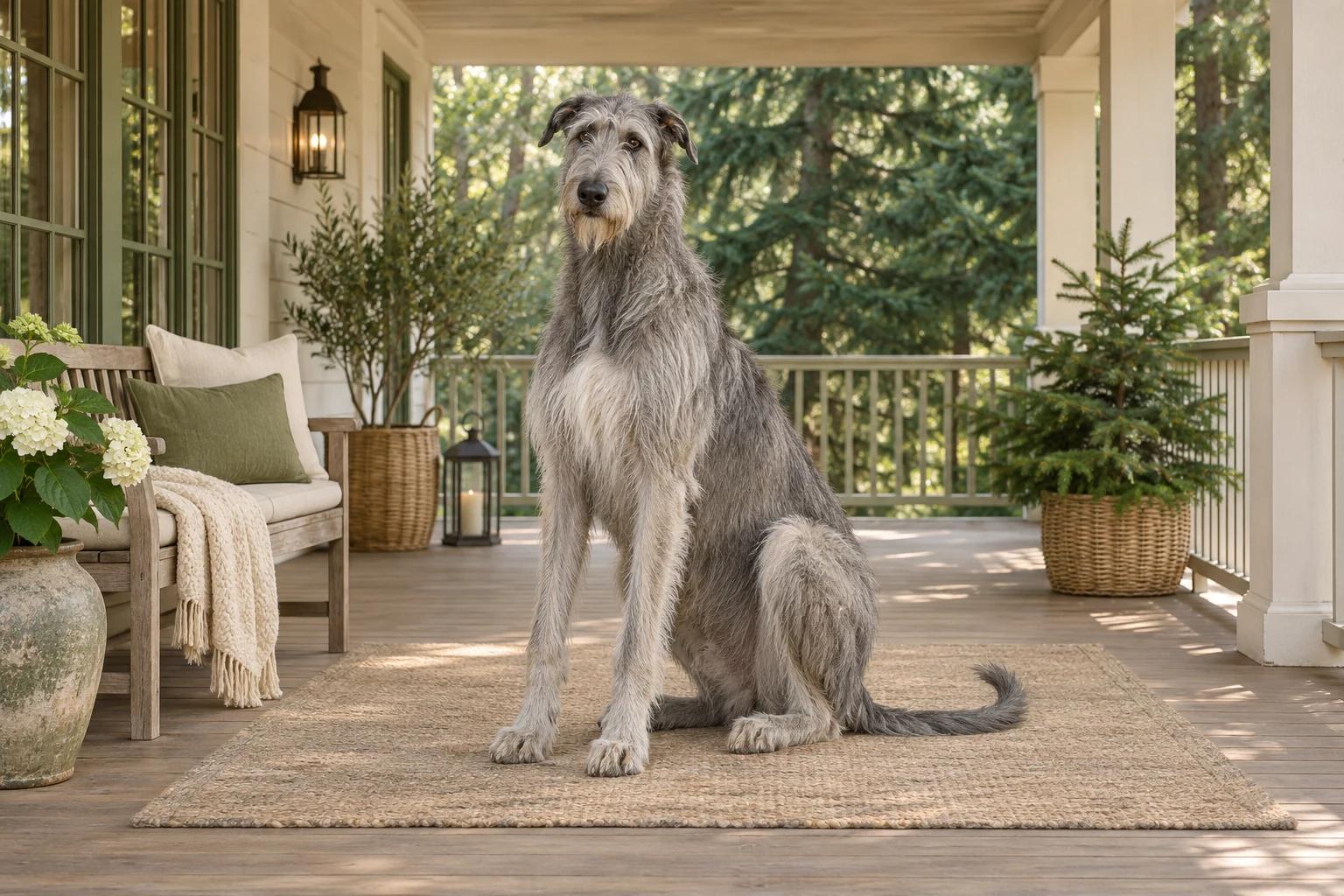
Irish Wolfhound exercise needs should not be reduced to the distance a large dog can cover. The practical questions are where you can go together, how you will manage the outing, and whether the activity suits this particular dog. A workable routine includes opportunities to move and investigate, useful learning, and room to rest.
The Irish Wolfhound profile introduces the breed. Before setting targets, discuss the dog's current routine with its caregiver and any individual restrictions with your veterinarian.
Irish Wolfhound exercise needs begin with usable space
The UKC standard describes a very large coursing hound that combines power with active movement. VCA's breed guidance includes regular outings and opportunities in an enclosed area. Neither idea requires treating every day as an endurance challenge.
A useful route gives you space to turn, pause, and pass others. Walk it without the dog first if you are unsure about narrow sections, busy entrances, or sudden changes in surface. Notice where you could shorten the outing if necessary.
The journey from the resting place to the street matters too. A routine can fail before the walk begins if getting through a crowded hallway is difficult every time. Practise that part separately rather than accepting daily confusion as unavoidable.
Build the daily walk around a few reliable skills
An Irish Wolfhound daily walk is easier when the dog understands how to move with you at predictable points. Focus on attaching equipment calmly, waiting at the exit, turning together, and allowing room for someone to pass.
Teach those skills in quiet settings. Reward small successes before expecting the same response at a busy crossing. If the dog pulls toward something, review the distance and difficulty rather than relying on your ability to win a physical contest.
Choose equipment fitted to the individual and seek practical guidance if you are uncertain about handling. Ask a trainer to observe an ordinary walk, not just a polished demonstration in a training hall. The details of your entrance and local routes can change which skills deserve priority.
Allow time to investigate appropriate areas as well. A walk that alternates purposeful travel with exploration can be more useful than one long demand for formal position. Keep the dog's choices within the limits of the lead, location, and other people using the space.
Secure running space needs more than a reassuring label
If you use an enclosed field, inspect the boundaries and entrance arrangements before releasing the dog. Check whether the space is shared, whether other users can open the gate, and whether there are obstacles or unsuitable surfaces.
Do not assume a field is appropriate just because it is advertised for dogs. Ask the operator about the actual layout and use conditions. A large hound needs room to navigate, not merely permission to be present.
Watch the session rather than using the enclosure as a reason to disengage. You can finish early, change the activity, or leave if the situation is not working. Avoid creating a chase game with unfamiliar dogs as a substitute for understanding the individual dog's preferences.
A familiar recall remains worth teaching, but it does not replace boundaries. VCA notes the breed's interest in chasing wildlife. Keep management in place rather than testing a cue where a missed response could have serious consequences.
Treat puppy, adult, and older routines separately
A growing Wolfhound should not inherit an adult's activity plan simply because it already looks large. Ask your veterinarian for guidance about suitable activity for its stage of development and discuss the existing routine with the breeder.
Avoid adopting an online formula as a complete plan. The setting, surface, type of movement, and individual condition all matter alongside duration. A calendar age or a photograph is not enough information to prescribe an exercise program.
For an adult, make changes gradually and pay attention to how the dog manages the activity. For an older dog, review familiar routines rather than assuming that what worked last year should remain unchanged.
If the dog becomes reluctant, unusually tired, or uncomfortable, stop the activity and seek veterinary advice. Do not interpret a physical change as disobedience or try to fix it by pushing through a longer outing.
Add thinking tasks without turning home into an obstacle course
The Irish Wolfhound activity level you see outdoors is only part of the day. VCA also includes games and learning in its discussion of mental engagement. Choose tasks that fit the dog and the available room.
For example, practise moving to a resting place while you put away walking equipment. Or teach a simple hand target that helps guide the dog through an awkward entrance without pulling it into position. Keep the task clear and reward the behavior you want.
A supervised search for a familiar object can be another option if the dog enjoys it. Place it somewhere accessible rather than encouraging climbing or squeezing behind furniture. The interest should come from the task, not from making the space physically difficult.
Do not feel obliged to make every quiet moment productive. Shared downtime belongs in the routine too. A dog does not need a new challenge every time you look in its direction.
Make a plan for imperfect days
Weather, transport problems, and changes at work can interrupt your preferred outing. Identify an alternative before that happens: a shorter accessible route, a quieter time, or help from a handler who knows the dog.
If using a walker, confirm that they can manage the individual Wolfhound and your equipment. Explain the routines at doors, the situations to avoid, and what to do if the planned route is unavailable. A vague instruction to “give him plenty of exercise” leaves too many decisions open.
When asking how much exercise does an Irish Wolfhound need, include what you can provide consistently. A sustainable plan is more useful than an ambitious one that works only on weekends.
Keep the puppy screening-record guide with your broader research, and use the breed quiz to consider the practical demands of living with a large hound before committing.
FAQ
Does size mean an Irish Wolfhound needs long-distance running?
An Irish Wolfhound's size alone does not establish a need for long-distance running. Plan suitable outings for the individual dog and discuss running or other demanding activities with your veterinarian before building them into the routine.
Can a secure field replace all lead walks?
A secure field offers an Irish Wolfhound a different experience from lead walks through everyday surroundings. Consider the whole routine, including lead skills, exploration, learning, and rest.
What should I do when the usual walk becomes difficult?
If an Irish Wolfhound's usual walk becomes difficult, identify changes in the route, conditions, handling demands, or the dog's response. Simplify the outing where possible. If the dog shows a change in comfort or activity tolerance, stop and ask your veterinarian rather than increasing the challenge.
Sources behind this article
Article source checked: November 16, 2026. Source checked 2026-11-16
Keep reading

Afghan Hound Exercise Needs: Build a Workable Active Day
Read article →