Irish Water Spaniel vs Portuguese Water Dog
Compare Irish Water Spaniel and Portuguese Water Dog routines, learning, coat commitments, and practical questions for choosing a companion.
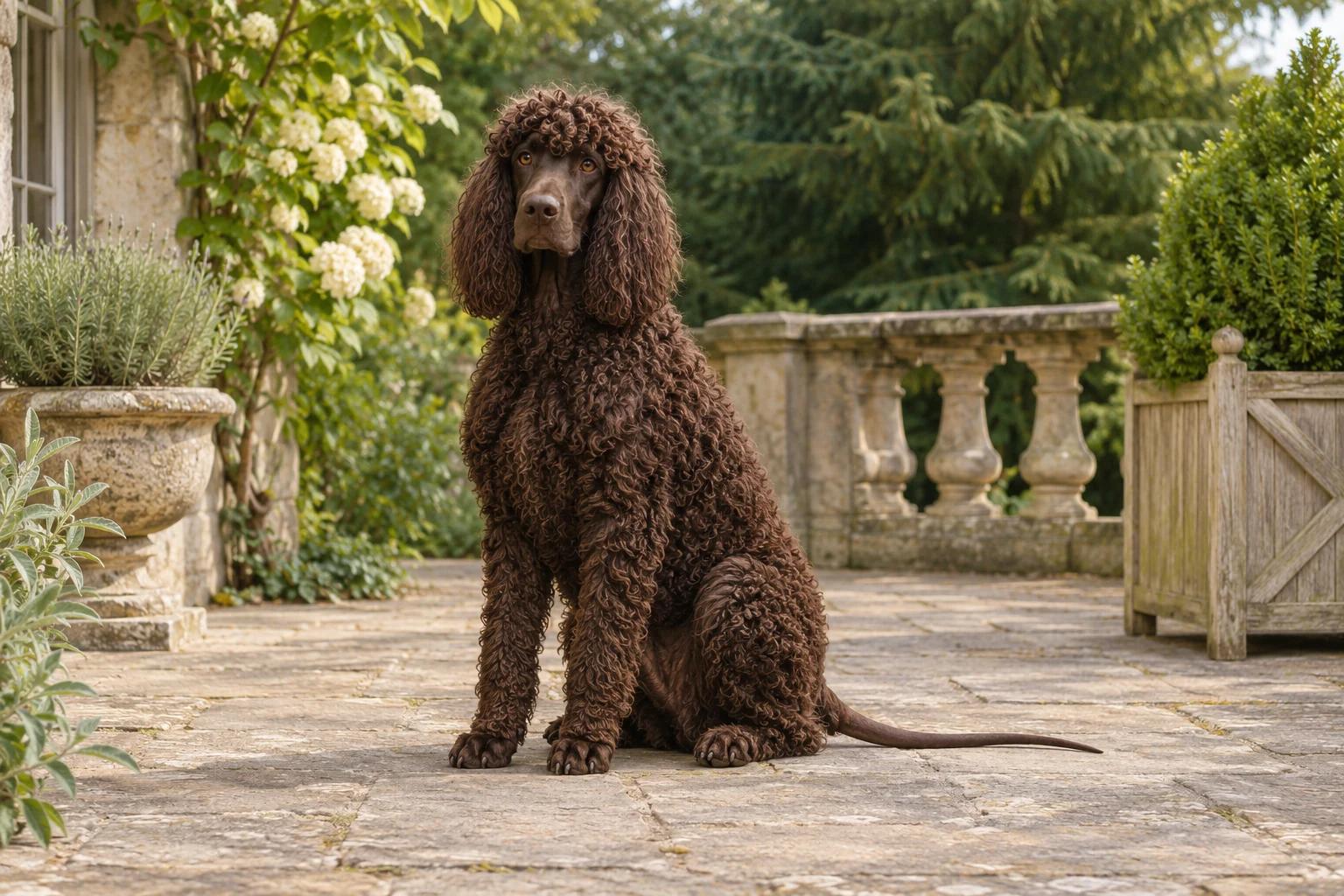
Irish Water Spaniel vs Portuguese Water Dog is a useful comparison if you like the idea of an involved, curly-coated companion. The shared word “water” can conceal quite different expectations, however. Choose by the adult dog you can live with, including the work of grooming and teaching, rather than by an appealing picture of weekends beside a lake.
Start with the Irish Water Spaniel profile and Portuguese Water Dog profile. Then consider how each would fit your ordinary week, not just your favorite holiday.
Irish Water Spaniel vs Portuguese Water Dog: different jobs
The UKC Irish Water Spaniel standard describes a waterfowl retriever. The Portuguese Water Dog standard describes work alongside fishers, including retrieving objects and carrying messages. Both histories involve cooperation with people, but they are not the same occupation.
That background can help you choose activities to investigate. It does not mean a companion must hunt, work from a boat, or swim every day. A household can build an interesting routine on land. Nor does a breed name establish that an unfamiliar stretch of water is an appropriate place for a particular dog.
If water activities are central to your plans, ask the current caregiver what the dog has actually experienced. Watching an adult enter and leave a suitable setting tells you more than hearing that its ancestors worked in water.
Compare the dog beneath the hairstyle
The Irish Water Spaniel has a liver-colored curly coat. Portuguese Water Dogs can have curly or wavy coats, with a different range of colors. A haircut can make two dogs look more similar or more different than their underlying coat types suggest.
Meet adults without expecting the photograph you first admired to represent every individual. Look at the whole dog standing, turning, and walking beside a person. Take equipment measurements from that dog rather than choosing a travel crate from a breed label.
Consider the route through your home: entrance, resting place, washing area, and car. Is there enough room for a wet dog to be dried without turning a narrow hallway into an obstacle? Can your usual caregiver manage the same setup? These questions matter for both breeds even when their actual measurements differ.
The Irish Water Spaniel tail article explains one distinctive appearance detail separately. For a choice of companion, place more weight on care arrangements than on that single feature.
Put coat maintenance on the calendar
VCA's Irish Water Spaniel profile notes that loose hair can remain within the curls, making thorough combing important. Little hair on a chair therefore does not tell you how much work remains in the coat.
For either candidate, ask a breed-experienced groomer to describe the home routine and professional appointments. Take the discussion beyond “How often is a haircut needed?” Ask which areas you should check, how to recognize an incomplete brushing, and what to do when you find a tangle you cannot comfortably remove.
Compare actual local arrangements. A groomer may be confident with one breed but unfamiliar with the other. You may need to travel, learn more home care, or coordinate appointments with your work schedule. Establish that before treating a particular style as easy to maintain.
Also ask the dog's caregiver to demonstrate its current handling skills. Standing for inspection, accepting a comb, and remaining comfortable while someone checks feet are learned practical abilities, not things a curly coat provides automatically.
Decide whether you enjoy teaching
Both UKC standards emphasize learning ability. That is an invitation to teach, not a promise of effortless manners. A responsive dog still needs to learn what you mean by waiting at a gate or leaving a dropped object alone.
During a visit, ask for an example of something the dog has learned recently. What motivated it? How did the handler break the task into steps? What still needs work? Those answers help distinguish a training approach you would enjoy from one you merely admire in a demonstration.
For your own household, choose three useful priorities. These might be walking through the building entrance without pulling, settling while you work, and returning when called in an enclosed area. Imagine practising those skills on an ordinary Tuesday. If that sounds like rewarding shared time, either breed may merit further investigation.
If you mainly want a companion that requires little active teaching, pause before choosing from appearance alone. Ask to spend time with a suitable adult whose established routine you can understand.
Ask about sociability in concrete situations
“Friendly” is too broad to settle a Portuguese Water Dog vs Irish Water Spaniel decision. Ask how the individual behaves when a visitor enters, when another dog passes closely, and when a familiar person leaves the room.
Do not stage a stressful test. Request observations from the caregiver and, where appropriate, watch normal routines. A dog may be relaxed with familiar people yet need time around strangers. The useful question is what support it needs, not which breed wins a sociability contest.
If you already have animals, describe them honestly. Discuss introductions, separate spaces, and any relevant history before committing. A broad breed reputation cannot answer whether two particular animals will share a home comfortably.
Make the choice with two written plans
The most practical difference between Irish Water Spaniel and Portuguese Water Dog ownership may turn out to be the individual dogs available to you. Write one plan for each real candidate, including current routine, grooming, training priorities, transport, and backup care.
Mark what you know and what still needs an answer. Do not fill gaps with flattering assumptions. Ask the breeder or rescue to review the plan and explain where your expectations differ from the dog's experience.
When deciding on an Irish Water Spaniel or Portuguese Water Dog, choose the arrangement you can sustain throughout the year. The breed quiz can help organize your preferences, but conversations and time with the actual dog should shape the final choice.
FAQ
Are these two names for the same breed?
No. The Irish Water Spaniel and Portuguese Water Dog are distinct breeds with different working histories and coat descriptions. Their shared association with water does not make their appearance or individual care needs interchangeable.
Must either breed live near water?
Neither an Irish Water Spaniel nor a Portuguese Water Dog needs to live beside a lake for a thoughtful companion routine. Plan suitable walks, learning, play, and rest. Any water activity needs its own assessment of the dog, location, supervision, and conditions.
Which is easier to groom?
To compare Irish Water Spaniel and Portuguese Water Dog grooming, examine the actual coats and their home-care requirements. Ask a groomer familiar with both breeds to explain the work between appointments. A particular haircut or small amount of visible loose hair does not establish an easier overall routine.
Sources behind this article
- UKC: Irish Water Spaniel standard ↗
- UKC: Portuguese Water Dog standard ↗
- VCA Animal Hospitals: Irish Water Spaniel ↗
Article source checked: November 16, 2026. Source checked 2026-11-16
Keep reading

Affenpinscher vs Brussels Griffon: Everyday Differences
Read article →