Irish Water Spaniel Exercise Needs: A Practical Routine
Plan Irish Water Spaniel exercise with varied walks, purposeful games, rest, and carefully considered water activities, without a fixed hourly quota.
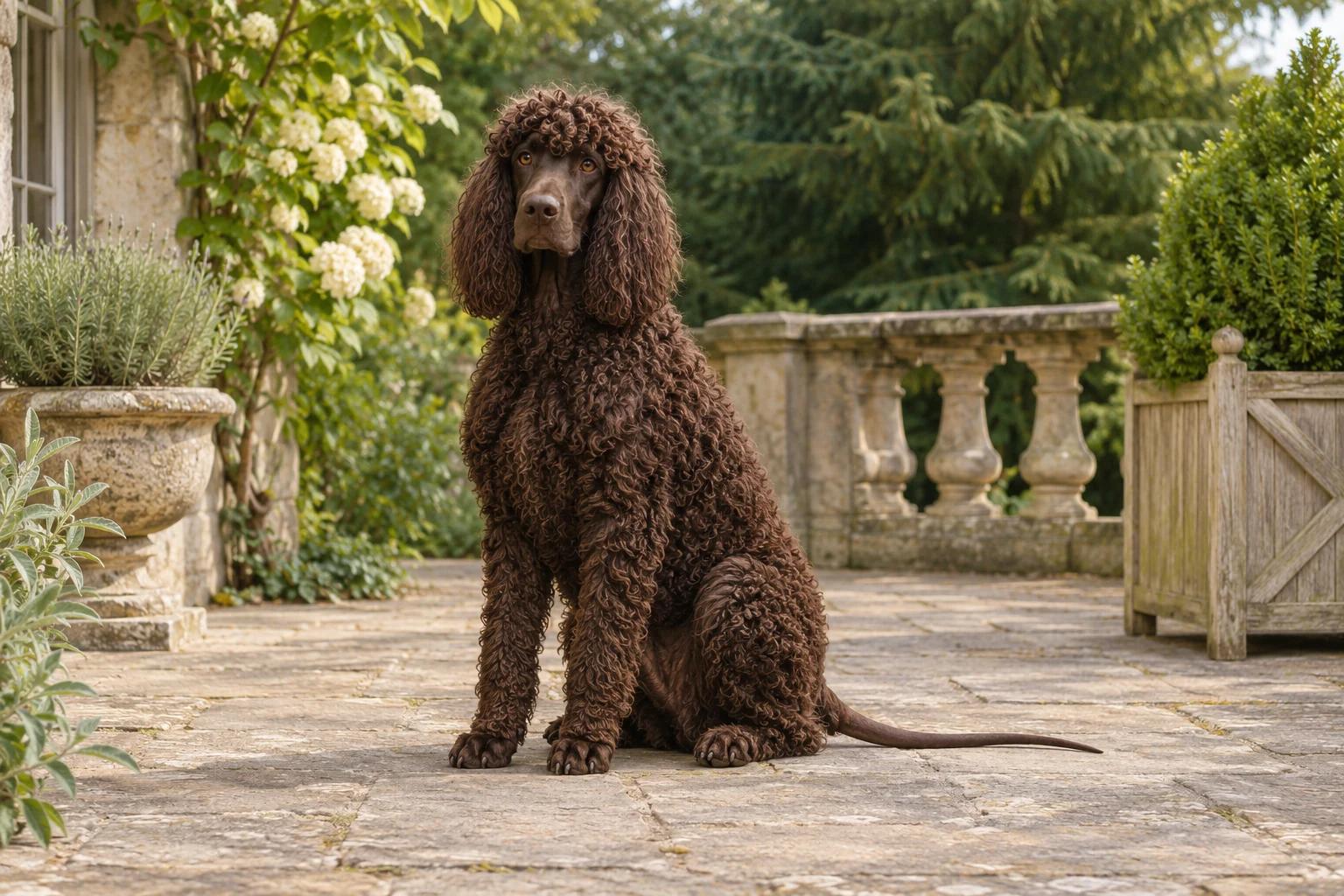
Irish Water Spaniel exercise needs are easier to meet with a varied routine than with a daily contest to cover more ground. Think about movement, opportunities to investigate, shared tasks, and downtime. A walk can contribute to several of those needs, but it does not have to carry the whole day on its own.
Use the Irish Water Spaniel profile as background, then make a plan for the dog in front of you. Age, experience, condition, and the environment all affect what an outing involves.
Irish Water Spaniel exercise needs: plan the whole outing
The UKC standard describes a retriever developed for waterfowl work. VCA's breed account identifies swimming and retrieving as characteristic interests. Those are useful starting points for exploring activities, not a compulsory menu or a reason to prescribe one duration for every dog.
An outing has more parts than the time spent moving. There is preparation, travel if needed, the activity itself, and the return home. If your only plan is “a long walk,” you may overlook whether the route offers space to pause or whether the dog can settle afterward.
Choose places where you can change your mind. A short loop with an easy return gives you more flexibility than a route that commits you to a long distance before you know how the day is going.
Give the daily walk more than one purpose
An Irish Water Spaniel daily walk can alternate between travelling together and having time to investigate. Decide where you need close attention, such as at crossings, and where the dog can explore within the limits of its lead and the location.
You might begin on a familiar stretch, pause in a quieter area, and finish with an uncomplicated route home. That is a planning example, not a fixed sequence that every dog must follow. The useful feature is that the walk has room for both engagement and observation.
Avoid making every outing a test of perfect obedience. Equally, do not wait until a difficult encounter to discover that turning away or walking beside you needs practice. Build those skills into easier moments so they are familiar when you need them.
Record something more informative than distance: where the dog could focus, what made the outing difficult, and whether the route was practical for you. These notes can help you choose tomorrow's walk without automatically making it longer.
Turn retrieving into a purposeful game
A carrying game can have a beginning, a manageable task, and a finish. It need not become repeated long throws. In an appropriate enclosed area, you might work on finding a placed toy, bringing it a short distance, or releasing it before another turn.
Choose objects suited to the individual dog and supervise their use. Put the equipment away when the game ends. If the dog chews or swallows pieces, that is not a reason to continue with the same object while hoping the lesson will improve.
Keep the challenge in the task rather than constantly increasing speed or distance. A clear delivery beside you can be an interesting goal without making every repetition physically demanding.
If you want to try organized retrieving work, contact a suitable club and explain the dog's age and experience. Ask what beginner sessions involve, what equipment is needed, and how they adapt the activity. Watch before committing to a program.
Water is an option that needs its own plan
A water-related breed name is not an assessment of swimming skill or local conditions. Before arranging a water outing, consider permission to use the site, the entry and exit, water conditions, other users, and how you would stop or leave.
Choose instruction from someone competent in the activity rather than introducing the dog by surprise. Do not throw it into water or use a difficult entry as a test of enthusiasm. An initial visit may simply involve becoming comfortable with the surroundings.
Discuss suitability and any relevant limits with your veterinarian, particularly if the dog is young, older, or has a health concern. Ask an activity professional about appropriate equipment for the particular setting.
Plan the return as carefully as the start. Have a practical place to dry the dog and inspect its coat after the outing. The article about the Irish Water Spaniel's coat pattern covers appearance; your outing checklist should focus on the individual dog's care and comfort.
Create a useful land-based alternative
You do not need to abandon the entire routine when a planned destination is unavailable. Keep a few alternatives that fit the space you actually have: a quieter walking route, a supervised toy-search game, or a short session practising an everyday skill.
For example, place a familiar toy in an easy location while the dog waits with another handler, then invite it to search. Start simply enough that the task is understandable. Add difficulty through thoughtful placement, not by hiding objects in inaccessible or unsafe places.
Another option is to practise moving between a resting spot and a training area. It creates a clear transition between activity and finishing, useful on days when everything happens close to home.
These alternatives are not a claim that a few indoor minutes replace all outdoor opportunities. They are ways to keep the day workable without forcing an unsuitable outing merely to satisfy a schedule.
Review the routine instead of chasing a quota
“How much exercise does an Irish Water Spaniel need?” is best answered through an individual plan, not a breed-wide stopwatch target. Discuss the starting routine with the breeder or current caregiver and review any medical limits with your veterinarian.
The Irish Water Spaniel activity level you observe can change with setting and experience. Do not assume that difficulty settling always means more exertion is needed. Consider whether the dog had a confusing, crowded, or unusually stimulating day.
Leave room for rest and predictable transitions. If activity tolerance changes suddenly or the dog seems uncomfortable, stop and seek veterinary advice. A training or behavior professional can help with persistent routine problems once health concerns have been considered.
For prospective owners, the breed quiz offers a way to reflect on how much shared activity and teaching you genuinely enjoy.
FAQ
Is a fixed number of walking hours necessary?
There is no single duration appropriate for every Irish Water Spaniel. Build a routine around the individual dog's age, experience, and veterinary guidance, combining suitable outings with purposeful activities and rest.
Does an Irish Water Spaniel have to swim?
An Irish Water Spaniel does not have to swim every day; swimming is optional. A land-based routine can include walks, retrieving skills, searching, and other shared tasks. Water activities require a separate assessment of the dog and the setting.
Is a garden enough exercise on its own?
Garden space alone does not provide a varied Irish Water Spaniel exercise routine. Consider what the dog actually does there and what opportunities it has for outings, learning, and interaction. Use secure boundaries and supervise activities appropriately.
Sources behind this article
Article source checked: November 16, 2026. Source checked 2026-11-16
Keep reading

Afghan Hound Exercise Needs: Build a Workable Active Day
Read article →