Irish Terrier Size: Height, Weight, and Everyday Fit
Understand Irish Terrier height and weight references, the breed’s leggy outline, equipment measurements, travel planning, and adult-size questions.
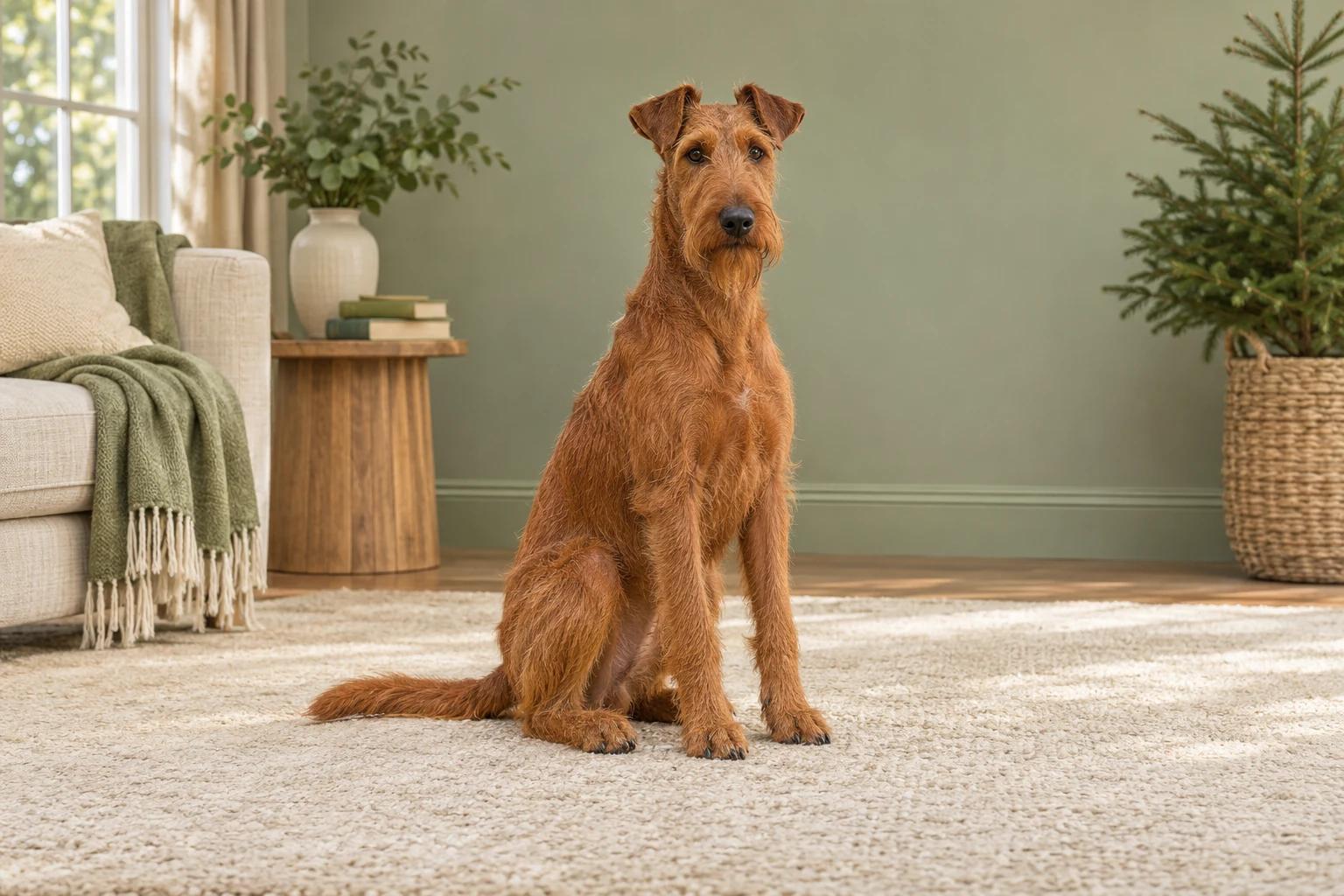
Irish Terrier size can surprise people who picture every terrier as short-legged and close to the ground. This breed has a leggy, streamlined outline. Its scale is best understood through shoulder height, a current measured weight, and the dimensions that matter for your home and equipment.
Begin with the Irish Terrier profile, then look at an adult in a natural standing position. A face photograph or a tightly cropped show image does not tell you how much space the dog occupies when walking, stretching out, or turning inside a travel enclosure.
Irish Terrier size in the breed reference
The My Breed Atlas Irish Terrier profile lists an adult weight range of 25–27 pounds for both females and males, with a shoulder height of approximately 18 inches. Use those figures as a starting point when planning space and equipment. The UKC standard also describes an approximately 18-inch shoulder height.
Irish Terrier height is measured at the shoulder, not at the ears. If you are checking clearance beneath furniture or through a travel opening, remember that the head stands above that point. A shoulder measurement is useful, but it does not describe the dog's complete outline.
These profile figures are not a requirement to make an individual weigh a particular amount. Your veterinarian should assess body condition and growth. Do not change food simply to make a scale reading agree with a breed description.
A leggy outline changes how size looks
The standard emphasizes strength without a bulky build. VCA's breed description likewise draws attention to the long-legged terrier outline. That can make the dog look different from another breed with a similar weight.
For practical planning, compare shape as well as numbers. A longer-legged dog may stand higher beside your chair than you expected from its weight alone. A bed chosen for a tightly curled sleeping position may prove less useful when the same dog lies fully stretched out.
Meet adults and watch several ordinary movements. See how the dog turns in a hallway, steps into its travel setup, and lies down beside the caregiver. These observations help you imagine daily arrangements without trying to infer everything from a standard.
Avoid asking photographs to settle exact dimensions. Camera height, perspective, and coat presentation all affect the impression. When a measurement matters, ask for it directly.
Keep a measurement sheet for actual purchases
Write the dog's name and the date at the top of a simple equipment note. Record only measurements you have actually taken or received from a reliable caregiver, and label any estimate as an estimate. This prevents a remembered number from becoming a supposedly exact figure later.
For a harness, use the maker's measurement diagram. Do not transfer the size label from another brand, because “medium” is not a shared measurement system. Check the fit in a natural standing position and during a short supervised walk.
For a collar, follow the product's fitting guidance and check the adjustment again after use. A newly adopted dog may arrive with equipment that was convenient for temporary care but is not the best fit for your routine.
For a bed, note the space available as well as the dog's resting posture. A generous bed squeezed into a doorway creates a different problem from a smaller bed in a quiet, usable location. The goal is a suitable resting place, not the largest item that can be ordered.
Weight belongs beside a date
Irish Terrier weight is useful when booking services or checking equipment limits. Provide a recent measured figure rather than copying a breed average into every form. If you do not know the current weight, say so and arrange to have it measured.
Keep older readings as a record, not as permanent facts. When your veterinarian weighs the dog, note the result and any advice they give. That creates a more useful history than occasionally comparing the dog with a photograph online.
For a puppy, ask the breeder about the adults behind the litter and the measurements already recorded. That background helps planning, but it cannot remove uncertainty about the individual. Use adjustable equipment where appropriate and check it regularly as the puppy grows.
An adult dog offers more definite information about present dimensions. Even then, confirm that the figures in a listing are recent and measured. A small clarification before collecting the dog can prevent a travel-equipment mismatch.
Plan the journey home
Measure your vehicle's usable space before choosing a travel arrangement. Include the opening, the installed equipment, and the space needed to secure it according to the manufacturer's instructions. A dog that fits inside an item does not automatically mean the item fits your car properly.
Ask the current caregiver how the dog usually travels and what it already accepts. If you need to introduce unfamiliar equipment, make time for that process rather than presenting everything at once on a rushed departure day.
Think about arrival too. Have the lead and a clear route ready, and avoid a crowded welcome around the vehicle. Practical handling matters even when a dog is small enough that someone assumes it can simply be picked up.
If stairs or carrying could become an issue, discuss your circumstances with the caregiver and veterinarian. Do not rely on a size label to decide what you or the dog can manage comfortably.
Small footprint does not mean a small commitment
A compact bed space is only one part of ownership. Consider where you will walk, train, groom, and provide quiet time. The Irish Terrier's physical size should not be used as a substitute for assessing the rest of its routine.
In a smaller home, clear organization can be especially useful. Keep walking equipment near the exit, set aside a resting area outside the main traffic route, and decide how visitors will enter without crowding the dog. These arrangements make the space more usable without pretending square footage alone determines suitability.
For the breed's historical background, see the limits of the oldest-breed claim. Use the dog match quiz to consider care and lifestyle alongside measurements, particularly if you are choosing among breeds of roughly similar weight.
FAQ
How big do Irish Terriers get?
My Breed Atlas lists adult Irish Terriers at 25–27 pounds and approximately 18 inches at the shoulder for both sexes. These figures guide breed understanding, not an individual feeding target or guaranteed puppy outcome.
Can I buy a harness from weight alone?
An Irish Terrier's weight alone is not enough to select a harness. Follow the manufacturer's measurement and fitting instructions, using the actual dog. Weight may help with product limits, but it does not supply chest dimensions or show where straps will sit during movement.
Does the coat make an Irish Terrier look larger?
An Irish Terrier's coat presentation can affect its apparent size, but photographs are unreliable for exact measurements. Use direct measurements and observe the dog standing and moving naturally when planning equipment or household space.
Sources behind this article
Article source checked: November 16, 2026. Source checked 2026-11-16
Keep reading

Airedale Terrier Temperament: What Everyday Life Can Feel Like
Read article →